

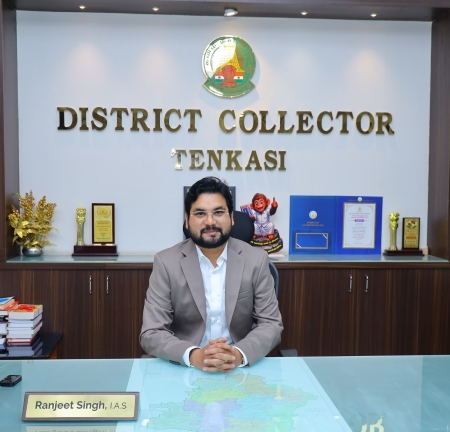
District Collector Office in Tenkasi
About Tenkasi District
Welcome to Tenkasi, a vibrant and naturally magnificent district nestled in southern Tamil Nadu, widely celebrated for its breathtaking waterfalls and profound spiritual heritage. Officially established on November 12, 2019, after being carved out from the historic Tirunelveli district, Tenkasi spans a stunning 2,882.43 square kilometers, heavily enriched by dense forests and fertile agricultural lands. Nourished by the perennial Chittar and Anumanadhi rivers, the district thrives on agriculture and is famously home to the spectacular Coutrallam falls, globally renowned as a natural medical spa. Beyond its ecological wonders, Tenkasi is a major pilgrimage center, housing culturally monumental sites like the ancient Kasi Viswanathar temple and the majestic Chitra Sabha at Kutraleeshwarar temple. Offering a supreme blend of natural grandeur and divine tranquility, Tenkasi is truly a jewel of South India.
District Admin Units
Local Bodies
Constituencies
General Information
- District: Tenkasi
- HeadQuarters: Tenkasi
- State: TamilNadu
- Total Area: 2882.43 Sq.Kms
- Forest Area: 439.99 Sq.Kms
Population Details (Combined)
- Total: 33,22,644
- Male: 16,42,403
- Female: 16,80,241
Majestic Waterfalls & Tourism
Tenkasi is phenomenally renowned for its spectacular cascades. The legendary Coutrallam Falls on the Chittar River is famously celebrated as a "medical spa" due to its therapeutic properties. The district boasts 8 other prominent falls, including Peraruvi, Aindharuvi, and Puli aruvi, attracting massive global tourism.
Spiritual Heritage
The district is a massive spiritual epicenter housing highly revered sites such as the ancient Kasi Viswanathar temple and the beautiful Sankarankoil temple. The iconic Kutraleeshwarar temple features the Chitra Sabha, one of Nataraja's five sabhas, highly romanticized in the classic poem “Kutrala Kuravanjiâ€.
Agricultural Dominance
Nourished heavily by the Chittar and Anumanadhi rivers, Tenkasi is an incredible agricultural powerhouse with over 65% of the population engaged in farming. It is expertly supported by massive irrigation infrastructure including the Gundar, Adavinayinar, and Ramanadhi dams, alongside more than 800 robust agricultural tanks.
Frequently Asked Questions about Tenkasi District
Who is the current District Collector of
The current District Collector and District Magistrate of Tenkasi is Thiru Ranjeet Singh, IAS.,.
How can I contact the Tenkasi District Collector Office?
You can seamlessly contact the Tenkasi District Collector Office for administrative or grievance purposes by calling the official Phone number at 290 547, or by sending an email to [email protected].
How does the administration manage the tourism sector?
During the main tourist season, the Collectorate ensures excellent safety, pristine sanitation, and top-tier crowd management at the waterfalls, providing a highly enjoyable experience for all visitors.
What is the agricultural focus of the district?
Blessed with a highly favorable climate and abundant water, the district is a major producer of paddy, spices, and fruits. The administration provides tremendous support to farmers to maximize their yields sustainably.
What makes the district geographically significant?
Located near the pristine Western Ghats, the administration actively enforces eco-friendly policies to protect the rich biodiversity and maintain the deeply peaceful, natural charm of the region.

 JB Soft System