
Women's Hair Loss: Common Causes, Treatment Options & Prevention Tips
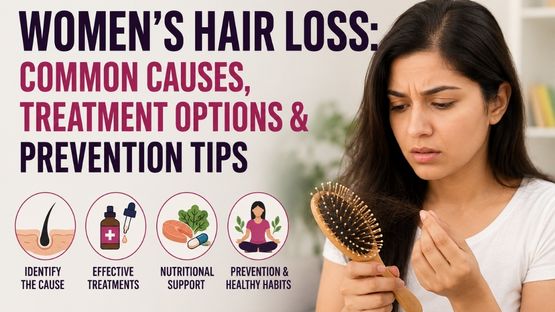
Hair loss is a common concern among women and can occur due to genetics, hormonal changes, nutritional deficiencies, stress, or certain medical conditions. Identifying the underlying cause is essential for choosing the right treatment.
Common Signs of Hair Loss
- Increased hair shedding
- Thinning hair, especially around the crown or parting
- Widening hair part
- Visible scalp
- Slower hair growth
- Patchy bald spots
- Changes in hair texture
- Itchy or tender scalp
Possible Causes
- Female pattern hair loss (genetic)
- Hormonal changes such as pregnancy, menopause, or PCOS
- Stress or illness
- Iron, vitamin D, zinc, or other nutrient deficiencies
- Thyroid disorders and autoimmune diseases
- Certain medications
- Tight hairstyles or excessive heat styling
- Rapid weight loss
Treatment Options
Depending on the cause, treatment may include:
- Topical minoxidil to support hair regrowth
- Prescription medications for hormonal causes (when appropriate)
- Nutritional supplements if deficiencies are identified
- Platelet-rich plasma (PRP) therapy
- Low-level laser therapy (LLLT)
- Hair transplantation for advanced hair loss
- Treating any underlying medical condition
How to Help Prevent Hair Loss
- Eat a balanced diet rich in protein, iron, zinc, and vitamins.
- Manage stress through regular exercise, meditation, or relaxation techniques.
- Avoid tight hairstyles and excessive heat or chemical treatments.
- Be gentle when washing and brushing your hair.
- Keep your scalp clean and healthy.
- Avoid smoking and maintain a healthy lifestyle.
When to See a Doctor
Consult a dermatologist if you notice:
- Sudden or excessive hair loss
- Bald patches or rapid thinning
- Hair loss with itching, redness, or scalp pain
- Hair loss that continues for several months
- Hair thinning associated with other symptoms such as irregular periods, fatigue, or unexplained weight changes
Disclaimer
This article is for informational purposes only and is not a substitute for professional medical advice, diagnosis, or treatment. If you are experiencing persistent or significant hair loss, consult a qualified dermatologist or healthcare professional for proper evaluation and personalized treatment.
Top Stories
-
 Salem Railway Track Renewal Work to Cause Delays for Two Express Trains11/Jul/2026 1:07:33 PM
 -

-
Women's Hair Loss: Common Causes, Treatment Options & Prevention Tips11/Jul/2026 11:13:08 AM
-
 Samsung Galaxy Z Fold 8 Ultra Price Leaked Ahead of Launch11/Jul/2026 11:12:35 AM
 -
 ZF Group Showcases Future-Ready Commercial Vehicle Technologies At Prawaas 5.011/Jul/2026 10:06:24 AM
 -
 BharatBenz strengthens bus portfolio for India's fast-growing intercity and compact-bus segments11/Jul/2026 10:02:35 AM