
Scientific Facts About Gold: Amazing Properties of the Precious Metal
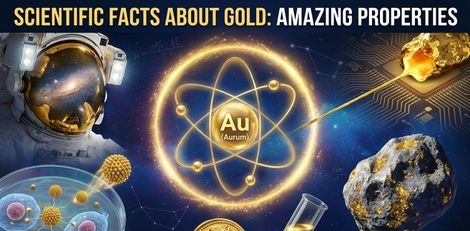
Gold is one of the most valuable and fascinating elements on Earth. Its chemical symbol is Au, derived from the Latin word aurum, meaning “shining dawn.” Beyond its beauty and value, gold has several unique scientific properties that make it useful in medicine, technology, and space exploration. Here are some of the most interesting scientific facts about gold.
1. Gold Exists Naturally in Alloys
Green gold, also known as electrum, is a natural alloy made of gold and silver, often with small traces of copper. This mixture occurs naturally and has been used since ancient times in coins and jewelry.
2. Asteroids May Contain Massive Gold Reserves
NASA is studying an asteroid named 16 Psyche, believed to be rich in metals, including gold. Scientists estimate that such asteroids may contain enough precious metals to reshape global resource availability.
3. The Human Body Contains Gold
Gold is present in the human body in very small amounts. A person weighing around 70 kg contains approximately 0.2 milligrams of gold, mainly in the blood and tissues.
4. Gold is Used in Medical Treatments
Gold compounds are used in the treatment of rheumatoid arthritis. Gold salt injections can help reduce pain, stiffness, and inflammation over time.
5. Gold is Extremely Stretchable
Gold is highly ductile. A single ounce (28 grams) of gold can be stretched into a thread nearly 8 kilometers long, making it useful in electronics and decorative embroidery.
6. Gold is the Only Naturally Yellow Metal
Gold naturally appears yellow in color. Most other metals appear gray or silver and only change color after chemical reactions.
7. Gold is Generally Safe and Non-Toxic
Gold is considered chemically stable and non-toxic, which is why it is used in dentistry, medical devices, and even edible decorations in food.
8. Gold Protects Astronauts in Space
Astronaut helmets have a thin gold coating on their visors. This layer helps reduce glare and protects against solar radiation and heat.
9. Oceans Contain Large Amounts of Gold
Seawater contains dissolved gold estimated at around 20 million tonnes worldwide. However, the concentration is extremely low, making extraction impractical.
10. Pure Gold is Not Magnetic
Pure gold does not stick to magnetets. Magnetic reaction usually indicates the presence of other metals in the alloy.
11. Mercury Can Dissolve Gold
Mercury can combine with gold to form an alloy called an amalgam, a property historically used in gold extraction processes.
12. Gold Has No Smell or Taste
Pure gold is odorless and tasteless because it does not react easily with other substances, reflecting its high chemical stability.
Conclusion
Gold is not just a symbol of wealth and beauty but also an extraordinary scientific element. From medical treatments and space technology to its presence in the human body, gold continues to play an important role in science and modern life.
Top Stories
-
 Chennai Evening Gold Rate: Gold Price Falls by ₹960 per Sovereign12/Oct/2026 7:07:30 PM
 -
 Tomorrow Panchangam October 13, 2026 | Auspicious Timings, Rahu Kalam, Gulikai12/Oct/2026 6:09:31 PM
 -
 E. Udayakumar: Building Bridges of Trust in India’s Construction Industry12/Oct/2026 5:38:31 PM
 -

-
 Top 10 Best-Selling Cars in India September 2026: Maruti Baleno Leads12/Oct/2026 5:09:03 PM
 -
 Rising Living Costs Push Chennai Families to Sell Gold Jewellery12/Oct/2026 4:52:16 PM

 JB Soft System