
Chennai’s Most Mysterious Society? The Untold Story of the Theosophical Society, Adyar
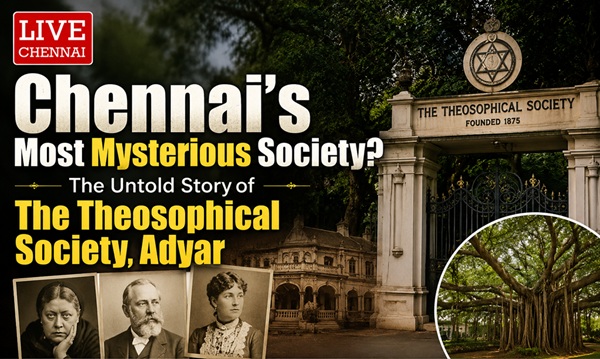
Chennai is home to many historic institutions, but few are as fascinating or as surrounded by mystery—as the Theosophical Society in Adyar. Nestled along the banks of the Adyar River, this historic institution has played a remarkable role in spirituality, philosophy, education, India’s freedom movement, social reform and the revival of Indian culture.
The story of the Theosophical Society began in the 19th century, a period marked by intense debates between science, religion and spirituality. As new scientific discoveries challenged long-held beliefs, a group of thinkers began looking towards Eastern philosophy and spirituality for deeper answers. The Society was originally founded in New York by Henry Steel Olcott and Helena Petrovna Blavatsky before its international headquarters was later established in Adyar, then a separate village outside the main city of Madras.
From its early days, the Society attracted attention because of its association with mysticism and unusual spiritual claims. Stories circulated about mysterious messages, spiritual masters known as Mahatmas and alleged supernatural experiences. Some of these incidents later became the subject of controversy and accusations that certain manifestations had been staged, adding another layer of intrigue to the Society`s history.
The organisation faced a difficult period, but its fortunes changed significantly with the arrival of Annie Besant. Under her leadership, the Theosophical Society became associated not only with spirituality but also with India`s growing political and social awakening. Besant strongly supported the idea of self-rule and became one of the prominent voices advocating greater freedom and rights for Indians.
The Society also developed close connections with several influential personalities of the period. Its members and supporters were involved in discussions surrounding India`s future, education, social reform and cultural identity. Over time, Adyar emerged as an important meeting point for people who were interested in both spiritual ideas and social change.
Its contribution to Madras extended far beyond philosophy and politics. People associated with the Theosophical movement played important roles in education, women`s empowerment, social reform and the promotion of Indian arts and culture.
One of its most significant cultural connections was with the revival and popularisation of Bharatanatyam. Rukmini Devi Arundale, who was closely associated with the Theosophical movement, played a major role in bringing the classical dance form to a wider audience. Her work helped transform Bharatanatyam into one of India`s most recognised and celebrated classical art forms, while the later establishment of Kalakshetra further strengthened Adyar`s place in India`s cultural history.
Adyar also became an important centre for educational experimentation. The Theosophical Society and personalities associated with it contributed to the development of new ideas in education, including connections with Maria Montessori and her methods of earlrly childhood learning. The organisation`s broader interest in education reflected its belief that social progress and personal development were closely connected.
The Society`s campus itself adds to its sense of mystery. Surrounded by greenery and located close to the Adyar River and estuary, the area has long been known for its ecological importance. One of its most famous landmarks is the historic Adyar Banyan Tree, which became a powerful symbol of the Society and attracted visitors and thinkers from around the world.
The private nature of certain activities within the Society has also fuelled public curiosity over the years. Limited access to some areas, combined with its long association with spirituality and mysticism, has given rise to several theories and rumours. Stories involving secret rituals, hidden practices and secret organisations have circulated over time.
However, such claims should be treated with caution. The available source material does not establish these conspiracy theories as verified facts. Much of the mystery surrounding the institution appears to have grown from its private nature, its unusual history and the unfamiliar spiritual practices associated with the movement.
What remains undeniable is the enormous influence that the Theosophical Society and the people connected with it have had on Adyar, Madras and India. Its history intersects with some of the country`s most important developments from the freedom movement and social reform to education, spirituality and the revival of classical Indian arts.
Today, Adyar is a vibrant and modern part of Chennai. Yet, behind its busy roads and residential neighbourhoods lies a remarkable history shaped by revolutionary ideas, influential personalities and institutions that changed the course of the city`s cultural development.
Perhaps that is the real mystery of the Theosophical Society.
The unanswered questions may attract curiosity, but its true story is already extraordinary. Behind the gates of this historic institution lies more than a century of philosophy, controversy, cultural transformation and ideas that helped shape both Madras and modern India.
The Theosophical Society, Adyar, remains not just one of Chennai`s most mysterious institutions, but also one of its most historically significant.
Top Stories
-
Chennai’s Most Mysterious Society? The Untold Story of the Theosophical Society, Adyar22/Aug/2026 3:48:58 PM
-
 Tamil Nadu Weather: 14 Districts Likely to Receive Moderate Rain Today22/Aug/2026 3:22:31 PM
 -
 CM Vijay Congratulates Tamil Nadu Teachers Selected for National Teachers Award22/Aug/2026 3:19:53 PM
 -
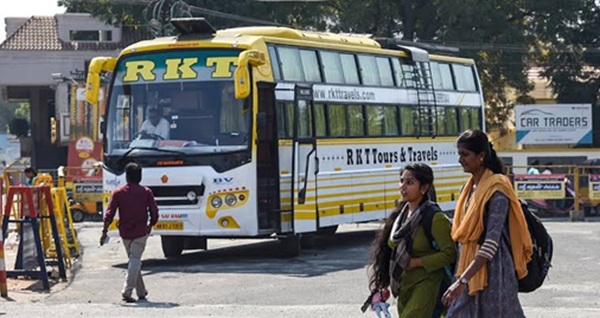 Avani Muhurtham 2026: Chennai Omni Bus Fares Surge Ahead of Auspicious Day22/Aug/2026 3:15:19 PM
 -
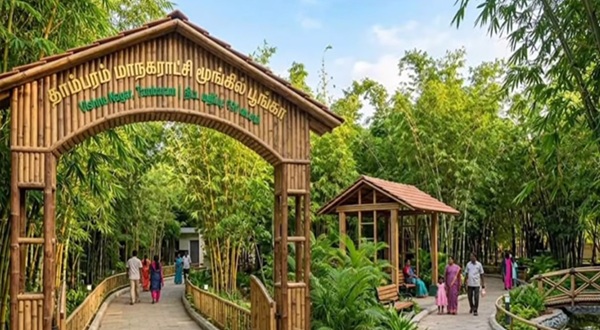 Chennai Flyover Underpasses to Get Parks & EV Charging Points | See Full Video22/Aug/2026 3:06:20 PM
 -
 My City My Voice Open Mic Chennai - August 23, 202622/Aug/2026 3:02:23 PM