
Smart Home Tips: Simple Ways to Make Your Home Smarter, Safer and More Efficient
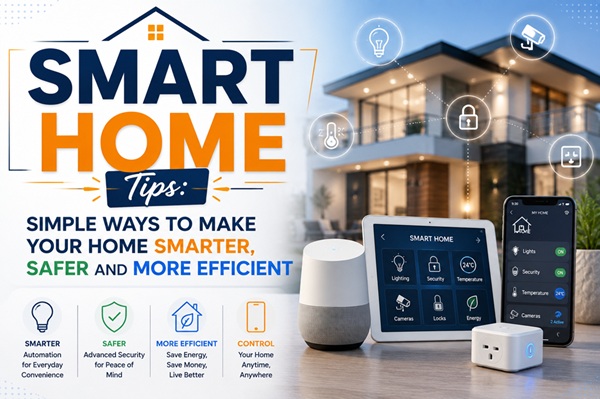
Smart home technology is no longer something reserved for luxury homes. With a few practical upgrades, homeowners can make everyday life more convenient, improve security and manage energy consumption more efficiently.
From automatically switching off lights to controlling appliances remotely, smart devices can simplify daily routines and help reduce unnecessary electricity usage. The key is to start with the features that solve real, everyday problems.
Start with Smart Lighting
Smart lighting is one of the easiest and most effective ways to begin building a smart home.
You can replace regular bulbs in frequently used areas, such as the living room and bedrooms, with Wi-Fi or Zigbee-enabled smart bulbs. These allow you to control lights through a smartphone app, voice assistant or automated schedule.
You can also create simple routines, such as:
- Switching off lights automatically when you leave home.
- Turning on outdoor lights after sunset.
- Using motion sensors in corridors or bathrooms.
-- Dimming bedroom lights automatically at night.
These small changes can make your home more convenient while helping to reduce unnecessary electricity consumption.
Make Your Existing Appliances Smarter
You do not always need to replace your existing appliances with expensive smart versions.
Smart plugs and smart switches can help automate many compatible devices, allowing you to switch them on or off remotely or according to a schedule. They can be useful for lamps, televisions, chargers and other suitable appliances.
For example, you can schedule a water heater to switch on shortly before your usual bathing time instead of leaving it running longer than necessary.
However, appliances with high power requirements, such as air conditioners and geysers, should only be connected to smart switches or controllers specifically designed and rated for their electrical load. Always check the product specifications and installation requirements before use.
Automate Your Cooling System
In a city like Chennai, where air conditioners and fans are used extensively for much of the year, smart automation can help improve both comfort and energy management.
If your AC does not have built-in smart controls, you can use a compatible smart AC controller or IR blaster to control it through your smartphone or integrate it with a voice assistant.
You can create routines such as a Good Night mode, which can:
- Set the AC to a comfortable temperature.
- Switch off unnecessary lights.
- Turn off the television.
- Activate selected security devices.
Similarly, an Away mode can help ensure that lights and compatible appliances are switched off when nobody is at home.
Strengthen Home Security
Smart technology can also add an extra layer of convenience and security to your home.
Depending on your requirements, you may consider installing:
- Smart door locks
- Video doorbells
- Indoor and outdoor security cameras
- Door and window sensors
- Motion sensors
Many smart security devices can send alerts directly to your phone when movement is detected or when a door or window is opened.
Before installing internet-connected cameras or security devices, it is important to review their privacy settings, account security features and options for storing recorded footage.
Create Practical Energy-Saving Routines
The real benefit of a smart home comes from automation. Instead of controlling every device individually, you can create routines that manage multiple devices at the same time.
Away Mode
When leaving home, you can automatically switch off selected:
- Lights
- Fans
- Televisions
- Air conditioners
- Non-essential smart plugs
Morning Mode
At a scheduled time, your smart home can prepare your space for the day by switching on selected lights and compatible devices.
You can also use a smart speaker for news updates, reminders or other daily information.
Sleep Mode
At bedtime, a single command can switch off unnecessary lights and appliances while keeping essential devices running.
These routines can be adjusted over time based on your lifestyle and daily habits.
Choose One Smart Home Ecosystem
As you add more devices, managing multiple apps can become inconvenient.
It is usually easier to choose a primary ecosystem, such as Google Home, Amazon Alexa or Apple Home, and check whether new devices are compatible before purchasing them.
Using one main ecosystem makes it easier to manage devices, create routines and control multiple appliances through a single interface.
Don`t Ignore Wi-Fi Coverage
Reliable connectivity is essential for a smooth smart home experience.
Before adding multiple Wi-Fi devices, check whether your internet connection provides good coverage throughout the house. Larger homes may require a mesh Wi-Fi system, additional access points or a dedicated smart home hub.
Poor connectivity can lead to delayed responses, disconnected devices and unreliable automation.
Keep Your Smart Home Secure and Updated
Smart home devices require regular maintenance, just like smartphones and computers.
Make it a habit to:
- Keep device firmware updated.
- Use strong, unique passwords.
- Enable two-factor authentication where available.
- Replace or recharge sensor batteries when needed.
- Remove old devices from your account before selling or replacing them.
- Review who has access to your smart home system.
- Check your automations periodically to ensure they are working correctly.
For installations involving electrical wiring or high-power appliances, it is always advisable to use a qualified professional.
Start Small and Expand Gradually
You do not need to automate your entire home at once. A practical approach is to start with a few devices that offer immediate benefits.
You could begin with:
- Smart lights in the living room or bedroom.
- Smart plugs or switches for compatible appliances.
- A central control app or smart speaker.
- AC or cooling automation.
- Security devices such as cameras, sensors or a video doorbell.
Once you become comfortable with the technology, you can gradually expand your setup based on what works best for your home.
Make Your Home Work Smarter for You
The purpose of a smart home is not to fill your house with technology. It is to make everyday life simpler, safer and more efficient.
Start by identifying common problems—such as forgetting to switch off lights, leaving appliances running, managing air conditioning or monitoring your home`s entrance—and choose technology that provides a practical solution.
With the right devices and well-planned automation, even a few simple upgrades can help create a more convenient, secure and energy-efficient home.
Top Stories
-
 Onam Yellow Day and Fancy Dress Competition in Chennai24/Aug/2026 4:13:35 PM
 -
 Start a Matrimony Business: A Meaningful and Profitable Business Opportunity24/Aug/2026 3:30:40 PM
 -
 Aavani Avittam 2026: What Is Aavani Avittam and When Is It Celebrated?24/Aug/2026 3:25:54 PM
 -
Smart Home Tips: Simple Ways to Make Your Home Smarter, Safer and More Efficient24/Aug/2026 3:14:35 PM
-
 Can Gold Really Protect Your Money From Inflation? Here’s What History Shows24/Aug/2026 3:07:52 PM
 -
 Chennai Real Estate Market Sees 6% Rise in Property Prices24/Aug/2026 3:01:30 PM