
Abdominal Distension: Causes, Symptoms and Treatment
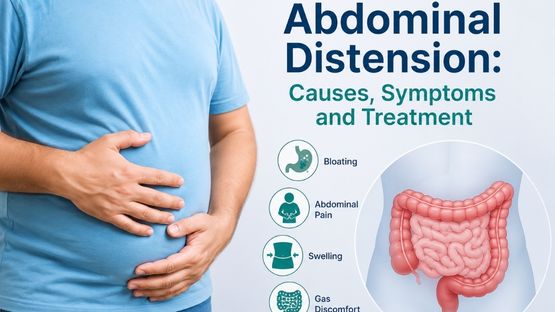
Abdominal distension refers to unusual swelling or enlargement of the abdomen. It may occur due to gas, fluid, digestive contents, pregnancy, or an increase in abdominal fat. The condition can happen suddenly or may occur repeatedly over time.
What Causes Abdominal Distension?
Common causes of abdominal distension include:
- Gas and bloating caused by indigestion, food intolerance or irritable bowel syndrome.
- Constipation, which can cause stool and digestive contents to build up.
- Pregnancy and menstrual-related water retention.
- Bowel obstruction, which can lead to a buildup of gas and waste.
- Gastrointestinal conditions such as celiac disease, inflammatory bowel disease and SIBO.
- Fluid buildup, sometimes associated with liver disease.
- Urinary retention, which can cause the bladder to become enlarged.
- In some cases, inflammation, internal bleeding, organ enlargement or growths may cause abdominal swelling.
How Is Abdominal Distension Diagnosed?
A healthcare provider will usually examine the abdomen and ask about symptoms, eating habits and medical history. Depending on the suspected cause, tests such as ultrasound or other imaging studies may be recommended.
How Is Abdominal Distension Treated?
Treatment depends on the underlying cause. Constipation, excess gas, infections, fluid buildup or other medical conditions may each require different treatments.
For recurring digestive-related bloating, a healthcare provider may recommend dietary changes, probiotics, digestive enzymes or other appropriate treatments.
How Can You Prevent Abdominal Distension?
Some simple lifestyle changes may help:
- Identify foods that trigger bloating or discomfort.
- Eat smaller meals and eat slowly.
- Drink enough water.
- Include adequate fiber in your diet.
- Discuss probiotics or digestive enzymes with a healthcare professional if needed.
When Should You See a Doctor?
Persistent or unexplained abdominal swelling should be evaluated by a healthcare professional, especially when it is accompanied by significant pain, vomiting, difficulty passing stool or gas, fever, sudden swelling, or other unusual symptoms.
Disclaimer: This article is intended for general informational purposes only and should not be considered medical advice. Persistent or severe abdominal distension shouould be evaluated by a qualified healthcare professional to determine the underlying cause and appropriate treatment.
Top Stories
-
 Tomorrow Panchangam August 25, 2026 | Auspicious Timings, Rahu Kalam, Gulikai24/Aug/2026 5:37:03 PM
 -

-
 The Ultimate Raksha Bandhan Gift Guide: From Gourmet Hampers to Timeless Keepsakes24/Aug/2026 4:37:24 PM
 -
 Onam Yellow Day and Fancy Dress Competition in Chennai24/Aug/2026 4:13:35 PM
 -
 Start a Matrimony Business: A Meaningful and Profitable Business Opportunity24/Aug/2026 3:30:40 PM
 -
 Aavani Avittam 2026: What Is Aavani Avittam and When Is It Celebrated?24/Aug/2026 3:25:54 PM