
Eye Exercises: How They Work, Their Effectiveness, and Eye Health Tips

For centuries, people have promoted eye exercises as a natural way to improve vision and correct eyesight problems. However, there is little credible scientific evidence to show that eye exercises can actually improve vision. While these exercises may not correct common vision problems, they may help reduce eyestrain and make your eyes feel more comfortable.
If you have a common refractive error such as myopia (nearsightedness), hyperopia (farsightedness), or astigmatism, eye exercises are unlikely to improve your vision. Similarly, people with common eye conditions such as age-related macular degeneration, cataracts, or glaucoma are unlikely to see significant benefits from these exercises.
Eye exercises may be more useful for people experiencing digital eyestrain, which is common among those who spend long hours working on computers or other digital devices. Symptoms can include:
- Dry eyes
- Eyestrain
- Blurred vision
- Headaches
Some simple exercises and healthy screen habits may help ease these symptoms.
How to Exercise Your Eyes
Depending on your needs, you can try several simple eye exercises.
Focus Change
This exercise challenges your eyes to adjust their focus and can be performed while sitting.
1. Hold your index finger a few inches away from your eye.
2. Focus on your finger.
3. Slowly move your finger farther away while maintaining your focus.
4. Look away briefly at something in the distance.
5. Focus on your outstretched finger and slowly bring it back toward your face.
6. Look away again and focus on a distant object.
7. Repeat the exercise three times.
Near and Far Focus
This exercise involves switching your focus between nearby and distant objects.
1. Hold your thumb about 10 inches from your face and focus on it for 15 seconds.
2. Choose an object about 10 to 20 feet away and focus on it for 15 seconds.
3. Shift your focus back to your thumb.
4. Repeat this process five times.
Figure Eight
This exercise can be performed while sitting.
1. Choose a point on the floor approximately 10 feet in front of you and focus on it.
2. Using only your eyes, trace an imaginary figure eight.
3. Continue for about 30 seconds, then change the direction of the movement.
The 20-20-20 Rule
Spending long periods focusing on a single object, especially a digital screen, can contribute to eyestrain.
The 20-20-20 rule is a simple way to give your eyes regular breaks. Every 20 minutes, look at something about 20 feet away for at least 20 seconds.
What Is Vision Therapy?
Vision therapy is a specialized form of treatment that may include eye exercises as part of a broader program. It is generally performed under the guidance of an eye care professional, such as an optometrist or ophthalmologist.
Depending on the individual`s needs, vision therapy may aim to improve eye coordination, strengthen certain visual skills, retrain visual behavior, or address eye-tracking problems.
Conditions that may sometimes be treated with vision therapy include:
- Convergence insufficiency
- Strabismus, commonly known as crossed eyes
- Amblyopia, also known as lazy eye
- Certain visual difficulties associated with dyslexia
Vision therapy should be tailored to the individual`s condition and carried out under appropriate professional supervision.
Tips for Keeping Your Eyes Healthy
Eye exercises are only one part of maintaining good eye health. Other habits can also help protect your vision:
- Have regular comprehensive eye exams: Even if you don`t notice any vision problems, regular eye examinations can help identify conditions that may not cause obvious symptoms.
- Know your risk factors: People with diabetes or a family history of eye disease may have a higher risk of developing certain eye conditions. Talk to an eye care professional about how often you should have your eyes checked.
- Wear sunglasses: Choose sunglasses that provide protection against both UVA and UVB rays. Polarized lenses can also help reduce glare.
- Maintain a healthy diet: Eating a balanced diet rich in healthy fats, antioxidants, vitamins, and minerals can support overall eye health. Carrots are also a good source of vitamin A, an important nutrient for healthy vision.
- Use corrective lenses when needed: Wearing glasses or contact lenses as prescribed will not weaken your eyes.
- Avoid smoking: Smoking can negatively affect many parts of the body, including your eyes. Quitting smoking can benefit your overall health and eye health.
Disclaimer: This article is intended for general informational and educational purposes only. It should not be considered a substitute for professional medical advice, diagnosis, or treatment. If you have persistent eye discomfort, blurred vision, eye pain, or sudden changes in vision, coconsult a qualified eye care professional.
Top Stories
-
 Want a Higher Take-Home Salary? Think Twice Before Reducing Your PF Contribution18/Aug/2026 5:29:51 PM
 -
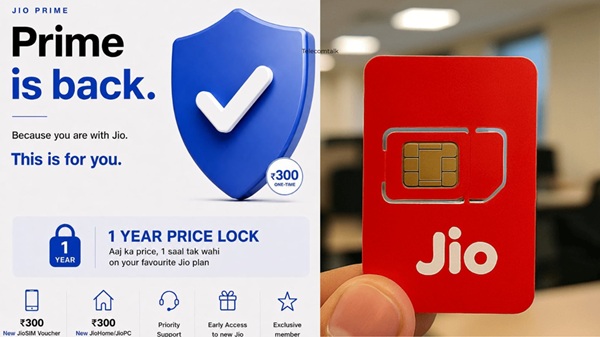 Jio Prime Relaunched After 10 Years: ₹300 Subscription Offers Exclusive Benefits18/Aug/2026 4:17:23 PM
 -

-
 Honoring a Visionary: Happy Birthday to Ramkumar Singaram18/Aug/2026 2:54:12 PM
 -

-
 Tata Sampann Onam Recipe - Ada Pradhaman (Poha Version)18/Aug/2026 1:24:39 PM