
Safe Banking Tips: How to Protect Your Money from Online Frauds
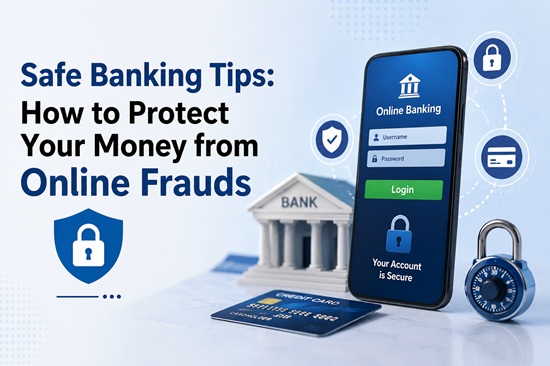
With digital banking becoming a part of everyday life, cybercriminals are constantly developing new ways to steal personal and financial information. Whether you use internet banking, mobile banking, UPI, or debit and credit cards, following basic safety practices can help protect your money and personal data.
Here are some essential safe banking tips every customer should follow.
Always Use Official Banking Channels
Always access your bank`s services through its official website or mobile app. Avoid searching for banking websites through unknown links, as fake websites are designed to steal your login credentials.
Keep Your Contact Details Updated
Ensure that your mobile number and email address are registered with your bank. Enable SMS and email alerts to receive instant notifications for every transaction. This helps you detect unauthorized activities immediately.
Use Strong and Unique Passwords
Create strong passwords using a combination of uppercase and lowercase letters, numbers, and special characters. Avoid using common passwords such as your name, date of birth, mobile number, or simple combinations like "123456."
Protect Your Devices
Install trusted antivirus and anti-malware software on your computer and smartphone. Keep your operating system and banking apps updated with the latest security patches.
Download Apps Carefully
Only download banking or financial apps from official app stores such as Google Play Store or Apple App Store. Before installing any app, verify the developer`s name, reviews, and ratings.
Check Website Security
Before entering your banking credentials, make sure the website address begins with https:// and displays a padlock icon in the browser. These indicate that the connection is encrypted.
Watch for Fake Messages
Fraudsters often send fake SMS messages, emails, or WhatsApp messages pretending to be from banks. Be cautious of spelling mistakes, urgent requests, or messages asking you to verify your account.
Avoid Public Wi-Fi for Banking
Never access your bank account using public Wi-Fi networks, shared computers, or unsecured internet connections. These networks can expose your sensitive information to cybercriminals.
Never Share Confidential Banking Information
Your bank will never ask for your:
- ATM PIN
- Internet banking password
- UPI PIN
- One-Time Password (OTP)
- CVV number
- Debit or credit card details
Never share these details with anyone, even if they claim to be a bank employee.
Do Not Click Unknown Links
Avoid clicking links received through SMS, email, social media, or messaging apps unless you are certain they are genuine. These links may lead to phishing websites designed to steal your banking credentials.
Be Careful with Remote Access Apps
Do not install remote access applications such as AnyDesk, TeamViewer, or similar software at the request of unknown callers. Fraudsters often use these apps to gain control of your device and steal money.
Be Alert While Using UPI
Remember that receiving money through UPI never requires you to:
- Enter your UPI PIN
- Share an OTP
- Scan a QR code
If someone asks you to do any of these to receive money, it is almost certainly a scam.
Stay Safe at ATMs
Never accept assistance from strangers while using an ATM. Cover the keypad while entering your PIN and inspect the ATM for any suspicious devices before inserting your card.
Report Suspicious Activity Immediately
If you notice any unauthorized transaction or suspect fraudulent activity:
- Contact your bank immediately.
- Block your debit or credit card if necessary.
- Change your passwords without delay.
- Report cyber fraud through the National Cyber Crime Reporting Portal or call the Cyber Crime Helpline 1930 as soon as possible.
Final Advice
Online banking is safe when used responsibly. Staying alert, protecting your personal information, and following basic cybersecurity practices can significantly reduce the risk of financial fraud. Always remember that no genuine bank will ever ask for your PIN, password, OTP, or UPI PIN over a phone call, SMS, email, or social media message. Staying informed is the first step toward safe banking.
Top Stories
-
 Tomorrow Panchangam July 01 2026 | Auspicious Timings, Rahu Kalam, Gulikai30/Jun/2026 6:16:58 PM
 -

-
 Why Do Gold Prices Fluctuate? Key Factors to Know Before Buying Jewelry30/Jun/2026 4:29:00 PM
 -
 Top Businesses to Start with ₹1 Lakh in Chennai30/Jun/2026 4:17:19 PM
 -
Safe Banking Tips: How to Protect Your Money from Online Frauds30/Jun/2026 3:43:23 PM
-
 What Are WhatsApp Usernames and How Can You Reserve One?30/Jun/2026 3:31:58 PM