
Chennai OMR Traffic Hit Hard by Nookampalayam Link Road SWD, Sewage Works
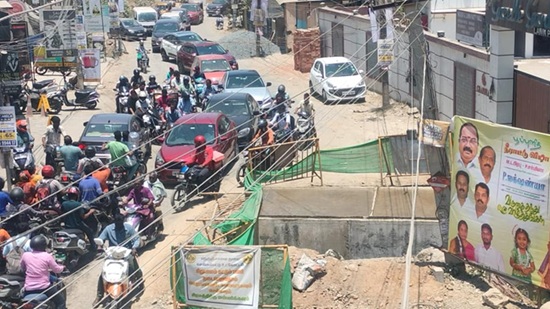
Motorists travelling on the busy Nookampalayam Link Road near Rajiv Gandhi Salai (OMR) are facing heavy traffic congestion due to ongoing stormwater drain (SWD) and sewage pipeline works carried out by the Greater Chennai Corporation and Chennai Metro Water Supply and Sewerage Board.
The 2-km stretch connecting Perumbakkam, Semmencheri and Thazhambur has been under construction for more than 10 months, causing severe traffic snarls during peak hours. Reduced road space and continuous digging works have made commuting difficult for residents, office-goers and students.
Residents said the delays in completing the SWD and Metro Water pipeline projects have increased travel time and created safety concerns for motorists. With schools set to reopen on June 4, commuters expect traffic congestion on the stretch to worsen further.
Following a recent inspection by S S Saravanan, the pace of work has reportedly improved. Officials have been instructed to speed up the project and restore normal traffic movement at the earliest.
According to civic officials, around 600 metres of the proposed 2-km SWD network has been completed so far. Authorities said the remaining works are progressing rapidly and are expected to be completed within the next two months.
Top Stories
-
 Tamil Nadu Housing Board (TNHB): Schemes, Eligibility and How to Apply Online31/Jul/2026 12:33:41 PM
 -
 Tamil Nadu Weatherman Pradeep John Thanks Chief Minister Vijay After Advisory Panel Appointment31/Jul/2026 12:28:55 PM
 -
 Indian Passport Fees 2026: Application Charges for Fresh, Reissue and Tatkaal Services31/Jul/2026 11:40:45 AM
 -
-

-