
Credit Card Late Payment Fee: What Happens If You Miss Your Credit Card Due Date?
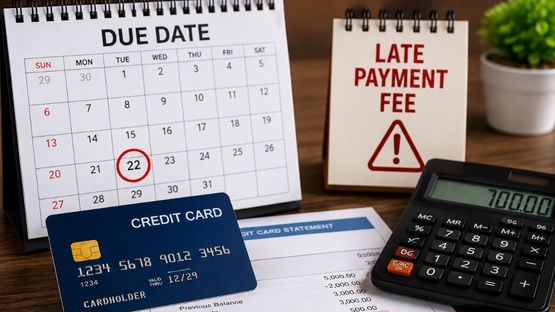
Credit cards make payments convenient, but they also come with the responsibility of paying your bill on time. Missing your credit card due date can result in a late payment fee, interest charges, and even a negative impact on your credit score if the payment remains overdue for an extended period.
Understanding how credit card late payment fees work can help you avoid unnecessary charges and maintain a healthy credit history.
What Is a Credit Card Late Payment Fee?
A credit card late payment fee is a penalty charged by the card issuer when you fail to pay at least the minimum amount due by the payment due date. The fee varies depending on the bank and the outstanding amount.
In addition to the late fee, interest may also be charged on the unpaid balance until it is fully repaid.
What Happens If You Miss Your Credit Card Payment?
If you do not pay your credit card bill on time, you may face several consequences, including:
• Late payment fee.
• Interest on the outstanding balance.
• Loss of the interest-free credit period.
• Lower credit score if the delay continues.
• Reduced eligibility for future loans and credit cards.
Paying your dues on time is the best way to avoid these issues.
RBI Guidelines on Credit Card Late Payment
The Reserve Bank of India (RBI) has issued guidelines to ensure that credit card customers are treated fairly. Some of the important points include:
Three-Day Grace Period
Banks should not report a credit card account as overdue to credit information companies if the payment is cleared within three days after the due date. This grace period helps protect customers from immediate negative credit reporting.
Transparent Fee Disclosure
Banks must clearly disclose all late payment charges, finance charges, and other applicable fees in their credit card terms and monthly statements.
Reasonable Charges
Late payment charges should be reasonable and linked to the outstanding amount. Banks should avoid imposing excessive or arbitrary penalties.
Advance Notice for Fee Changes
If a bank plans to revise its fee structure, customers should be informed well in advance before the changes take effect.
How Is the Late Payment Fee Calculated?
The exact late payment fee depends on the card issuer and the amount due. Generally, banks calculate the fee based on the unpaid outstanding balance or the applicable fee slab mentioned in the credit card`s terms and conditions.
If only part of the bill is paid, charges may apply only to the remaining g unpaid amount, depending on the issuer`s policy.
Does a Late Payment Affect Your Credit Score?
Yes. Repeated late payments can negatively affect your credit score. A lower credit score can make it more difficult to obtain:
• Personal loans.
• Home loans.
• Vehicle loans.
• New credit cards.
• Better interest rates.
Maintaining a strong repayment history is one of the most important factors in building a good credit profile.
Interest Charges on Outstanding Amount
Apart from the late payment fee, interest continues to accrue on the unpaid balance until the amount is completely cleared. Since credit card interest rates are generally high, delaying payments for several months can significantly increase your total repayment amount.
Tips to Avoid Credit Card Late Payment Fees
You can avoid unnecessary penalties by following these simple practices:
• Enable auto-debit for your credit card bill.
• Set reminders through SMS, email, or mobile banking apps.
• Pay at least the minimum amount due before the due date.
• Review your monthly credit card statement regularly.
• Keep sufficient funds in your bank account before the payment date.
• Avoid spending beyond your repayment capacity.
Why Paying on Time Matters
Timely credit card payments help you:
• Avoid late payment charges.
• Save money on interest.
• Maintain a good credit score.
• Improve your chances of getting future loans.
• Build a strong financial reputation.
Conclusion
A credit card late payment fee may seem like a small penalty, but repeated delays can lead to higher interest costs and affect your financial health. Understanding your card`s payment terms, tracking due dates, and making timely payments can help you avoid unnecessary charges and maintain a positive credit history. Responsible credit card usage not only saves money but also strengthens your overall financial profile.
Top Stories
-
 Tomorrow Panchangam August 04, 2026 | Auspicious Timings, Rahu Kalam, Gulikai03/Aug/2026 5:36:03 PM
 -

-
 Top 5 Five-Star Hotels in Chennai for a Luxurious Stay03/Aug/2026 4:55:03 PM
 -
 Gold Prices Jump on Aadi Perukku: Should Investors Buy Now or Wait?03/Aug/2026 4:44:47 PM
 -
 Gold Selling Rises in Chennai as Prices Stay High03/Aug/2026 4:44:25 PM
 -