
Saidapet: The Untold History of Chennai’s ‘Gateway to Madras’
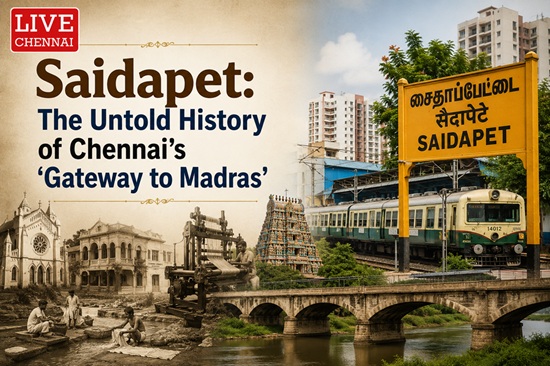
Saidapet is widely known today for its famous Vadakari, busy markets, railway station and bustling streets. But behind the familiar name lies a rich history shaped by the Adyar River, trade, education, politics, religion and changing urban development.
According to historian Saidapet Venkatesh Ramakrishnan, Saidapet was once regarded as the “gateway to Madras”, serving as an important southern entry point to the city.
The area`s name is associated with Sadatullah Khan, the Nawab of Arcot. The word “pettai” was commonly used for settlements outside fortified areas, giving rise to the name Saidapet.
Adyar River and the Growth of Saidapet
The history of Saidapet is closely connected with the Adyar River, which runs through the locality. The river played an important role in the area`s development, while Saidapet also became associated with traditional occupations such as weaving and washing.
A large washermen`s settlement, or Dhobi Khana, developed in the area. The concentration of washermen eventually contributed to the emergence of neighbourhoods associated with sudden settlement and occupational communities.
Saidapet was also once home to a considerable number of weavers. Traditional pit looms were used by weavers, reflecting the area`s importance as a centre of textile-related activity.
An Important Centre of Education
Saidapet also played an important role in the development of education in the Madras region.
The Saidapet Agricultural School was established here and later developed into an important agricultural education institution, with the agricultural college tradition eventually becoming associated with Coimbatore.
The area also has a connection with Dr. Sarvepalli Radhakrishnan, who later became India`s second President. He is remembered for beginning his teaching career in the region.
Saidapet was also home to the Gandhi Library, associated with playwright Sakthi Krishnaswamy, who was known for his work on Kattabomman.
Saidapet and the Andhra-Madras Dispute
One of the lesser-known chapters in Saidapet`s history is its connection with the political developments surrounding the creation of Andhra State.
During the period when the future of Madras was being debated amid demands for a separate Andhra State, Saidapet became associated with important administrative and political activities involving the Telugu-speaking community.
The dispute over whether Madras should become part of Andhra or remain with the Tamil-speaking region became one of the significant political questions of the period.
Karunanidhi and Saidapet Politics
Saidapet also occupies anan important place in Tamil Nadu`s political history.
Former Chief Minister M. Karunanidhi contested from the Saidapet constituency in the 1967 Assembly election and won. His campaign was notable for the amount of money reportedly raised for the election, leading to the famous reference to him as “Mr. 11 Lakh.”
The constituency subsequently became an important political stronghold and remained closely associated with the Dravidian political movement.
Churches, Temples and Heritage
Saidapet`s heritage is also reflected in its religious landmarks.
The area is connected to the wider history surrounding St. Thomas Mount and Little Mount, which are traditionally associated with St. Thomas, one of the apostles of Jesus.
The historic bridge across the Adyar River also forms part of Saidapet`s heritage. Armenian merchant Petrus Uscan, known for his contributions to several historic structures in and around Madras, is associated with the construction of the old bridge and the steps leading to St. Thomas Mount.
Saidapet is also home to the historic Karaneeswarar Temple, along with mosques and churches that reflect the area`s diverse cultural heritage.
The Forgotten Cactus Farm
One of the more unusual stories associated with Saidapet is the existence of a cactus farm.
According to historical accounts cited by Ramakrishnan, a farm was established in the area to cultivate cactus plants associated with the production of cochineal, an insect-derived red dye. Cochineal was historically used to produce red colouring, including dyes used for military uniforms.
The story remains one of the lesser-known chapters in Saidapet`s history.
From Garden Houses to a Crowded Urban Neighbourhood
Saidapet was once described as a relatively quiet locality filled with garden houses, tiled-roof homes, traditional settlements and agraharams.
The arrival and expansion of railway services helped transform the neighbourhood. Improved connectivity allowed residents to live in Saidapet while travelling to other parts of Madras for work.
Over time, the locality developed into a predominantly middle-class residential and commercial area. Roads, railway tracks and Mount Road gradually divided the neighbourhood into distinct sections, influencing its economic and social development.
A Locality Shaped by the Adyar
The same Adyar River that contributed to Saidapet`s early development has also made the locality vulnerable to flooding.
Saidapet and several surrounding neighbourhoods experienced severe flooding during the 2015 Chennai floods, highlighting the challenges created by development along the river and low-lying areas.
Today, Saidapet is a densely populated part of Chennai, known for its transport connections, markets, schools, religious institutions and residential neighbourhoods.
Yet beneath its crowded streets lies a much older story—one of riverside settlements, weavers, washermen, education, politics, trade, religious heritage and changing urban life.
Saidapet may be one of Chennai`s busiest neighbourhoods today, but its streets continue to preserve layers of history that reveal how the southern gateway to old Madras evolved into the Chennai we know today.
Top Stories
-
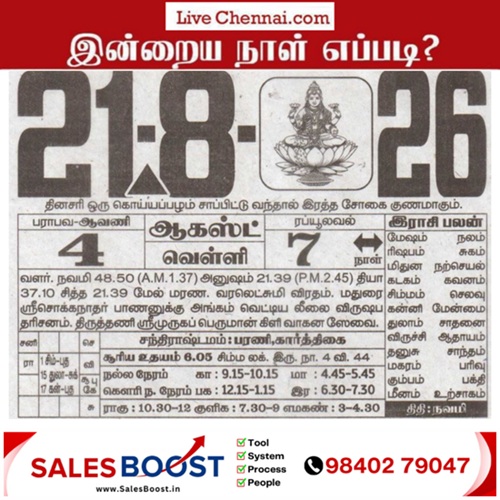 Tomorrow Panchangam August 21, 2026 | Auspicious Timings, Rahu Kalam, Gulikai20/Aug/2026 5:36:22 PM
 -
Saidapet: The Untold History of Chennai’s ‘Gateway to Madras’20/Aug/2026 5:18:19 PM
-
 Beware: Errors in Medical Records Could Complicate Your Health Insurance Claim20/Aug/2026 5:14:03 PM
 -
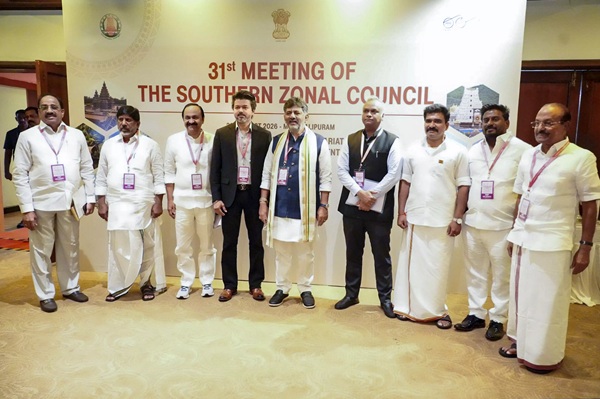 VD Satheesan Meets Tamil Nadu CM C Joseph Vijay at Southern Zonal Council Meeting20/Aug/2026 4:09:57 PM
 -
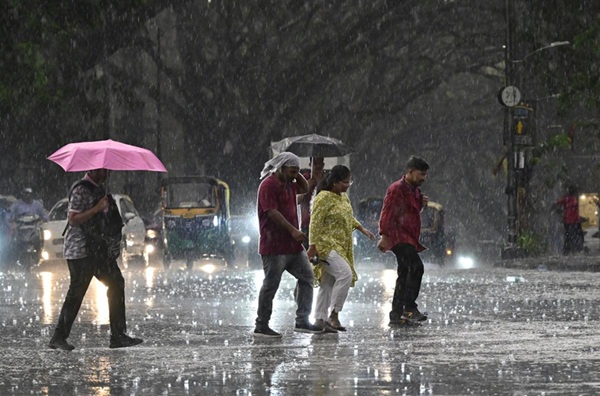 Tamil Nadu Weather Update: Moderate Rain Likely in 21 Districts Today20/Aug/2026 4:03:01 PM
 -
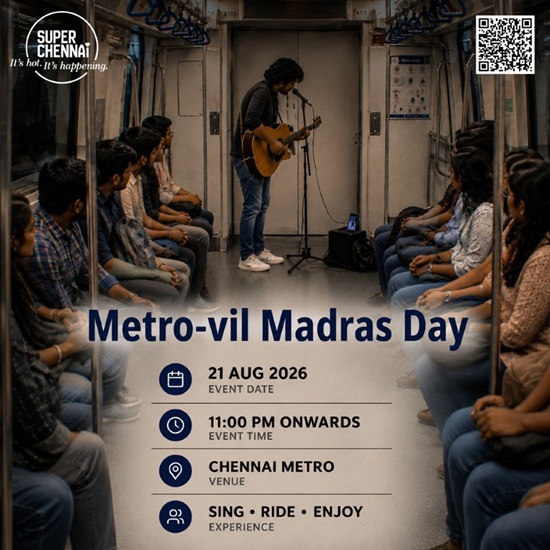 Madras Day 2026: Chennai Metro to Host Midnight Musical Ride20/Aug/2026 3:53:52 PM