
Is an Indian Passport Proof of Citizenship? Here's What the Law Says
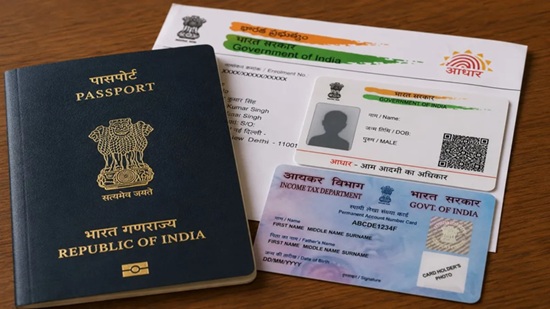
Confusion over the documents required to prove Indian citizenship has been increasing. Adding to the debate, the Central Government has clarified that holding an Indian passport alone does not constitute conclusive proof of Indian citizenship.
The clarification, issued by the Ministry of External Affairs (MEA), has raised an important question: If a passport is not sufficient, what legally proves Indian citizenship?
What Did the Ministry of External Affairs Say?
On June 24, the Ministry of External Affairs observed Passport Seva Divas to commemorate the enactment of the Passports Act, 1967. During the event, the ministry clarified that an Indian passport is an official travel document and a valid identity document for international travel, but it should not be treated as definitive legal proof of Indian citizenship.
This statement has sparked widespread discussion and confusion among citizens.
Why Is There Confusion?
The debate is not new. In December 2019, while discussing the National Register of Citizens (NRC), the Central Government`s Press Information Bureau (PIB) stated that individuals could submit documents relating to their date and place of birth to establish citizenship. However, it also noted that the list of acceptable documents had not yet been finalised.
As a result, many people continue to ask: What is the legal proof of Indian citizenship?
What Does the Citizenship Act, 1955 Say?
The Citizenship Act, 1955 does not recognise any single document as absolute proof of Indian citizenship. Instead, citizenship is determined based on legal provisions and eligibility criteria.
The Act provides five ways through which a person can acquire Indian citizenship:
- By birth
- By descent
- By registration
- By naturalisation
- By incorporation of territory
The rules for citizenship by birth have also changed over time:
- Anyone born in India between January 26, 1950, and June 30, 1987, is considered an Indian citizen by birth.
- Those born in India on or after July 1, 1987, must have at least one parent who is an Indian citizen.
- Those born on or after December 3, 2004, must have both parents as Indian citizens, or one parent must be an Indian citizen while the other is not an illegal migrant.
Children born outside India to o Indian parents may acquire citizenship by descent, subject to conditions such as registration with the nearest Indian mission within the prescribed time.
Foreign nationals may also apply for Indian citizenship through registration or naturalisation, provided they meet the eligibility requirements, including prescribed periods of residence in India.
Why Aren`t Aadhaar or Passport Alone Enough?
The Supreme Court has clarified that the Aadhaar card is only an identity document and not proof of Indian citizenship. Aadhaar is issued to eligible residents who have lived in India for the required period, irrespective of citizenship status.
Similarly, the Ministry of External Affairs has clarified that an Indian passport is primarily a travel document and identity proof, not a standalone legal certificate of citizenship.
Conclusion
Indian citizenship is determined under the Citizenship Act, 1955, based on a person`s eligibility and supporting legal records. Neither an Indian passport nor an Aadhaar card alone serves as conclusive proof of citizenship. The determination depends on the applicable provisions of the law and the individual`s circumstances.
Top Stories
-
 Joyalukkas Chairman Joy Alukkas Adds Cessna Citation XLS+ Private Jet09/Oct/2026 7:31:24 AM
 -
 Chennai Plans Bus-Priority Corridor Linking Tambaram, Velachery, Pallavaram and Taramani09/Oct/2026 6:56:38 AM
 -
 Tomorrow Panchangam October 09, 2026 | Auspicious Timings, Rahu Kalam, Gulikai08/Oct/2026 5:51:14 PM
 -
 Gold Loan vs Home Loan: Which Is Better for Urgent Financial Needs?08/Oct/2026 5:39:41 PM
 -
 JB SOFT SYSTEM Helps Organisations Build Custom Community Portals08/Oct/2026 5:30:07 PM
 -
 Arupadai Veedu Murugan Temple, Besant Nagar, Chennai08/Oct/2026 5:24:35 PM

 JB Soft System