
Your Body Has Its Own Software: 8 Hormones That Influence Your Sleep, Mood, Hunger and Energy
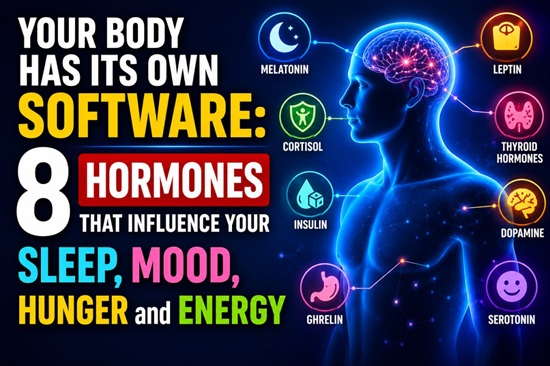
Sleep, mood, hunger and energy levels can vary from day to day, and hormones play an important role in regulating many of these functions. Experts note that everyday habits such as sleep, food, physical activity, stress and exposure to light can influence the body`s complex hormonal and nervous systems.
Hormones act as chemical messengers, helping different organs and systems communicate with each other. Among the many hormones and neurotransmitters involved in human health, the following eight are particularly important.
1. Melatonin – Helps Regulate Sleep
Melatonin plays a key role in regulating the body`s sleep-wake cycle. Its production generally increases in darkness, signalling the body to prepare for sleep.
Exposure to bright light at night, particularly from mobile phones, tablets and other screens, can interfere with the body`s natural sleep rhythm.
Maintaining a regular sleep schedule, reducing bright-screen exposure before bedtime and keeping the bedroom dark can support healthy sleep patterns.
2. Cortisol – Supports Alertness and Stress Response
Cortisol is often referred to as the "stress hormone," but it has several important functions. It follows a natural daily rhythm and helps the body become alert and active, particularly around the time of waking.
Long-term stress and poor sleep can affect normal cortisol patterns. Regular exercise, adequate sleep, relaxation and spending time outdoors can support healthy stress management.
3. Insulin – Helps Control Blood Sugar
Insulin helps glucose move from the bloodstream into cells, where it can be used for energy or stored.
A combination of excess calorie intake, physical inactivity and unhealthy eating patterns can contribute over time to reduced insulin sensitivity.
Eating balanced meals containing vegetables, whole foods, protein and fibre, while limiting excessive sugary drinks and refined foods, can support metabolic health. Regular physical activity, including walking, is also beneficial.
4. Ghrelin – The Hunger Signal
Ghrelin is one of the hormones involved in regulating appetite. Its levels can increase before meals and contribute to feelings of hunger.
Sleep patterns can also influence appetite regulation. Poor sleep may make it more difficult for some people to manage hunger and food choices.
Maintaining regular sleep and meal routines and paying attention to genuine hunger can help develop healthier eating habits.
5. Leptin – Involved in Fullness and Energy Balance
Leptin is produced mainly by fat cells and communicates information about the body`s energy stores to the brain. It is part of the complex system involved in regulating appetite and energy balance.
Rather than relying on extreme diets, experts generally recommend sustainable habits, including nutritious food, adequate sleep and regular physical activity.
6. Thyroid Hormones – Important for Metabolism
The thyroid gland produces hormones that influence metabolism and several other body functions, including heart rate and body temperature.
Abnormally high or low thyroid hormone levels can cause a variety of symptoms. Suspected thyroid problems should be evaluated by a healthcare professional through appropriate medical assessment and blood tests.
People should avoid attempting to "balance" thyroid hormones through unverified supplements or online remedies.
7. Dopamine – Linked to Motivation and Learning
Dopamine is a neurotransmitter involved in motivation, reward, movement, attention and learning. Although it is often called the "pleasure chemical," its functions are much broader.
Constant notifications, short-form videos, games and social media can repeatedly compete for attention. Rather than trying to "remove dopamine," developing healthier digital habits can be more useful.
Limiting unnecessary notifications, reducing endless scrolling and spending time on exercise, hobbies, learning and meaningful activities can support healthier routines.
8. Serotonin – Involved in Mood and Other Functions
Serotonin is an important neurotransmitter involved in several processes, including mood, sleep, appetite and digestive function.
Regular physical activity, adequate sleep, nutritious food, daylight exposure and meaningful social interaction are generally considered beneficial lifestyle practices for overall well-being.
Daily Habits Can Influence the Body`s Signals
Experts emphasise that hormones cannot simply be switched "on" or "off." The body`s hormonal system is highly complex, with multiple systems constantly interacting.
For example, staying up late using a phone may affect sleep. Poor sleep can influence appetite and energy levels the following day. Lower energy may then reduce physical activity, potentially contributing to an unhealthy cycle.
On the other hand, positive habits can reinforce each other. Regular physical activity can support sleep, while better sleep may improve energy and make it easier to stay active and make healthier food choices.
Avoid Unproven "Hormone Hacks"
Social media frequently promotes claims about "hormone resets," "dopamine detoxes," "cortisol hacks" and supplements that supposedly provide instant hormonal balance.
There is no single food, drink or supplement that can automatically optimise all hormones.
Instead, maintaining basic healthy habits remains important. These include:
- Getting sufficient and consistent sleep
- Reducing unnecessary screen exposure at night
- Staying physically active
- Eating balanced and nutritious meals
- Limiting excessive sugar and highly processed foods
- Managing ongoing stress
- Spending time outdoors and getting daylight
- Maintaining healthy social connections
- Seeking medical advice for persistent or concerning symptoms
The Bottom Line
People cannot consciously control every hormone in their body, but many everyday behaviours can influence the systems that regulate sleep, appetite, energy, mood and metabolism.
The key is to focus less on quick "hormone hacks" and more on consistent healthy habits.
Disclaimer: This article is intended for general health awareness and educational purposes only. Persistent fatigue, sleep problems, unexplained weight changes, mood disturbances, suspected thyroid problems or other concerning symptoms should be evaluated by a qualified healthcare professional.
Top Stories
-
 Tomorrow Panchangam August 12, 2026 | Auspicious Timings, Rahu Kalam, Gulikai11/Aug/2026 5:52:38 PM
 -
 Gold Price Surges in Chennai: Is This the Right Time to Invest?11/Aug/2026 5:47:22 PM
 -
 Aadi Amavasya 2026: Date, Timings, Rituals and Significance11/Aug/2026 5:41:09 PM
 -
 Chennai Cooum River Restoration Project: See This Full Video for Complete Details11/Aug/2026 4:26:04 PM
 -
 Vivo X300 FE Price Hiked Again in India: New Version May Launch11/Aug/2026 4:24:44 PM
 -
 LPG Customers Must Complete Aadhaar e-KYC by August 1511/Aug/2026 4:12:56 PM