
GCC Property Lease Rules 2026: Public Auctions Mandatory in Chennai from September 1
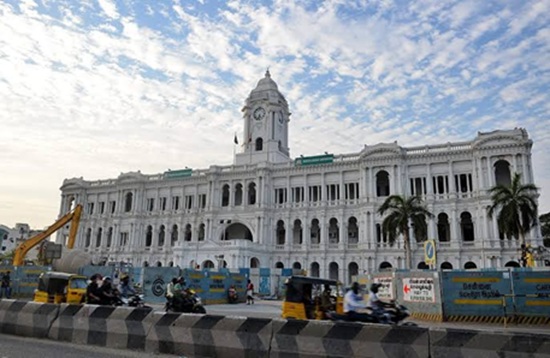
The Greater Chennai Corporation (GCC) Council has approved amended regulations governing the lease and rental allotment of its commercial properties, markets, and civic utility facilities across Chennai. Under the revised rules, all GCC immovable properties must initially be allotted through public auctions.
A resolution approving the changes was adopted during the GCC Council`s July meeting. The new GCC property lease rules will apply to lease renewals and new allotments from September 1, 2026.
GCC Commercial Properties to Have 3-Year Lease Terms
Under the revised regulations, commercial complexes, market stalls, petty shops, bus stand kiosks, and community halls will be leased in three-year blocks, with renewals permitted for a maximum total period of 12 years.
Once a property reaches the 12-year lease limit, no further extensions will be granted. Instead, the GCC will reassess the property`s market value and conduct a fresh public auction.
Properties leased to Central or State government departments can have a tenure of up to nine years, while non-commercial properties allotted for public use will continue to have a maximum lease period of three years.
Re-Tendering Mandatory for Civic Utility Facilities
The revised GCC property regulations also apply to civic utility facilities such as paid parking lots, public toilets, digital display panels, and EV charging stations.
Licences allowing operators to collect usage fees from these facilities will be limited to three years. After the licence period ends, the facility must undergo a fresh tender process.
GCC Introduces Mandatory 5% Annual Rent Increase
The policy mandates a 5% annual rent increase for all new and existing municipal tenancies.
Six months before the end of each three-year lease term, the GCC will issue formal notices asking lessees to accept the revised rental rates.
At the end of every three-year cycle, the lessee must execute a fresh agreement and pay a standard renewal fee based on the area of the property.
The renewal fee will be Rs 2,500 for properties up to 100 sq ft, Rs 5,000 for 101 to 500 sq ft, Rs 7,500 for 501 to 1,000 sq ft, and Rs 10,000 for properties above 1,000 sq ft.
12% Penal Interest for Delayed Rent Payments
To discourage payment defaults, the GCC will impose a 12% annual penal interest on delayed payments.
In the event of a lessee`s death, legal heirs may apply to transfer the lease to their name after clearing all outstanding dues and paying a Rs 5,000 transfer fee.
Existing Lessees to Get Priority During Redevelopment
The revised policy also addresses cases in which older GCC buildings are demolished for redevelopment.
Existing lessees holdiding a prior Memorandum of Understanding (MoU) will be given priority for allotment in the redeveloped property, provided they agree to match the highest bid received through an open public auction.
Committees to Handle GCC Rental Disputes
Local sub-committees will be established to resolve disputes related to tariffs and rental rates. Cases that cannot be resolved at the local level will be escalated to a State-level committee.
The revised policy follows amendments under Rule 316, “Licensing of Immovable Property of Municipality,” of the Tamil Nadu Urban Local Bodies Rules, 2023.
Amendments relating to the allotment of municipal properties through leases or licences were notified in the Government Gazette on December 16, 2025.
New GCC Property Lease Rules Effective September 1
The existing three-year tenure for GCC shop rentals, which began on September 1, 2023, will expire on August 31, 2026.
With the new rules taking effect on September 1, 2026, public auctions will become mandatory for the initial allotment of GCC immovable properties. The policy also introduces defined lease periods, annual rent increases, renewal fees, penalties for delayed payments, and compulsory re-tendering for civic utility facilities.
The revised framework is expected to bring greater uniformity to the management and allotment of Greater Chennai Corporation properties across the city.
Top Stories
-
 Tomorrow Panchangam September 17, 2026 | Auspicious Timings, Rahu Kalam, Gulikai16/Sep/2026 6:02:20 PM
 -
 Gold Prices Fall 20% From Record High: What Indian Investors Need to Know16/Sep/2026 5:58:43 PM
 -
 Tamil Nadu Weather Alert: Heavy Rain Warning for Several Districts for Next 5 Days16/Sep/2026 4:35:23 PM
 -
 Late Night Restaurants in Chennai for Midnight Food Cravings16/Sep/2026 4:34:32 PM
 -
 Farida Gupta Exhibition in Chennai: Handcrafted Shopping at C.P. Art Centre, Alwarpet16/Sep/2026 4:30:20 PM
 -
 Express Avenue, Royapettah, Chennai: Shops, Restaurants, Entertainment and Location Guide16/Sep/2026 4:25:31 PM