
How Artificial Intelligence (AI) Works – A Simple Guide for Everyone By J. Sampath - Part 2
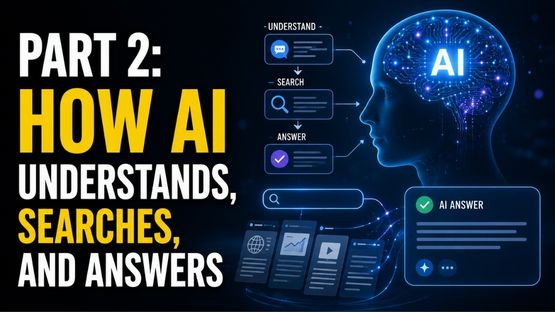
Step 3 – AI Predicts the Next Word
One surprising fact is that AI mainly predicts what word should come next.
For example:
"The sun rises in the..."
Most people would naturally say:
"East."
AI does the same.
It predicts the most likely next word based on everything it has learned.
Sentence after sentence, prediction after prediction, it generates complete answers.
This is why AI often sounds natural and conversational.
Step 4 – Understanding Context
Context is very important.
Suppose someone asks:
"What is Java?"
Without context, Java could mean:
- A programming language
- An island in Indonesia
- Coffee
AI studies the surrounding words.
If the question is:
"How do I write a Java program?"
AI understands that Java refers to the programming language.
Context helps AI choose the correct meaning.
Step 5 – Finding Relevant Information
Modern AI systems often use a technique called Retrieval-Augmented Generation (RAG).
Instead of depending only on what they learned during training, they can search additional documents.
For example:
Imagine a company has:
- Employee handbook
- HR policy
- Product manuals
- Customer agreements
- Technical documents
These documents are divided into smaller pieces called chunks.
Each chunk is converted into a mathematical representation called a vector.
These vectors are stored in a vector database.
When someone asks:
"What is our leave policy?"
AI searches the vector database.
Instead of reading thousands of pages, it finds only the most relevant chunks.
Then it uses those chunks to answer accurately.
This is how many modern business AI assistants work.
What is Chunking?
Imagine e reading a 500-page book.
Instead of searching the entire book every time, you divide it into small chapters.
AI does something similar.
Large documents are split into smaller meaningful sections.
These sections are called chunks.
Smaller chunks make searching faster and more accurate.
What is a Vector Database?
A vector database is like a very intelligent library.
Instead of arranging books alphabetically, it arranges information according to meaning.
For example:
Someone searches:
"Vacation policy"
The document actually says:
"Annual Leave Policy"
A normal keyword search may miss it.
A vector database understands that "vacation" and "annual leave" are closely related.
It quickly retrieves the correct information.
This makes AI much smarter than traditional search systems.
Why AI Sometimes Gives Wrong Answers
AI is powerful, but it is not perfect.
Sometimes it may:
- Misunderstand the question.
- Use outdated information.
- Mix information from different sources.
- Generate incorrect facts with confidence.
This is called an AI hallucination.
That is why important information should always be verified, especially in medicine, law, finance, engineering, and public policy.
AI should assist human judgment-not replace it.
Top Stories
-
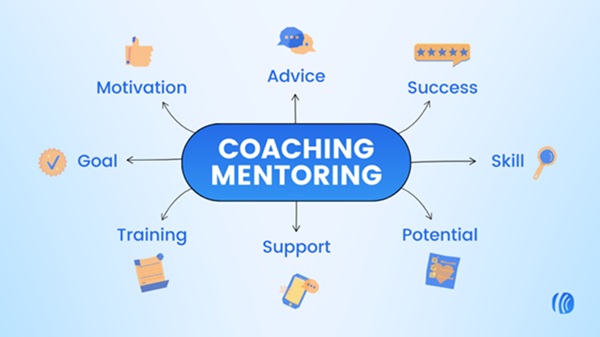 Growth Happens Faster When You Learn from the Right People25/Jul/2026 12:08:01 PM
 -

-
 LiveChennai.com Strengthens Its Position as Chennai's Most Trusted Gold Rate Portal25/Jul/2026 11:47:31 AM
 -
 HP T620 Thin Client: A Budget-Friendly PC Setup for Everyday Use25/Jul/2026 11:37:50 AM
 -
 Tambaram - Tenkasi Special Trains Announced on Thursdays and Saturdays to Ease Passenger Rush25/Jul/2026 11:29:57 AM
 -