
Remembering Perarignar Anna on His 117th Birth Anniversary: The Leader Who Gave Tamil Nadu a New Political Voice
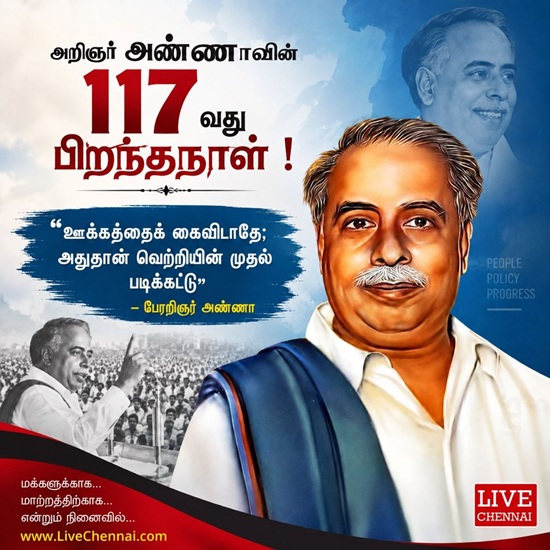
Tamil Nadu today commemorates the 117th birth anniversary of Perarignar C. N. Annadurai, affectionately remembered by generations simply as “Anna” - elder brother.
More than five decades after his passing, Anna remains deeply woven into the identity of Tamil Nadu. His name lives across Chennai through Anna Salai, Anna Nagar, Anna University, Anna Centenary Library, Arignar Anna Zoological Park and the Anna Memorial on Marina Beach. But his true legacy goes beyond buildings, roads and memorials.
Anna changed how leaders communicated with people, strengthened Tamil identity without closing the doors to the wider world, championed social dignity and demonstrated how words, ideas, cinema, journalism and democratic participation could transform society.
From Kanchipuram to the leadership of Tamil Nadu
Conjeevaram Natarajan Annadurai was born on September 15, 1909, in Kanchipuram, then part of the Madras Presidency.
Coming from a modest background, Anna understood the everyday realities of ordinary families. He studied at Pachaiyappa’s institutions and later completed postgraduate studies in economics and politics at Pachaiyappa’s College in Chennai. He briefly worked as a teacher before becoming actively involved in journalism, public speaking and politics.
These early experiences helped shape the qualities that would later define him: intellectual curiosity, empathy for common people, command over language and the ability to explain complex political and social questions in words everyone could understand.
A writer, journalist and master communicator
Anna was not merely a politician. He was an outstanding Tamil writer, playwright, journalist, debater and public speaker.
He used essays, short stories, stage plays and cinema to communicate ideas about social justice, equality, rational thinking and the dignity of labour. Works associated with him, including “Velaikkari” and “Or Iravu,” brought social and political questions into popular culture.
Through journals such as Dravida Nadu, Anna took political thought beyond meeting halls and directly into people’s homes.
His communication had three distinct strengths:
- He could express a powerful idea in simple language.
- He combined reasoning with humour and memorable examples.
- He spoke to people without making them feel intellectually inferior.
Long before social media, Anna understood an essential truth of modern communication: an idea creates change only when people can understand, remember and share it.
The birth of the DMK
Anna initially worked closely with social reformer E. V. Ramasamy, popularly known as Periyar, in the Justice Party and later the Dravidar Kazhagam.
In 1949, following ideological and organisational differences, Anna and his associates founded the Dravida Munnetra Kazhagam—DMK. Anna believed that social reform ideas should also be carried through electoral democracy and legislative action.
Under his leadership, the DMK used public meetings, theatatre, newspapers, literature and cinema to reach different sections of society. This approach reshaped political communication in Tamil Nadu and created space for many first-generation political participants.
Anna’s journey also demonstrated that disagreement need not erase respect. Despite taking a separate political path, he continued to acknowledge Periyar’s foundational contribution to the social reform movement.
A historic political change in 1967
Anna was elected to the Madras Legislative Assembly from Kanchipuram in 1957. He later became a member of the Rajya Sabha, where his speeches attracted attention beyond Tamil Nadu.
In the 1967 Assembly election, the DMK achieved a historic victory. Anna became Chief Minister on March 6, 1967, marking the beginning of Dravidian-party rule in the state and ending the Congress party’s continuous post-Independence administration in Madras State.
The transition was significant not only because one political party replaced another. It demonstrated the strength of Indian democracy: a regional movement could receive a popular mandate and peacefully assume power through elections.
Giving Tamil Nadu its name
One of Anna’s most enduring accomplishments was the renaming of Madras State as Tamil Nadu.
The Tamil Nadu Legislative Assembly unanimously adopted the renaming resolution on July 18, 1967. Following parliamentary approval, the name officially came into effect on January 14, 1969.
The change recognised the linguistic, historical and cultural identity of the Tamil people while remaining firmly within the Indian Union.
Anna lived for only a few weeks after the name officially came into force, but his role in securing it ensured his permanent place in Tamil Nadu’s history.
Tamil and English: confidence with openness
Anna strongly opposed the compulsory imposition of Hindi and supported Tamil Nadu’s two-language policy Tamil and English.
His approach remains relevant in the modern age. Tamil represents cultural roots, identity and emotional belonging, while English provides access to higher education, science, technology, business and international opportunities.
For today’s young people, Anna’s language vision can be understood as a call to:
Love Tamil deeply, learn it properly and communicate it proudly while also acquiring every language and skill needed to succeed globally.
It was not a choice between identity and progress. It was an attempt to protect identity while keeping the doors of opportunity open.
Legal recognition for Self-Respect marriages
Anna’s government gave legal validity to Self-Respect marriages, which could be solemnised without compulsory religious rituals or the presence of a priest.
The reform was especially important for couples seeking inter-caste marriages, widow remarriages or simpler ceremonies based on mutual consent and equality.
At its heart was a modern principle that remains important today: marriage derives its legitimacy from the free consent and equal dignityty of the two individuals entering it.
Welfare politics and the responsibility of promises
Anna placed the everyday needs of ordinary people at the centre of political discussion. His famous subsidised-rice election promise reflected the struggle of families facing food insecurity and rising living costs.
The complete promise could not be implemented across the entire state in the originally proposed form, although a limited subsidised-rice programme was introduced in Chennai and Coimbatore. This episode also offers a valuable modern lesson: compassionate promises must be supported by sound financial planning, administrative capacity and transparent execution.
Anna helped establish the principle that a government must be evaluated not only by large infrastructure projects, but also by how effectively it improves the daily lives of ordinary citizens.
Cinema and mass communication
Anna recognised the influence of cinema much earlier than many other political leaders. He understood that films were not merely entertainment; they could carry social ideas to millions of people, including those who might never attend a political meeting or read an editorial.
The connection he created between literature, theatre, cinema and public life later became one of the defining features of Tamil Nadu’s political culture.
In the era of YouTube, reels, podcasts and artificial intelligence, Anna’s methods remain strikingly contemporary. The tools have changed, but the principle has not:
Meet people through the medium they use but give them content that improves their thinking.
Anna’s special connection with Chennai
Although born in Kanchipuram, Chennai became the central stage of Anna’s intellectual, journalistic and political journey.
He studied in the city, participated in its political debates, addressed enormous public gatherings here and eventually administered the state from Chennai.
His memory remains visible across the metropolis:
- Anna Salai, one of Chennai’s most important roads
-Anna Nagar, one of the city’s prominent residential and commercial neighbourhoods
-Anna University, a leading centre of engineering and technical education
-Anna Centenary Library, one of South Asia’s major public libraries
-Anna Memorial on Marina Beach
-Arignar Anna Zoological Park at Vandalur
These landmarks connect education, mobility, knowledge, nature, governance and public memory with his name.
A leader who lived for only 59 years
Anna’s tenure as Chief Minister lasted less than two years. He suffered from cancer and underwent treatment in the United States. Despite declining health, he continued attending public events and fulfilling official responsibilities.
He passed away in Chennai on February 3, 1969, at the age of 59.
Millions gathered to bid farewell to him. Contemporary accounts describe his funeral as one of the largest public gatherings ever witnessed for a leader. His final resting place on Marina Beach remains a place of remembrance for peoeople from across Tamil Nadu.
What can today’s generation learn from Anna?
Anna belonged to a different political period, but several aspects of his life remain relevant to young people, entrepreneurs, administrators and public leaders.
1. Communicate so people can understand
Knowledge alone does not create leadership. A leader must translate knowledge into clear, relatable and actionable ideas.
2. Use technology without losing purpose
Anna used the most influential communication platforms of his era print, theatre and cinema. Today’s generation can use digital media and artificial intelligence, but the content must still carry truth, responsibility and social value.
3. Protect identity without fearing the world
Strong roots and global ambition can coexist. One can be proud of Tamil language and culture while confidently participating in international education, business, science and technology.
4. Make dignity central to development
Economic growth becomes meaningful only when it expands opportunity and protects the dignity of people across caste, class, gender and social background.
5. Turn ideas into institutions and laws
Anna did not stop with speeches. His government converted important social principles into legislation and public policy. Modern leadership, too, must move from announcements to systems, measurable action and lasting institutions.
6. Respect democracy
His rise showed that social and political change could be pursued through public debate, organisation, elections and legislative action.
7. Keep learning
Anna was a lifelong reader and writer. In today’s rapidly changing world, continuous learning is no longer optional—for a student, employee, entrepreneur or political leader.
Beyond party politics
Different political parties may interpret Anna’s legacy in different ways, but his historical importance extends beyond party boundaries.
He belongs to the larger story of Tamil Nadu: its linguistic identity, social mobility, democratic transformation, political communication and demand for dignity.
Remembering Anna should therefore mean more than garlanding statues or conducting commemorative events. It should encourage society to ask:
- Are opportunities reaching people from every background?
- Are we making education accessible and meaningful?
- Are leaders communicating honestly and clearly?
- Are Tamil language and culture being carried confidently into the digital age?
- Are welfare programmes producing sustainable improvement?
- Are disagreements handled through dialogue and democracy?
- Are public institutions stronger than individual personalities?
Anna in the age of artificial intelligence
If Anna were speaking to the present generation, he might find himself in a world transformed by smartphones, globalisation, automation and artificial intelligence.
Yet the basic questions would remain familiar: Who gets access to knowledge? Whose language is represented? Does technology reduce inequality or deepenen it? Can ordinary people understand and participate in decisions that affect them?
The most meaningful way to carry Anna’s legacy into the AI era is to ensure that technology becomes accessible in Tamil, education reaches every family, digital opportunities are inclusive and communication continues to serve people not manipulate them.
Remembering the elder brother of Tamil Nadu
Perarignar Anna’s life was brief, but his influence has been remarkably long.
He showed that words could awaken people, that culture could coexist with modernity, that political power could emerge from communication and organisation, and that democratic government must remain connected to ordinary citizens.
On his 117th birth anniversary, Chennai and Tamil Nadu remember not merely a former Chief Minister, but a writer, reformer, communicator and institution-builder whose ideas continue to influence public life.
Anna’s greatest memorial is not a statue, road or building. It is a society in which knowledge is shared, dignity is protected, language is celebrated and opportunity is available to all.
Top Stories
-
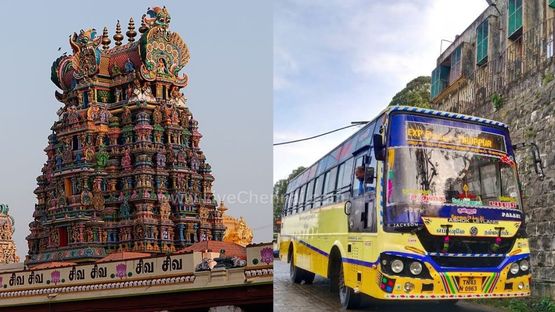 Madurai Meenakshi Amman Temple Kumbabhishekam: 285 Special Buses to Operate15/Sep/2026 10:33:09 AM
 -
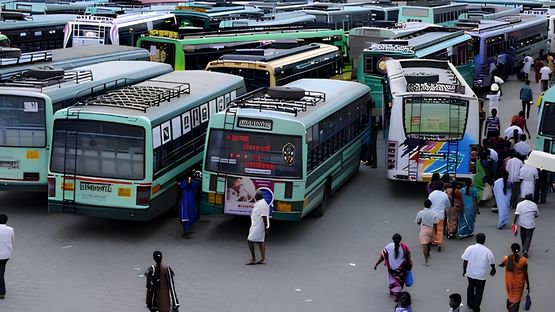 Chennai Traffic Jam: Heavy Congestion on GST Road After Vinayagar Chaturthi Holidays15/Sep/2026 10:03:37 AM
 -

-
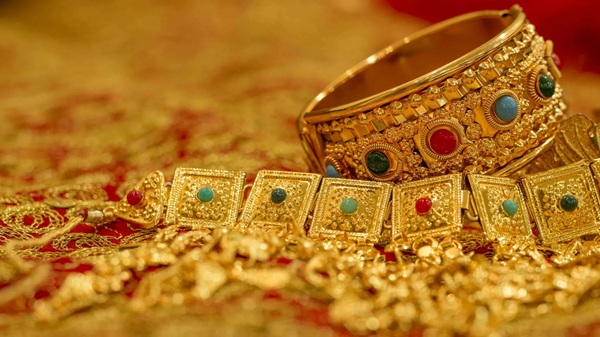 Gold Rate Today in Chennai: 22K Gold Falls ₹85, Silver Rate Unchanged15/Sep/2026 9:46:21 AM
 -
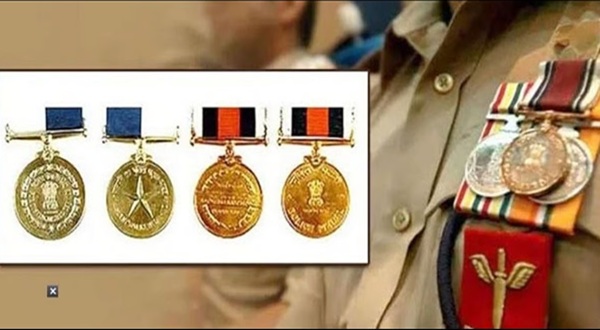 Tamil Nadu Announces Chief Minister’s Anna Medals for 180 Uniformed Service Personnel15/Sep/2026 9:36:05 AM
 -
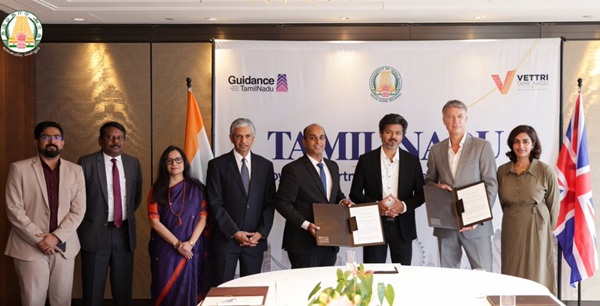 Tamil Nadu Secures Rs 12,300 Crore Investment Commitments in London During CM Vijay’s Visit15/Sep/2026 9:31:48 AM