
Rural Gold Jewellery Demand Falls 19% as High Prices Keep Buyers Away
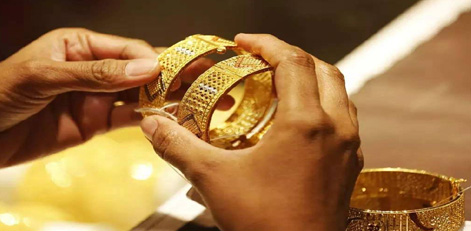
India`s rural gold jewellery market witnessed a sharp slowdown during the first quarter of 2026, with jewellery demand dropping 19% year-on-year, as soaring gold prices and higher import duties pushed ornaments beyond the reach of many rural households.
According to the World Gold Council (WGC), rural India, which contributes nearly 60% of the country`s total gold consumption, recorded jewellery demand of 50 tonnes in Q1 2026, down from 61.5 tonnes during the same period last year.
Higher Landed Costs Push Prices to Record Levels
The decline in rural demand has been driven primarily by a steep rise in the landed cost of imported gold.
The Central Government increased the Basic Customs Duty (BCD) from 5% to 10% and the Agriculture Infrastructure and Development Cess (AIDC) from 1% to 5%, taking the effective import duty to 15%. At the same time, the weakening Indian rupee against the US dollar further increased import costs.
As a result, domestic gold prices averaged around ₹1.51 lakh per 10 grams during Q1 2026, representing an 81% increase compared to the previous year.
Industry experts say the higher import cost has quickly translated into higher retail jewellery prices, forcing many households to postpone purchases.
Rural Buyers Most Affected
Rural consumers have been hit harder than urban buyers because household incomes are largely dependent on agriculture and monsoon conditions. Most families save for several years to purchase jewellery for weddings and other important occasions, making them highly sensitive to price increases.
The mandatory PAN card requirement for high-value gold purchases has also discouraged some rural buyers, particularly farmers who do not regularly use tax-related documentation.
Consumers Shift to Smaller Purchases
Instead of buying new ornaments, many consumers are changing their purchasing behaviour by:
- Postponing non-essential jewellery purchases
- Exchanging old jewellery for new ornaments
- Choosing lighter-weight jewellery
- Restricting purchases mainly to weddings and essential family functions
The World Gold Council noted that consumers generally prefer stable prices and that the recent sharp increase has significantly affected affordability.
Investment Demand Continues to Grow
While jewellery demand weakened, investment in gold continued to rise.
India`s total gold demand increased 10% during Q1 2026 to 151 tonnes, supported by strong investment demand.
- Jewellery demand: 69 tonnes (down 19%)
- Investment demand: 82 tonnes (up 54%)
For the first time since 2000, investment demand accounted for a larger share of India`s gold market than jewellery demand, indicating that many consumers are increasingly purchasing gold bars, coins and investment products instead of ornaments.
Export Data Reflects Weak Jewellery Market
The slowdown is also reflected in export performance.
India`s plain gold jewellery exports declined 40% year-on-year during April and May 2026, indicating weaker domestic production and reduced demand. Higher import duties and tighter gold availability have also affected manufacturing activity in major jewellery hubs such as Surat.
Impact on Tamil Nadu
The trend is particularly significant for Tamil Nadu, one of India`s largest gold-consuming states.
A large share of gold purchases in the state comes from rural and semi-urban regions, where jewellery is primarily bought for weddings and family functions. With prices remaining at record highs, jewellers are witnessing reduced demand for traditional ornaments while interest in gold bars, coins and other investment products continues to increase.
Outlook
The World Gold Council expects rural jewellery demand to remain under pressure through the rest of 2026 unless inflation eases, gold prices stabilize and the country experiences a favourable monsoon that improves rural incomes.
ICICI Bank estimates domestic gold prices could remain in the ₹1.50 lakh to ₹1.80 lakh per 10 grams range during 2026, with prices potentially touching ₹1.90 lakh by 2027 if global and domestic market conditions remain supportive.
Bottom Line
The sharp decline in rural jewellery demand highlights a significant shift in India`s gold market. Rising import duties, a weaker rupee and record-high gold prices have made jewellery less affordable for rural households. While traditional ornament purchases have slowed, investment demand for gold continues to strengthen, reshaping the country`s gold consumption pattern in 2026.
Top Stories
-
 Are You Using Your Credit Card Rewards the Right Way? Tips to Get More Value25/Jun/2026 3:52:09 PM
 -
-
 Start Your Own Matrimony Business with a Powerful Online Platform25/Jun/2026 3:17:59 PM
 -
 Tambaram - Velachery Road Renamed as Major Mukund Varadarajan Road25/Jun/2026 3:10:13 PM
 -
 Income Tax Return Deadline Extension Unlikely in 2026; Taxpayers Advised to File Early25/Jun/2026 3:02:01 PM
 -