
Special Voter List Revision Camps Held in Chennai Today and Tomorrow
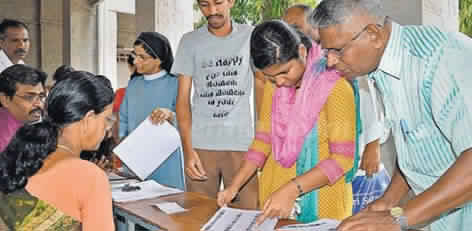
Special intensive voter list revision camps are being conducted today and tomorrow across Chennai. Eligible voters from all 16 Assembly constituencies in Chennai district can submit their applications during these camps.
According to election officials, voter list revision camps are being held at 4,079 polling booth centres across the city. Citizens who are not included in the draft electoral roll can apply for inclusion by submitting Form 6 along with a self-declaration affidavit.
Voters can also use this opportunity to verify their details, request corrections, and ensure their names are accurately reflected in the electoral roll. Authorities have urged eligible voters to make use of the special camps to complete the voter registration and correction process on time.
Top Stories
-
 Tamil Nadu Dengue Cases Rise: 71 New Cases Reported in a Single Day22/Sep/2026 11:19:53 AM
 -
 Rotary Club of Chennai Portcity Hosts Converge Educator Awards22/Sep/2026 10:55:46 AM
 -
 Thaimaman Gold Ring Scheme: CM Vijay Launch Event Shifted to Madurai22/Sep/2026 10:37:06 AM
 -
 Palani Murugan Temple Rope Car Service Resumes Today22/Sep/2026 10:18:01 AM
 -
 6 Health Benefits of Eating Pumpkin Seeds22/Sep/2026 10:14:58 AM
 -
 Kancheepuram Heavy Rain: Strong Winds and Rain Bring Relief from Heat22/Sep/2026 10:14:17 AM