
Latest shocking news regarding tomatoes in Chennai!!
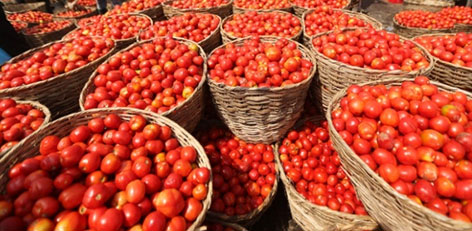
The heavy rains in the neighboring states have not only resulted in issues in those states but also in Chennai.
The prices of tomatoes in Chennai have gone up due to the heavy rains in the neighboring states as the rains have led to limited supply of tomatoes to Chennai. Tomatoes do not need much water and heavy rains have damaged the crop. This was revealed by some farmers. Bangalore tomatoes are being sold for Rs 100 per kilo and regular tomatoes are being sold for Rs 90 to Rs 95 per kilo in the Koyambedu wholesale market in Chennai now. Just 44 loads of tomatoes are received at this famous market with each truck carrying 10 tons of tomatoes.
President, Koyambedu Wholesale Traders Association, Mr. Thiagarajan expressed his thoughts and spoke about how the market is getting vegetables from states like AP, Karnataka and Maharashtra etc. He threw light regarding how places like Hosur and Krishnagiri Koyambedu market are getting fewer than 10 truckloads.
The shocking piece of news is that it would take more than a month of time for the prices and supply of tomatoes to become normal.
In the Western Ghats in Tamil Nadu, the tomato season begins in the month of October or November. At this time, the NE monsoon also begins. It must be noted that TN never faced shortage of tomatoes in the last 3 years.
It was later brought out by a farmer belonging to Tenkasi district that normally the onion season would be there for just 3 months but this time around it was extended to 4.5months and that was due to high rains. Truth is that with the lack of rains in the last 3 years there was a supply-demand gap for onions.
According to professor of agricultural economics belonging to TNAU, Dr. K.M. Shivakumar it was clear that the cost of tomatoes would increase twice per year in summer and in monsoon. He mentioned that tomatoes do not need much sunlight or rainfall. He concluded that the farmers were asked to grow tomatoes in places that were not affected much by the climatic changes.
Top Stories
-
 Tomorrow Panchangam September 18, 2026 | Auspicious Timings, Rahu Kalam, Gulikai17/Sep/2026 5:52:10 PM
 -
 Saveetha Engineering College Admission 2026: Courses, Fees and Dates17/Sep/2026 5:09:26 PM
 -
 Tamil Nadu Weather: Heavy Rain Likely in 6 Districts Today17/Sep/2026 4:54:58 PM
 -
 What Is Credit Card EMI and How Does It Work? A Complete Guide17/Sep/2026 4:39:59 PM
 -
 Friday Elite Tamil Night in Chennai: Party Till 2 AM at Willows17/Sep/2026 4:31:53 PM
 -
 Nissan Magnite Price Hike: Variant Wise Price Changes Explained17/Sep/2026 3:34:23 PM