
Happy Independence Day
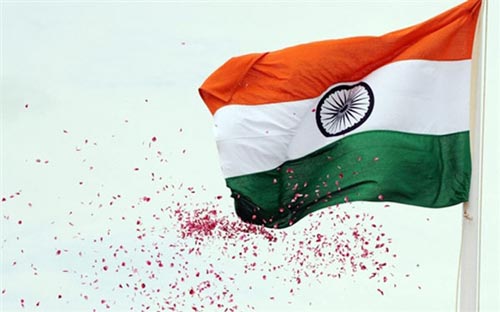
India`s Independence Day is observed on 15th August every year. India got freedom from the British on this day in 1947. It is a National and Gazetted Holiday all across the country.
Freedom fighters from all corners of the country fought long and hard against the British for autonomy. A great many sacrificed their lives, securing future generations` comfort, rest and freedom. Resistance was violent and non violent and many plans were hatched against the rulers. Unfortunately, when the country was being partitioned, there were violent riots that caused mass casualties and dislocations and more than 15 million people.
On Independence Day, national, state and local government offices, banks, post offices, markets, stores, businesses, organizations, etc. are closed. However, public transport is up and running. New Delhi, the country`s capital, celebrates this day with aplomb. Schools, colleges and other educational institutions also celebrate the day, as does the public community and society.
This year marks the 69th year of Independence. It falls on a Saturday.
Let us look back at India`s journey towards Independence. The Indian subcontinent served as an outpost for European trade during the 17th century. The British East India Company used raw military strength to enslave the country bit by bit. In 1857, a group of army personnel revolted against the British. This revolt is called the Great Indian Rebellion, Revolt of 1857, the Sepoy Mutiny, Uprising of 1857 and the First War of Independence. The revolt started in the Bengal Presidency and spread rapidly across the country. The revolution resulted in the Government of India Act 1858, which is considered the beginning of the Independence movement.
The Revolt resulted in many individual civic movements, the most successful of which was the Indian National Congress, which was formed in 1885. One of its most poignant meetings was one that was held at Lahore in 1929. This was when the term `Swaraj` or self governance was coined. Also, this was when the Father of India, M.K. Gandhi kicked off the civil disobedience movement. Indians were urged not to follow British rules but, at the same time, not resort to violence.
It was after World War II that the British government realised that it`s power on India had diminished considerably. The freedom movement was at its peak and Britain finally decided to grant Independence. Unfortunately, the gulf between Hindus and Muslims in the country was too broad to bridge. Muslims demanded an independent country, Pakistan.
Pakistan was granted Independence on August 14th, and India on August 15th. M.A. Jinnah became the first Governor General of Pakistan, and Jawaharlal Nehru took over as Prime Minister of India. Leaders and freedom fighters celebrated through both the countries even as the violence wrecked havoc in some of its parts. At 11 pm on 14th August, 1947, at Constitution Hall in New Delhi, the new President of Independent India Rajendra Prasad swore in Jawaharlal Nehru as Prime Minister. Here is when Nehru gave his famous speech `A Tryst With Destiny`. An excerpt from the speech: Long years ago we made a tryst with destiny, and now the time comes when we will redeem our pledge, not wholly or in full measure, but very sububstantially. At the stroke of the midnight hour, when the world sleeps, India will awake to life and freedom. A moment comes, which comes, but rarely in history, when we step out from the old to the new, when an age ends and when the soul of a nation, long suppressed, finds utterance. We end today a period of ill fortune, and India discovers herself again.
The members of the new Assembly took their pledges to the country. Gandhiji, however, was not part of this celebration. He decided to stay in Calcutta where rioting was at its peak and tried to encourage peace between Hindus and Muslims.
Independence Day today is a National holiday. States and Union Territories observe this day with great enthusiasm. The President of the country gives his `Address to the Nation`in the evening before. On the day, the Prime Minister hoists the Indian flag at Red Fort in New Delhi. Following this, the assembly sings the National Anthem and there is a 21 gun salute to honour this great nation.
The Prime Minister then gives his address. Typically, this address would highlight the achievements of the past year, and touch on important social issues and suggested solutions. He will also talk about further development plans. He will also pay tribute to freedom fighters and great leaders of the Independence movement. Following this, the Indian Armed Forces and the Paramilitary forces show their strength and might by parading their achievements. The Chief Ministers of the States have a similar celebration in the State capitals.
Government and non government organisations celebrate by hoisting the flag, singing the National Anthem and having cultural programmes. The same would, typically, take place in educational institutions. Buildings are colourfully decorated and people wear the National Flag pinned to their clothing to mark respect. People greet each other by saying `Jai Hind`, `Vande Mataram` and `Jai Jawan` or `Jai Kisan`. Independence Day is also a day when there are kite flying competitions. Countless kites dot the skies. Many are in the country�s tri colour.
Unfortunately, there is a big risk of terrorist attacks on this day. Major cities like New Delhi and Mumbai and high tension areas like Jammu and Kashmir are on high alert. The Red Fort is declared a no fly zone to prevent aerial attacks.
Top Stories
-
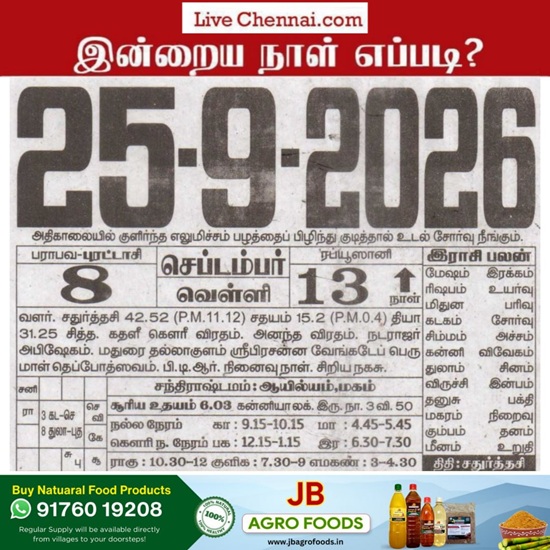 Tomorrow Panchangam September 25, 2026 | Auspicious Timings, Rahu Kalam, Gulikai24/Sep/2026 5:42:50 PM
 -
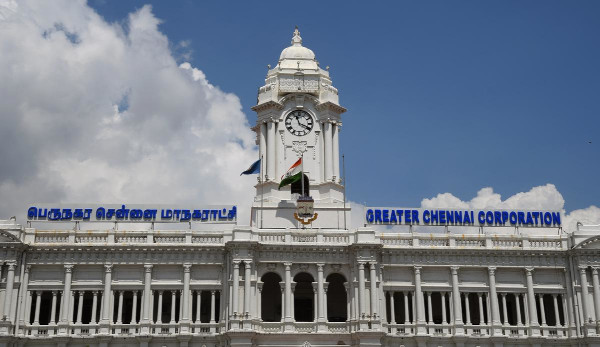 Chennai Infrastructure Boost: 780 Roads Covering 160 Km to Get Rs 150 Crore Upgrade24/Sep/2026 5:26:44 PM
 -
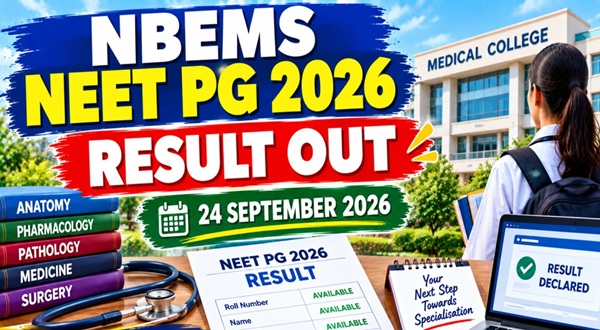 NEET PG 2026 Results Released: Check Result Online24/Sep/2026 5:24:08 PM
 -
 Smart Office Automation: How Chennai Businesses Are Building the Workplace of the Future24/Sep/2026 5:08:41 PM
 -
 Chennai AI Traffic Signals: ATCS & ITS Smart Traffic System | See This Full Video24/Sep/2026 4:57:52 PM
 -

 JB Soft System