
IIT Madras and Mehta Family Foundation Mark 20+ Years of Biosciences Leadership
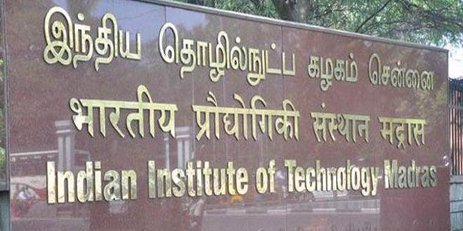
As India moves from building biomedical capacity to deploying large-scale genomics and health-tech solutions in public healthcare, the Bhupat & Jyoti Mehta School of Biosciences at IIT Madras marks 20 plus years of work that has helped underpin some of the country’s most consequential life sciences initiatives.
Founded at IIT Madras in partnership with the Mehta Family Foundation, the School was among the first academic institutions in India to integrate biology and engineering, an approach that has since become central to national missions in genomics, cancer research, and maternal health.
Through a visionary partnership between IIT Madras and the Mehta Family Foundation, the School pioneered an interdisciplinary approach to biosciences at a time when such integration was virtually non-existent in Indian academia. What was then a bold, ahead-of-its-time model has since become foundational to national missions in health tech. More than twenty years on, it stands as one of the most consequential examples of private philanthropy shaping India`s health education infrastructure.
Over the last two decades, the School has evolved from a pioneering academic experiment into a nationally significant engine for biomedical research, translational science, and talent creation:
- Trained over 1500+ students across undergraduate, postgraduate, and doctoral programmes between 2005 and 2025, many now leading research, startups, and public health initiatives in India and abroad.
- Secured competitive research funding from DBT, DST, ICMR, BIRAC, MoE, BMGF, Hyundai, and Karkinos, supporting advances in disease biology, cancer genomics, systems medicine, diagnostics, and healthcare innovation.
- Established national-scale research infrastructure, including the National Cancer Tissue Bank (NCTB), Centre for Integrative Biology and Systems Medicine (IBSE), Bio-SAIF, Bioincubator, BioFoundry, DST-FIST Facility, Low Dose Gamma Irradiation Facility, Animal House, with access to Cryo-EM and HPC facilities.
- Led key national missions and digital public goods, including GenomeIndia 10K, creating an Indian reference genome from 10,000 individuals across 83 populations, and the Bharat Cancer Genome Atlas, supported by 960 exomes from 480 breast cancer patients.
- Delivered high-impact maternal health innovations through Garbhini-GA1 and Garbhini-GA2, India-specific gestational age models, with Garbhini-GA2 currently deployed in Tamil Nadu and Army hospitals.
- Strengthened deep-tech entrepreneurship, enabling faculty- and student-incubated companies through structured industry–academia collaboration.
Commenting on the milestone, Rahul Mehta, Founder, Mehta Family Foundation, said: “When this partnership began, interdisciplinary biosciences were still the exception in India. The idea was to create an institution that could generate knowledge, talent, and solutions relevant to India’s realities. Over two decades later, seeing that work reflected in natitional programmes and deployed health solutions is deeply validating.”
Prof. Sanjib Senapati, Professor & Head, Bhupat & Jyoti Mehta School of Biosciences, Indian Institute of Technology Madras added, “The next frontier for biosciences lies in convergence where genomics, computation, systems biology, and engineering work seamlessly together. The foundation laid over the last two decades positions IIT Madras to lead this convergence at scale. Our ambition is not only to generate knowledge, but to translate it into platforms and technologies that strengthen India’s healthcare ecosystem.”
The Bhupat & Jyoti Mehta School of Biosciences was the Mehta Family Foundation’s first institutional partnership in India. Since then, the Foundation has established seven additional schools and centres across IITs, spanning Artificial Intelligence, Data Science, Sustainability, and Health Sciences reinforcing a long-term approach to institution-building rather than short-cycle philanthropy.
As India increasingly looks to its universities to deliver deployable science, the School’s20-year trajectory highlights the role of sustained academic investment in building nationally relevant biomedical capability.
Top Stories
-

-
 Special Trains to Operate Between Chennai, Mumbai and Thiruvananthapuram for Festive Season27/Sep/2026 11:23:30 AM
 -
 Mahalaya Paksha 2026: Importance of Ancestor Worship and Tharpanam26/Sep/2026 5:47:41 PM
 -
 Bigg Boss Tamil 10: Shathiga and Muthazhagi Question Avinash’s Leadership26/Sep/2026 5:30:08 PM
 -
 Online permission for film shoots from now on26/Sep/2026 5:00:38 PM
 -
 September 28, 2026 Panchangam: Auspicious Time, Rahu Kalam, Yamagandam & Timings26/Sep/2026 4:32:32 PM

 JB Soft System