
Online Scams: How to Identify Fraudulent SMS, Calls and Links
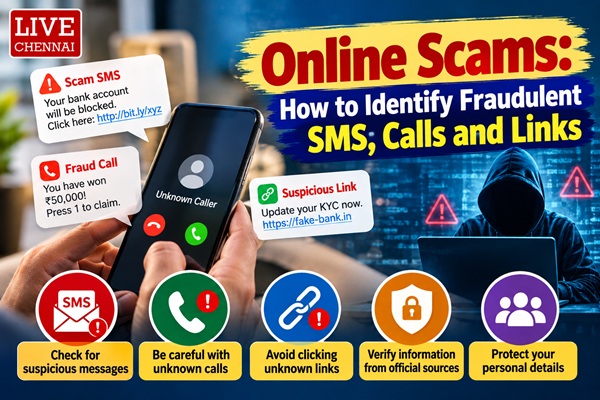
Cybercriminals are increasingly using fake SMS messages, phone calls, emails and messaging apps to trick people into sharing sensitive information or clicking malicious links. Fraudsters often impersonate banks, financial institutions, government departments and popular companies to make their messages appear genuine.
How to Identify a Fraudulent Message
Sent from unknown numbers: Be cautious of messages received from random mobile numbers claiming to represent a bank or company.
Suspicious links: Avoid clicking links that appear shortened, misspelled or unrelated to the organisation`s official website.
Creates urgency: Scammers may claim that your account will be blocked, your KYC will expire, your credit card limit will change or your rewards will be lost unless you act immediately.
Requests sensitive information: Legitimate organisations generally do not ask you to share OTPs, PINs, CVVs, passwords or other confidential banking credentials through SMS, calls or email.
Fake customer-care numbers: Fraudsters may provide fake helpline numbers and ask victims to contact them.
Safety Tips to Avoid Online Fraud
- Do not click on suspicious links received through SMS, email or messaging apps.
- Never share your OTP, PIN, CVV, passwords or banking credentials with anyone.
- Do not install apps or open attachments sent by unknown people.
- Verify offers, account alerts and payment requests directly through the organisation`s official website or mobile application.
- Do not trust messages simply because they contain a bank or company logo.
- Avoid responding to messages that create unnecessary urgency or pressure.
- Check the sender carefully before taking any action.
- If you suspect fraud, immediately contact your bank or the relevant organisation through its official customer-care channels.
- Report suspected cybercrime through the appropriate official cybercrime reporting channels.
Stay Alert
Scammers constantly change their methods, using fake KYC updates, reward-point alerts, loan offers, investment opportunities, delivery notifications and account-blocking messages to target users. Stop, verify and then act whenever a message asks you to click a link, share information or make a payment
Top Stories
-
 Bigg Boss Tamil 10: Lakshmi Priya Evicted as She Criticises Avinash’s Gameplay25/Sep/2026 5:10:05 PM
 -
 Chennai Rain Forecast: Rain Likely in Chennai and 15 Districts for Two Days25/Sep/2026 4:54:12 PM
 -
 Gold Investment Gains Momentum: Why More Investors Are Turning to Gold ETFs25/Sep/2026 4:51:26 PM
 -
 Keep a Consolidated Record of Your Investments to Help Your Family25/Sep/2026 4:38:35 PM
 -
 10 Tips to Get Better Results from ChatGPT25/Sep/2026 4:34:25 PM
 -
 Top Non-Veg Restaurants in Tambaram, Chennai: Best Places for Biryani, Chettinad Food & More25/Sep/2026 4:13:58 PM

 JB Soft System