
Aerosols Could Improve Chennai Flood Forecasts, IIT Madras Study Finds
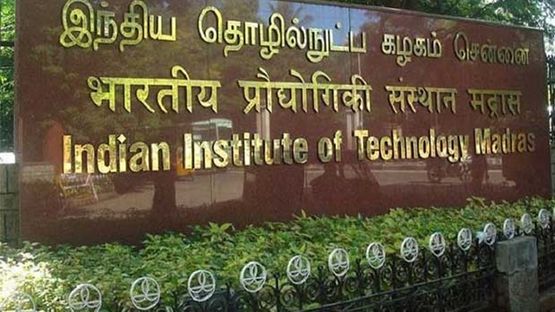
Atmospheric aerosols could help improve extreme rainfall and urban flood forecasts, according to an international study led by IIT Madras. The study found that explicitly accounting for these tiny airborne particles improved simulated rainfall over the Adyar basin by about 22% and flood inundation accuracy by up to 51%.
Published in Natural Hazards and Earth System Sciences, the study examined the extreme rainfall and flooding event in Chennai on December 1, 2015. The researchers assessed how interactions between aerosols and clouds influence rainfall and how these changes affect runoff, reservoir inflows and flood inundation.
The research brought together scientists from IIT Madras, the GFZ Helmholtz Centre for Geosciences in Germany, the Japan Aerospace Exploration Agency (JAXA), and Kathmandu University in Nepal. The research team included Oscar Paul, N Nithila Devi, Rakesh Teja Konduru, Soumendra Nath Kuiry, Kundan Lal Shrestha and Chandan Sarangi.
The researchers used the high-resolution Weather Research and Forecasting (WRF) model, configured in large-eddy simulation mode, to reproduce atmospheric processes during the 2015 event under different aerosol conditions. The simulated rainfall was then coupled with hydrological and hydraulic models to assess runoff, reservoir inflows and inundation across the Adyar basin.
The 2015 event, considered a 1-in-100-year flood, produced nearly 500 mm of maximum daily rainfall over the basin and was among Chennai`s most severe urban flooding events. The estimates put the death toll at around 500, while economic losses were estimated at USD 3 billion.
Chandan Sarangi, corresponding author and faculty member in the Department of Civil Engineering at IIT Madras, said urban flood forecasting is often treated mainly as a rainfall-to-runoff problem. He noted that weather models do not always accurately capture the spatial and temporal distribution of rainfall in urban areas.
He said that atmospheric conditions before and during rainfall can significantly influence its spatial pattern. By explicitly representing aerosol-cloud interactions, researchers can better capture the spatial and temporal characteristics of extreme rainfall in urban regions and consequently improve flood inundation simulations.
Soumendra Nath Kuiry said rainfall forecasting in a megacity such as Chennai should be considered alongside water resources management. He noted that the timing and spatial distribution of extreme rainfall directly influence runoff, reservoir inflows and flood forecasting.
The study found that realistic, lower concentrations of cloud condensation nuclei (CCN) during the event favoured warm-rain processes and helped reproduce the observed rainfall pattern more accurately. These improvements also reduced errors in simulated reservoir inflows and improved the estimated extent of flooding.
The findings also have implications for water management. The study noted that about one-third of the peaeak inflow during the 2015 event resulted from releases from the Chembarambakkam reservoir. It also cited earlier research indicating that timely regulation of initial reservoir storage could have reduced reservoir outflows by 30% while delaying the flood peak.
However, the researchers cautioned against treating the findings as an operational breakthrough in flood forecasting. The study covers a single extreme event, while the high-resolution modelling is computationally demanding. Further testing across different extreme rainfall events and cities is needed to determine whether the approach can be applied reliably in operational flood forecasting.
Top Stories
-
 IndiGo Raises Air Ticket Prices From Today as Fuel Costs Increase06/Oct/2026 10:26:19 AM
 -
 Chennai Gold Rate Today, October 6, 2026: Gold Prices Decline06/Oct/2026 10:19:23 AM
 -
 TNPSC Group 4 Notification Expected to Be Released Today06/Oct/2026 9:54:39 AM
 -
 Annan Seer Scheme Application Website to Be Launched Soon06/Oct/2026 9:48:44 AM
 -
Aerosols Could Improve Chennai Flood Forecasts, IIT Madras Study Finds06/Oct/2026 9:40:55 AM
-
 JB Soft System Managing Director J Sampath Celebrates 50th Birthday06/Oct/2026 9:23:44 AM

 JB Soft System