
Mahalaya Paksha 2026: Importance of Ancestor Worship and Tharpanam
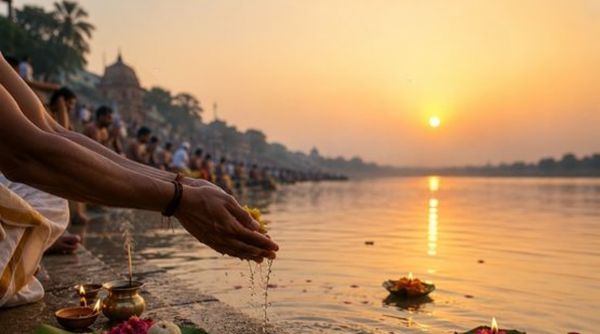
Mahalaya Paksha begins on Sunday, September 27, 2026, and continues until Mahalaya Amavasya on October 10, 2026. It is a 15-day period traditionally dedicated to remembering and worshipping ancestors.
The term Mahalaya is said to mean a “great gathering.” According to traditional belief, departed ancestors, known as Pitrs, visit their families during these 15 days. Offering sesame seeds and water through Tharpanam during this period is traditionally considered an important form of ancestor worship.
On Mahalaya Amavasya, offering food to the needy according to one`s ability is also traditionally believed to help receive the blessings of ancestors. Performing ancestor-related rituals and offerings during this period is considered significant.
What Makes Mahalaya Special?
According to traditional belief, ancestors who have departed to the ancestral realm visit their families on Amavasya and accept their offerings. During the 15 days of Mahalaya Paksha, ancestors are believed to gather together, making Mahalaya Amavasya particularly significant.
Since it is believed to be the Amavasya on which ancestors gather together, the day is known as Mahalaya Amavasya. It is also associated with the beginning of Navaratri.
Mahalaya Paksha is traditionally observed as a special period to express gratitude to generations of ancestors who came before us.
Three Important Amavasya Days
Although every Amavasya is traditionally associated with ancestor worship, Thai Amavasya, Aadi Amavasya and Mahalaya Amavasya are considered particularly important.
Thai Amavasya marks the beginning of the Uttarayana period, while Aadi Amavasya is associated with the beginning of the Dakshinayana period. Mahalaya Paksha is traditionally observed as an opportunity for those who were unable to perform Tharpanam on these Amavasya days, as well as for those who wish to continue ancestor worship for a longer period.
There is also a traditional saying that Mahalaya is meant for those who may have forgotten to perform ancestor worship. Those who could not perform the rituals for various reasons are traditionally encouraged to offer water and food to their ancestors during Mahalaya Paksha.
From Aadi Amavasya to Thai Amavasya
According to traditional belief, ancestors arrive during Aadi Amavasya, remain during the Mahalaya period and return to the ancestral realm after Thai Amavasya.
It is believed that ancestors visit their families to observe their lives, remove difficulties associated with the family and offer their blessings.
The days before Mahalaya Paksha are traditionally considered the period of their arrival, while the days following Mahalaya are regarded as the period when they return. There is also a traditional belief that lamps are lit during festivals such as Diwali and Karthigai to ililluminate their path.
Importance of Ancestor Worship
Four important forms of debt are traditionally mentioned for householders: Deva Runa, Rishi Runa, Bhuta Runa and Pitru Runa. Among the duties of a householder is the responsibility of honouring and remembering one`s ancestors.
The teachings associated with Thiruvalluvar also emphasise the importance of caring for ancestors, along with one`s responsibilities towards God, guests, relatives and family.
Ancestor worship is traditionally expected to be performed with sincerity and care. The term Shraddha is associated with performing these rituals with faith and devotion.
Do Ancestors Curse Their Descendants?
Traditional beliefs emphasise that ancestral duties should not be neglected.
There is a belief that fulfilling one`s ancestral obligations is connected with the successful completion of prayers made to a family deity or personal deity. Mahalaya worship is regarded as an expression of gratitude towards the generations of ancestors who lived before us and continued the family lineage.
The traditional view is that ancestor worship should not be forgotten. Some traditions also state that neglecting these duties can result in difficulties within a family. However, this is explained in terms of the consequences of forgetting one`s ancestral responsibilities rather than as a curse from the ancestors.
Pitru Puja Is Not Considered Futile
Some ancestors may have taken another birth or may have attained liberation. According to traditional belief, whether they have taken another birth, attained liberation or remain in the ancestral realm, offerings made through Pitru worship reach them in some form through the Pitru deities.
It is also traditionally believed that such worship can benefit ancestors even after rebirth. At the same time, remembering ancestors with gratitude is believed to bring spiritual and other benefits to the family.
Since people cannot know the spiritual state of every ancestor, traditional teachings emphasise the continued performance of Pitru worship. Therefore, Pitru Puja is traditionally believed not to be performed in vain.
Who Should Perform Ancestor Rituals?
According to the traditions mentioned in the source:
- Men who have lost their mother or father are traditionally expected to perform the rituals.
- Women who have no children and have lost their husbands are traditionally mentioned as observing the associated practices.
- Married women who have lost their parents may worship and remember them. However, the source states that specific rules regarding Amavasya fasting and Tharpanam do not apply to them.
- Women may visit temples, make charitable offerings and invite elders for a meal and honour them without obsererving a formal fast or performing Tharpanam.
- Traditionally, Til Tharpanam and Shraddha are generally performed by male descendants according to the practices described in the source.
Mahalaya Amavasya and the Mahabharata
Mahalaya Amavasya is traditionally associated with a story from the Mahabharata involving Karna. Although various explanations are given in scriptures for the significance of this period, the connection with Karna is commonly passed down as an oral tradition.
According to the story, Karna died during the Kurukshetra war. Known for his generosity during his lifetime, Karna reached the realm of Yama after his death.
When he sat down to eat there, he found gold and silver coins on his plate instead of food. When Karna asked why he had not been given food, Yama explained that he had not performed worship and offerings for his ancestors.
Karna then returned to Earth with the permission of the divine forces and performed ancestor worship during Mahalaya Paksha, thereby completing his ancestral obligations. After returning, he was said to have been offered a royal feast.
How Does Ancestor Worship Begin?
When a person from the father`s or mother`s lineage passes away, they are traditionally referred to as a departed ancestor or Pitru. Worship performed for them is known as Pitru Puja.
The Tithi on which an ancestor passed away is considered particularly important. According to the traditional practices described in the source, ancestral duties begin from that time.
It is traditionally stated that 96 Shraddha observances, performed in the form of Hiranya and accompanied by Tharpanam, should be performed during a year. These are known as Shannavathi Shraddhas.
The observances mentioned include those connected with monthly beginnings, Amavasya, Ashtaka, Vyatipata, Vaidhruti, Manvadi, Yugadi and Mahalaya.
What If All These Rituals Cannot Be Performed?
For those who cannot perform all these observances according to the traditional schedule, the source states that Tharpanam should be performed on the 12 Amavasya days of the year.
Once a year, Shraddha should also traditionally be performed during the month and on the Tithi on which the ancestor passed away.
In addition, the period beginning with the waxing-fortnight Pratama of Purattasi and continuing until Amavasya is traditionally observed as a time for remembering ancestors, performing worship and offering water.
Observing ancestor worship throughout all 15 days of Mahalaya Paksha is traditionally considered special. Those who cannot do so may observe it from Panchami, or from Ashtami or Dasami, until Amavasya.
Those who cannot observe the rituals for a longer period may perform ancestor worship on one suitable day during the 15-day period.
p>Tharpanam
According to traditional practice, ancestors can generally be honoured in three ways.
The first is Tharpanam, in which sesame seeds and water are offered. The second is Hiranya Shraddha, which involves performing Pada Puja for a person representing the ancestor and offering Dakshina.
The third is Anna Shraddha, which is performed along with Homas. Although all three forms are traditionally considered important, the source emphasises that at the very least, Tharpanam can be performed simply by remembering and mentioning the names of one`s ancestors.
Traditional Beliefs About the Benefits of Each Day
According to traditional beliefs associated with Mahalaya Shraddha, each day of the 15-day period is associated with a particular benefit:
Day 1 Pratama: Associated with financial prosperity.
Day 2 Dwitiya: Associated with being blessed with good children.
Day 3 Tritiya: Associated with the fulfilment of wishes.
Day 4 Chaturthi: Associated with relief from fear of enemies.
Day 5 Panchami: Associated with wealth and prosperity.
Day 6 Shashti: Associated with fame and recognition.
Day 7 Saptami: Associated with the removal of obstacles to career advancement.
Day 8 Ashtami: Associated with gaining knowledge and intelligence.
Day 9 Navami: Associated with the removal of marriage-related obstacles and improved family unity.
Day 10 Dasami: Associated with the fulfilment of long-held wishes.
Day 11 Ekadashi: Associated with growth and progress in the arts.
Day 12 Dwadashi: Associated with acquiring clothes and jewellery.
Day 13 Trayodashi: Associated with longevity, good health and favourable employment or business opportunities.
Day 14 Chaturdashi: Associated with longevity and benefits for future generations.
Day 15 Mahalaya Amavasya: Traditionally believed to provide all the benefits mentioned above.
Karuneya Pitrs
Mahalaya Tharpanam is traditionally said to have a special feature that is not present in ordinary Amavasya Tharpanam. Offerings are made to three groups of ancestors: Pitru Varga, Matru Varga and Pitru Karuneya Varga.
Ancestors from the father`s side are referred to as Pitru Varga, w while those from the mother`s side are referred to as Matru Varga. Uncles, teachers, gurus and friends, among others, are included under Karuneya Pitrs.
According to the traditional practice described in the source, Tharpanam may also be offered by remembering relatives and others such as paternal uncles, brothers, children, sisters, wife, father-in-law, brothers-in-law, teachers, spiritual guides, protectors and friends, along with their Gotra and names.
Ancestors at the Entrance of the Home
According to traditional belief, during Mahalaya and Amavasya, the ancestors of each family come to the entrance of their respective homes. They are believed to receive the Tharpanam, particularly water mixed with sesame seeds, and offer their blessings.
It is traditionally believed that ancestors may feel disappointed if no Tharpanam or worship is performed for them at home on these days.
The source also states that each day`s Pitru Shraddha during Mahalaya Paksha is traditionally considered to provide benefits comparable to Gaya Shraddha, while certain specific days are believed to carry greater spiritual significance.
If Mahalaya Shraddha cannot be performed during Mahalaya Paksha for any reason, the source states that certain days, including Pratama, Shashti, Ekadashi, Chaturdashi and Friday, should be avoided when performing it before the following Panchami.
Importance of Offering Water to Ancestors
Ancestor worship is traditionally considered an important part of family customs. The practice of fulfilling one`s ancestral obligations has been followed in various forms across generations.
In many Tamil Nadu villages, people traditionally observe a fast in the morning on Amavasya, prepare an offering known as Amavasya Padayal and have their meal afterwards. Many families continue to follow such customs as part of their ancestral traditions.
Mahalaya Paksha is therefore traditionally observed as an important period for remembering ancestors and fulfilling ancestral obligations through worship and water offerings according to one`s family customs.
Disclaimer: The information provided above is based on traditional beliefs, scriptures and customary practices associated with ancestor worship and Mahalaya Paksha.
Top Stories
-
Mahalaya Paksha 2026: Importance of Ancestor Worship and Tharpanam26/Sep/2026 5:47:41 PM
-
 Bigg Boss Tamil 10: Shathiga and Muthazhagi Question Avinash’s Leadership26/Sep/2026 5:30:08 PM
 -
 Online permission for film shoots from now on26/Sep/2026 5:00:38 PM
 -
 September 28, 2026 Panchangam: Auspicious Time, Rahu Kalam, Yamagandam & Timings26/Sep/2026 4:32:32 PM
 -
 Tomorrow Panchangam September 27, 2026 | Auspicious Timings, Rahu Kalam, Gulikai26/Sep/2026 4:31:11 PM
 -
 Tamil Nadu Rain Forecast: Heavy Rain Likely in 4 Districts on September 3026/Sep/2026 4:25:44 PM

 JB Soft System