
Chennai Monsoon 2026: 5 Essential Health Checks and Insurance Tips to Protect Your Family from Dengue
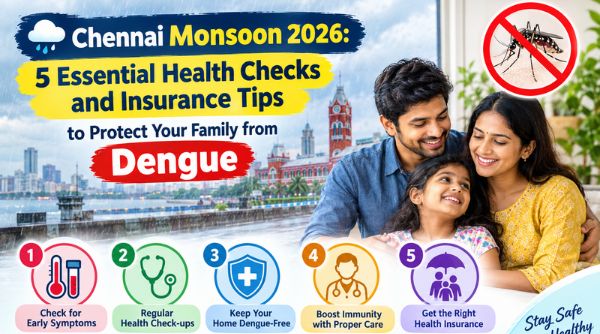
Chennai’s northeast monsoon brings the risk of mosquito-borne diseases and other seasonal infections. With 4,592 dengue cases and 16,254 tests reported in the city this year, early medical assessment, appropriate testing and adequate health insurance are important precautions for families during the rainy season.
As rainfall increases the risk of stagnant water around homes and neighbourhoods, residents should pay attention to fever symptoms, maintain mosquito-control measures and review their health insurance coverage before medical emergencies arise.
1. Seek Medical Attention for Persistent Fever
High fever accompanied by body pain, headache, vomiting, rash or unusual fatigue should not be ignored. Medical assessment within 24–48 hours is particularly important when symptoms are severe or persistent.
Dengue can sometimes worsen even after the fever subsides. Warning signs require immediate hospital evaluation rather than waiting for symptoms to improve.
2. Get Dengue Testing at the Right Time
Doctors may recommend dengue NS1 antigen testing during the early stage of illness, while IgM and IgG antibody tests may be more useful later, depending on the timing and clinical circumstances.
Not every monsoon fever is dengue. Depending on symptoms and medical assessment, testing for malaria, typhoid and other infections may also be necessary.
Residents should follow a clinician’s advice rather than ordering repeated tests without guidance.
3. Monitor Platelets and Other Blood Parameters
A complete blood count (CBC), including platelet count and haematocrit, may be recommended during dengue assessment. Repeat testing depends on the patient`s condition and the doctor`s advice.
Falling platelet counts and changes suggesting plasma leakage can indicate complications. Patients should seek urgent care if they develop severe abdominal pain, repeated vomiting, bleeding, black stools, extreme weakness, confusion, reduced urination, dehydration or breathing difficulties.
People with suspected dengue should avoid aspirin and ibuprofen unless specifically advised by a clinician, because these medicines can increase bleeding risk. Paracetamol should be taken only as directed by a healthcare professional.
4. Remove Mosquito Breeding Sites at Home
A weekly household inspection can help reduce mosquito breeding. Empty or cover buckets, flowerpots, discarded tyres, coolers and rooftop containers where water collects.
Window screens, mosquito nets and suitable repellents provide additional protection. Chennai residents can report mosquito-breeding concerns through the Greater Chennai Corporation’s 1913 helpline.
5. Review Health Insurance Before Hospitalisation
Families should examine whether their health insurance covers dengue, malaria, typhoid and other relevant illnesses.
A hospitalisation cover of ₹5–10 lakh for an individual or ₹10–25 lakh for a family may be worth considering for treatment in metropolitan private hospitals, depending on affordability and medical needs.
Check these policy features:
Cashless hospital network: Confirm that nearby emergency hospitals are included.
Day-care and disease covererage: Review applicable exclusions and treatment limits.
Pre- and post-hospitalisation expenses: Consider coverage for consultations, tests and follow-up care.
Room-rent and ICU limits: Understand restrictions that could increase out-of-pocket expenses.
Co-payment clauses: Check whether you must pay a percentage of eligible treatment costs.
A Practical Chennai Monsoon Health Plan
Keep a thermometer, oral rehydration solution (ORS), suitable mosquito repellent and nearby hospital contact details ready. Seek medical advice promptly when concerning symptoms appear, and follow the recommended testing and monitoring schedule.
The key to monsoon preparedness is early diagnosis, appropriate medical monitoring, mosquito-source control and health insurance that meets your family’s needs. Taking these precautions can help Chennai residents respond more effectively to seasonal health risks during the 2026 northeast monsoon.
Top Stories
-
 Kamaraj IAS Academy Chennai: Courses, Facilities and Contact Details15/Oct/2026 2:55:50 PM
 -
 OnePlus 16 Launched with 9,000mAh Battery and 200MP Camera: Price and Specifications15/Oct/2026 2:32:21 PM
 -
-
 Average Car Loan Amount in India Rises 49% to ₹8.2 Lakh; Loan Tenures Get Longer15/Oct/2026 1:11:33 PM
 -
 What Should Gold Investors Do Now? Gold Falls to ₹1,08,120 per Sovereign in Chennai15/Oct/2026 1:02:39 PM
 -
 Tamil Nadu Ministers’ Contact Numbers and Email IDs Released for Public Complaints15/Oct/2026 12:10:24 PM

 JB Soft System