
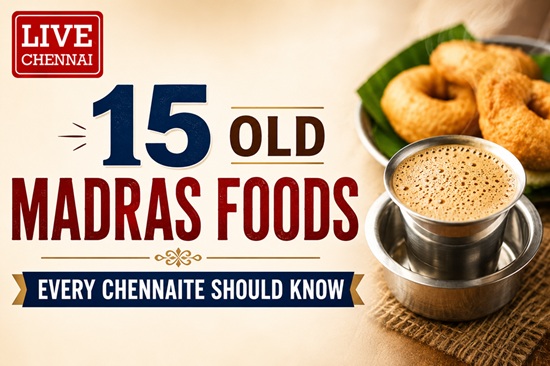
15 Old Madras Foods Every Chennaiite Should Know
Long before cafés, food courts and online delivery became part of everyday life, Madras had a food culture of its own. The city’s kitchens were shaped by traditional Tamil cooking, Muslim culinary traditions, Anglo-Indian influences, old clubs, neighbourhood bakeries and countless small eateries.
From a steaming plate of idli in the morning to parotta and salna late at night, the flavours of Old Madras tell the story of a city where food has always brought together people, communities and traditions.
Here are 15 classic dishes, snacks and flavours that continue to define the culinary memory of Old Madras.
1. Idli, Sambar and Vada
For generations, the classic combination of soft idlis, crisp medu vadas, sambar and coconut chutney has been at the heart of Chennai`s breakfast culture.
Whether served at a small tiffin shop, a traditional mess or at home, this simple meal remains one of the city`s most enduring food traditions. For many Chennaiites, the day still begins with the familiar aroma of freshly steamed idlis and hot filter coffee.
2. Dosa and Its Many Variations
The dosa is another dish deeply woven into Chennai`s food identity.
From the classic plain dosa to paper roast, ghee dosa and set dosa, every version has its own loyal following. Yet, the appeal remains the same a hot dosa fresh from the tawa, served with chutney and sambar.
It is simple, versatile and timeless, which perhaps explains why dosa continues to be a favourite across generations.
3. Vadacurry: A Madras Classic
Few dishes are as closely associated with Chennai as vadacurry.
Prepared with crumbled lentil vadas cooked in a rich and spicy gravy, vadacurry is commonly enjoyed with idli, dosa, chapati or parotta.
Its bold flavour and comforting texture have made it a staple of Chennai`s tiffin culture and one of the city`s most distinctive local dishes.
4. Milagu Rasam and Mulligatawny
The humble milagu rasam, or pepper rasam, has long been a familiar part of Tamil home cooking.
During the colonial period, this traditional preparation inspired the Anglo-Indian dish known as mulligatawny soup, a name believed to have evolved from the Tamil expression milagu thanni, meaning pepper water.
Over time, the simple rasam was adapted into a richer soup, eventually becoming part of colonial-era dining in Madras.
5. Chicken 65
Chicken 65 is one of Chennai`s most famous culinary exports.
While the exact origin of its name continues to be debated, the dish became widely popular through Chennai`s historic restaururant culture, particularly the famous Buhari chain.
Spicy, crispy and packed with flavour, Chicken 65 eventually travelled far beyond Chennai and found a place on restaurant menus across India and around the world.
6. Mutton Chukka and Pepper Chicken
Chennai`s food culture has always had a strong love for richly spiced non-vegetarian dishes.
Mutton chukka, slow-cooked until dry and coated with aromatic spices, and pepper-based chicken dishes remain favourites in traditional Tamil and Muslim eateries.
These preparations reflect the city`s long-standing preference for bold flavours, freshly ground spices and hearty meals.
7. Bun Parotta and Veechu Parotta
Few foods capture Chennai`s late-evening food culture quite like parotta.
The soft, fluffy bun parotta and the thin, hand-stretched veechu parotta are usually served with salna, kurma or spicy meat gravies.
From roadside stalls to old neighbourhood restaurants, parotta remains one of Chennai`s favourite comfort foods.
8. Madras-Style Biryani
Chennai`s biryani culture has been shaped by generations of Muslim communities, traditional cooks and historic restaurants.
Madras-style biryani is known for its aromatic spices and distinctive local character. Unlike a single standard recipe, its preparation varies from one restaurant and community to another, giving the city a wide range of flavours and styles.
For many Chennaiites, biryani is more than a special meal it is an essential part of the city`s food culture.
9. Kollu Rasam and Traditional Tamil Curries
Long before modern restaurant menus and fusion cuisine, Tamil cooking relied heavily on local ingredients, seasonal produce and traditional spices.
Dishes such as kollu rasam, made using horse gram, reflect this older culinary tradition. Ingredients such as pepper, dry ginger, tamarind and native grains played an important role in everyday cooking.
Traditional seafood and meat curries also formed an important part of the food culture of communities living along Chennai`s coast and surrounding waterways.
10. Sundal: A Chennai Favourite
Sundal holds a special place in Chennai`s food culture.
Made using chickpeas, peas or other legumes and tempered with mustard, curry leaves and coconut, sundal is closely associated with temples, festivals and Chennai`s beaches.
For generations, an evening visit to the beach has often included a cup of freshly prepared sundal from a street vendor.
11. Boondi, Laddus and Old-Style Sweets
Traditional sweet shops have always been an important part of Chennai`s neighbourhood life.
Boondi, laddus, mysore pak and other traditional sweets were closely associated with festivals, weddings and family celebrations.
Small bakeries and street vendors also sold familiar treats such as butter biscuits, coconut biscuits and colourful coconut candies simple snacks that continue to bring back memories of an earlier Madras.
12. Filter Coffee: The Taste of Madras
If there is one drink that truly represents Madras, it is South Indian filter coffee.
Made with freshly brewed decoction and hot milk, and traditionally served in a davara and tumbler, filter coffee is more than just a beverage. It is part of the city`s daily rhythm.
From traditional homes to busy tiffin centres, a strong tumbler of filter coffee remains one of Chennai`s most enduring traditions.
13. Anglo-Indian and Club Specialities
Madras also developed a distinctive Anglo-Indian food culture during the colonial era.
Heritage clubs and old institutions introduced and preserved dishes such as roast chicken, bread and butter pudding, Yorkshire pudding and Chicken Country Captain.
These recipes brought together European cooking traditions and Indian ingredients, creating flavours that became an important part of the city`s culinary history.
14. Street Treats: Gola, Kulfi and Ice Pops
For many people who grew up in Madras during the 1970s and 1980s, street-side frozen treats are filled with nostalgia.
Ice gola, kulfi and colourful ice pops were commonly sold near beaches, temples, cinema halls and busy streets.
Simple, affordable and refreshing, these treats became an unforgettable part of childhood during Chennai`s long, hot summers.
15. Tea, Biscuits and Old Café Culture
Before modern coffee shops became popular, Chennai had its own culture of neighbourhood tea stalls, bakeries and old cafés.
A hot cup of tea served with biscuits, sweet buns or freshly baked snacks was a familiar part of everyday life. These small establishments were more than just places to eat they were gathering spots where people discussed politics, cinema, cricket and local news.
Even today, this simple tea-and-snack culture continues to thrive across Chennai.
A City Remembered Through Its Food
The food of Old Madras reflects the many communities and cultures that helped shape the city.
Traditional Tamil kitchens gave Chennai its idlis, dosas, rasam and sundal. Muslim communities and historic restaurants enriched its non-vegetarian n cuisine, while Anglo-Indian kitchens introduced a unique blend of European and Indian flavours. Street vendors, bakeries and small neighbourhood eateries added their own unforgettable chapters to the story.
Today, Chennai`s food scene is more diverse than ever. Yet, the familiar taste of hot idlis, spicy vadacurry, flaky parotta, beach sundal or a strong tumbler of filter coffee continues to connect the modern city with its past.
Because in Chennai, history is not just found in its streets and buildings sometimes, it is served on a plate.
Top Stories
-
 Power Shutdown Areas in Chennai - Tuesday (06-10-2026)04/Oct/2026 9:40:38 PM
 -
 Power Shutdown Areas in Chennai - Monday (05-10-2026)04/Oct/2026 9:39:28 PM
 -
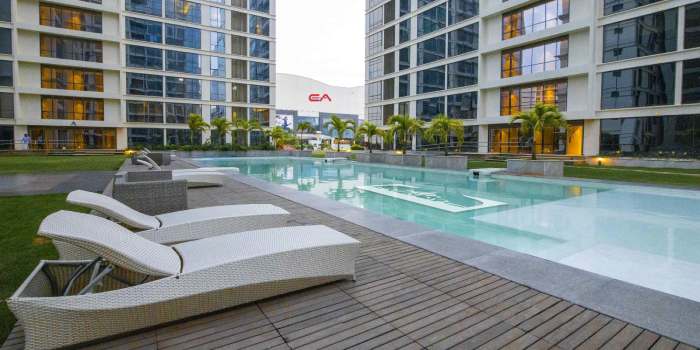 ₹19.8 Crore for an Apartment! A Look at Chennai’s Luxury Address Beside Express Avenue04/Oct/2026 10:42:50 AM
 -
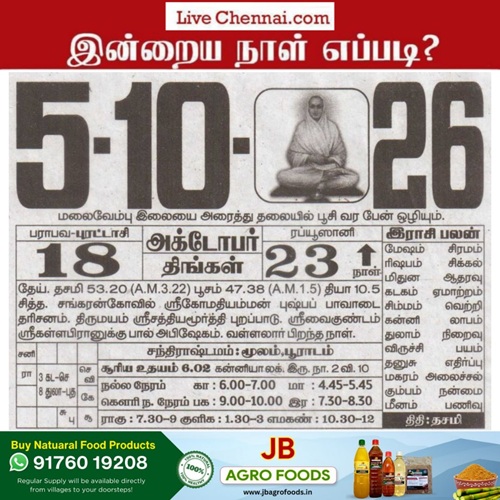 Today Nalla Neram October 5, 2026 – Rahu Kalam, Yamagandam & Tamil Panchangam03/Oct/2026 6:22:39 PM
 -
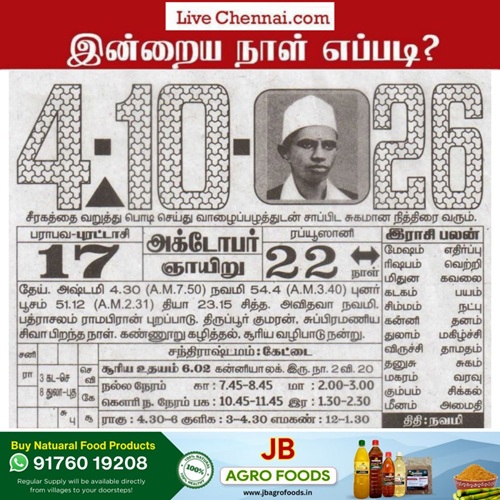 Tomorrow Panchangam October 04, 2026 | Auspicious Timings, Rahu Kalam, Gulikai03/Oct/2026 6:21:18 PM
 -
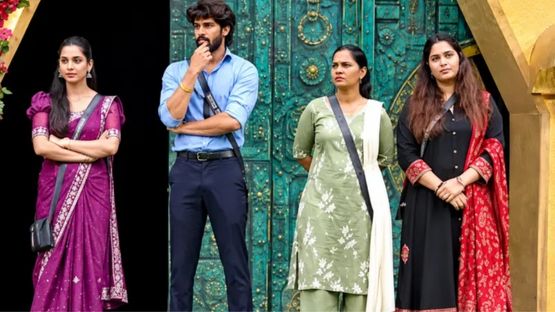 Bigg Boss Tamil 10 Day 26: Javeed, Dhanya, Savinya and Ashmitha Face Major Twist03/Oct/2026 5:30:20 PM

 JB Soft System