
How Chennai’s Famous Localities Got Their Names
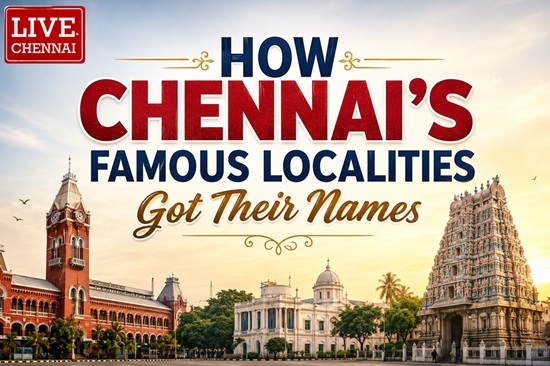
Every locality in Chennai has a story behind its name. Some were named after prominent political leaders and administrators, while others trace their origins to ancient Tamil words, temples, rivers, lakes, villages and geographical features.
From the bustling shopping streets of T. Nagar to the historic temple town of Mylapore, Chennai`s place names offer fascinating clues about the city`s cultural, political and geographical past.
Here is a closer look at the stories behind some of Chennai`s most familiar neighbourhoods.
T. Nagar: Named After Sir Pitti Theagaraya Chetty
T. Nagar, one of Chennai`s best-known commercial and shopping destinations, takes its name from Thyagaraya Nagar, also known as Theagaraya Nagar.
The locality was named after Sir Pitti Theagaraya Chetty, a prominent political leader and one of the leading figures associated with the Justice Party in the Madras Presidency.
T. Nagar was developed as a planned residential neighbourhood during the 1920s, following the development of land around the former Long Tank. Several roads and landmarks in the area were also named after important leaders of that era.
Panagal Park, for instance, was named after the Raja of Panagal, while roads such as Dr. T.M. Nair Road and Dr. Natesan Road honour other prominent Justice Party leaders.
Over time, this carefully planned residential area grew into one of Chennai`s largest commercial centres.
Mylapore: The Land of the Peacock
Mylapore is one of Chennai`s oldest and most culturally significant neighbourhoods. Known in Tamil as Mayilappur or Thirumayilai, the name is closely associated with the Tamil word “mayil,” meaning peacock.
According to local tradition, Goddess Parvati worshipped Lord Shiva here in the form of a peacock. This legend is closely linked to the identity of the famous Kapaleeshwarar Temple, one of Chennai`s most important religious landmarks.
Mylapore is also believed to have been an ancient settlement and trading centre. Over centuries, it developed into a major cultural hub, known for its temples, traditional streets, music, festivals and distinctive Chennai character.
Even today, Mylapore remains a place where the city`s ancient heritage and modern lifestyle exist side by side.
Adyar: A Locality Shaped by Its River
The name Adyar is inseparably connected with the Adyar River, one of Chennai`s most important waterways.
The settlement developed along the banks of the river, which played a major role in shaping the area`s geography and growth. Over time, the name of the river became associated with the locality itself.
There are different interpretations regarding the original Tamil form and linguistic meaning of the name. However, what remains clear is that the Adyar River has been central to the identity and development of the locality for centuries.
Today, the river continues to be one of the defining geographical features of South Chennai.
Guindy: A Name Connected to the Landscape
The origins of the name Guindy are commonly linked to older Tamil forms such as Kunnam or Kundram, words associated with elevated land or small hills.
The area once had natural elevations and landscape features that distinguished it from the surrounding plains. Over time, the original name is believed to have changed in pronunciation and spelling, eventually evolving into the present-day name, Guindy.
Today, Guindy is one of Chennai`s most important hubs, home to the industrial estate, educational institutions, government offices, the national park and major transport networks.
Yet its name may still preserve a connection to the landscape that existed long before the modern city developed around it.
Egmore: From an Ancient Settlement
Egmore is believed to have evolved from older Tamil place names such as Egaambur, Egambaram or Eyalur, although the exact linguistic origin remains open to interpretation.
Historical references connect the locality with an old settlement and the water bodies that once shaped the area`s landscape, including the historic Egmore tank.
During the British period, the pronunciation and spelling of the original name gradually changed, eventually giving rise to the English form Egmore.
Today, Egmore is one of central Chennai`s major institutional and transport centres, known for its railway station, museums, hospitals and government offices.
Royapettah: The Settlement of Raya or Rayappa
The name Royapettah reflects the history of old settlements and market areas in Chennai.
The word “pettah” or “pettai” generally refers to a settlement or market locality. The first part of the name, “Roya,” is commonly linked to Raya or Rayappa, believed to have been a local leader, landholder or influential personality associated with the early settlement.
While historical accounts differ on the exact individual behind the name, the commonly accepted interpretation is that Royapettah refers to a settlement or market associated with Raya or Rayappa.
Today, the locality remains an important part of central Chennai, connecting several major residential and commercial areas.
Triplicane: From Thiruvallikeni
Triplicane is one of Chennai`s most h historic neighbourhoods and is traditionally known in Tamil as Thiruvallikeni.
The name is generally associated with “Alli Keni,” referring to a water body or tank connected with water lilies. The word “Thiru” adds a sense of sacredness and religious significance.
During the colonial period, the Tamil name Thiruvallikeni was adapted into the English form Triplicane, which continues to be widely used today.
The locality is closely associated with the historic Parthasarathy Temple and its temple tank, making its identity deeply connected with Chennai`s religious and cultural heritage.
More Than Just Names on a Map
Chennai`s locality names are not merely addresses. They are reminders of the people, landscapes, water bodies, temples and historical events that shaped the city over centuries.
T. Nagar reflects the political history of the Justice Party. Mylapore carries the legacy of ancient Tamil culture and temple traditions. Adyar is defined by its river, while Triplicane preserves the memory of its sacred tank and historic temple.
As Chennai continues to grow and modernise, these names remain living links to the city`s past preserving stories that might otherwise be forgotten beneath its rapidly changing urban landscape.
Top Stories
-
 Tomorrow Panchangam October 09, 2026 | Auspicious Timings, Rahu Kalam, Gulikai08/Oct/2026 5:51:14 PM
 -
 Gold Loan vs Home Loan: Which Is Better for Urgent Financial Needs?08/Oct/2026 5:39:41 PM
 -
 JB SOFT SYSTEM Helps Organisations Build Custom Community Portals08/Oct/2026 5:30:07 PM
 -
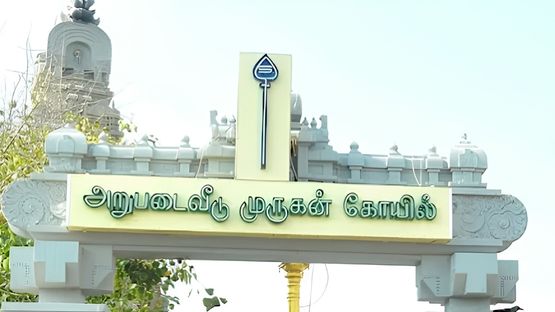 Arupadai Veedu Murugan Temple, Besant Nagar, Chennai08/Oct/2026 5:24:35 PM
 -
 Flipkart Big Billion Days Sale: Poco Phones Get Up to Rs. 6,000 Discount08/Oct/2026 4:59:38 PM
 -
 2026 Honda Elevate Facelift: Price, Variants, Colours and Features08/Oct/2026 4:50:12 PM

 JB Soft System