
Vetri Veedu Thittam 2026: Eligibility, Benefits, Documents Required and How to Apply
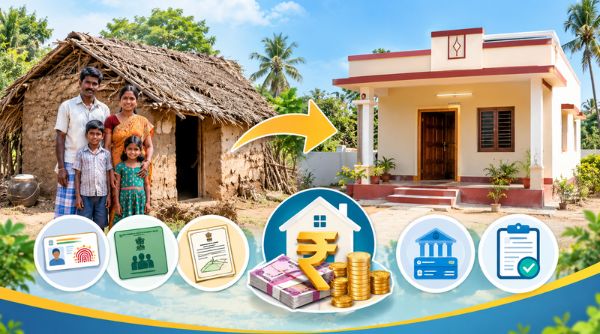
The Vetri Veedu Thittam 2026 is a Tamil Nadu Government housing scheme announced to help rural families living in kutcha huts build permanent houses. Under this scheme, the financial assistance for constructing a pucca house has been increased to Rs.5 lakh per house. The Government has planned to cover 70,000 houses in the first year, with an estimated allocation of Rs.3,500 crore.
The scheme comes under the Rural Development and Panchayat Raj Department. Eligible families are expected to be identified through a door-to-door survey. As of 21 October 2026, the detailed application guidelines and a separate online application portal have not been announced in the information available.
Vetri Veedu Thittam 2026 Benefits
Under the scheme, eligible rural families living in kutcha huts can receive financial assistance of up to Rs.5 lakh for house construction, subject to the final Government guidelines.
The major benefits announced under the scheme include:
- Financial assistance of Rs.5 lakh per house.
- 70,000 houses planned for the first year.
- Direct transfer of assistance to the beneficiary`s bank account in instalments based on construction progress.
- Cement supplied by the Rural Development Department.
- An additional home loan of up to Rs.1 lakh may be available to eligible families, with a 3% annual interest subsidy subject to the prescribed conditions.
- Assistance for household toilets through the Swachh Bharat Mission (Gramin), where applicable.
- Electricity, tap water and gas connections for completed houses, as outlined in the Policy Note.
Who Can Apply for Vetri Veedu Thittam 2026?
The scheme is intended for families living in kutcha huts in rural areas of Tamil Nadu. The final eligibility criteria will be confirmed through the Government`s detailed guidelines.
Priority has been indicated for widows, destitute women, deserted women, women-headed families, transgender persons, sanitation workers, released bonded labourers, persons affected by serious illnesses, disaster-affected families and other vulnerable groups.
Particularly Vulnerable Tribal Groups, Scheduled Tribes and nomadic communities will receive high priority. The scheme also reserves 5% of each district`s allocation for persons with disabilities and 40% of houses in every district for Scheduled Caste and Scheduled Tribe households.
How to Apply for Vetri Veedu Thittam 2026?
The Government has indicated that eligible families will be identified through a fresh door-to-door survey conducted by the Rural Development and Panchayat Raj Department. A separate online application process has not yet been announced in the available information.
Step 1: Check Your Eligibility
Check whether your family lives in a kutcha hut in a rural area of Tamil Nadu. The final eligibility requirements will be available once the Government issues the detailed guidelines.
Step 2: Keep Your Documents Ready
Keep commonly required documents ready for verification. These may include your Aadhaar Card, Ration Card, residence proof, bank passbook and other documents requested by the authorities. The final document list has not yet been officially confirmed.
Step 3: Participate in the Door-to-o-Door Survey
When the authorised survey team visits your area, provide accurate information about your family, current house and residential details. Cooperate with the officials and submit the requested documents or details.
Step 4: Contact Your Local Panchayat Office
For information about the survey schedule and beneficiary identification, contact your Village Panchayat office or Block Development Office (BDO). Ask whether the survey has started in your area and how eligible families will be assessed.
Step 5: Check the Beneficiary Selection Status
After the survey, the authorities are expected to verify the details and identify eligible households. Follow announcements from the local Rural Development Department to check the selection process.
Step 6: Complete the Approval Process
If your family is selected, follow the instructions issued by the concerned officials. The final guidelines will explain the approval procedure, construction requirements and documents needed before assistance is released.
Step 7: Receive the Housing Assistance
Under the announced plan, financial assistance will be transferred directly to the beneficiary`s bank account in instalments linked to construction progress. The amount and release conditions will be subject to the final Government guidelines.
Documents to Keep Ready
Although the official document checklist has not yet been announced, families can prepare the following documents for possible verification:
- Aadhaar Card
- Ration Card
- Residence proof
- Income certificate, if required
- Community certificate, if applicable
- Disability certificate, if applicable
- Bank passbook or bank account details
- Details of the existing house and residential land, if requested
Applicants should wait for the official document list before submitting any formal application.
Is There an Online Application Portal?
As of 21 October 2026, no separate online application portal or final application procedure has been reported in the supplied scheme information. Beneficiaries are expected to be identified through a door-to-door survey.
Families can contact their local Village Panchayat office or Block Development Office for updates. Avoid paying unauthorised agents or submitting personal documents through unofficial websites claiming to register beneficiaries.
Important Information
The Vetri Veedu Thittam aims to help eligible rural families move from kutcha huts to permanent houses. The scheme`s final eligibility conditions, survey schedule, application process and beneficiary selection procedure will depend on the Government`s official guidelines.
Disclaimer: This article is intended for general informational purposes only. Scheme benefits, eligibility criteria, required documents and application procedures may change when official guidelines are released. Please confirm the latest details with the concerned Government department before taking any action.
Top Stories
-
 Tomorrow Panchangam October 23, 2026 | Auspicious Timings, Rahu Kalam, Gulikai22/Oct/2026 5:39:16 PM
-
 WhatsApp Tests a New Green Circle Indicator for Android Users22/Oct/2026 5:13:10 PM
-
 Bigg Boss Tamil 10: TTF Vasan Eats Raw Meat in Survival Task Promo22/Oct/2026 5:08:41 PM
-
Vetri Veedu Thittam 2026: Eligibility, Benefits, Documents Required and How to Apply22/Oct/2026 5:00:28 PM
-
 Tamil Nadu Weather Alert: Heavy Rain Forecast in 28 Districts with Thunderstorms Today22/Oct/2026 4:20:50 PM
-
 Gold Loan in Chennai: Benefits, Eligibility, Interest Rates and How to Apply22/Oct/2026 4:15:54 PM

 JB Soft System