
Roof Leakage, Bathroom Leakage and Water Seepage: Causes and Prevention Tips for Chennai Homes
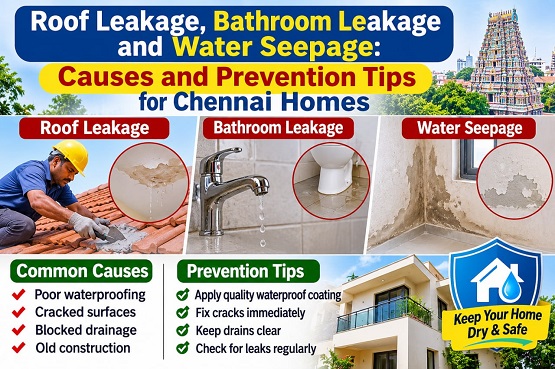
Water leakage is a common problem in homes, especially during the rainy season. Roof leakage, bathroom leakage and wall dampness can damage building materials and household interiors. In Chennai, proper waterproofing and weatherproofing are important to protect homes from heavy rainfall and moisture.
Common Types of Water Leakage in Homes
Roof Leakage: Cracks in concrete roofs, damaged waterproofing layers and blocked drainage outlets can allow rainwater to enter ceilings and rooms.
Bathroom Leakage: Damaged plumbing connections, cracked tiles and poor floor waterproofing can cause water to seep into nearby walls and ceilings.
Wall Water Seepage: Exterior wall cracks, leaking pipes and damaged plaster can cause damp patches, peeling paint and mould growth.
Terrace Leakage: Poor drainage, improper roof slopes and damaged waterproofing membranes can lead to water stagnation and leakage.
Main Causes of Roof and Bathroom Leakage
Some common causes include:
- Cracks in roofs and concrete surfaces.
- Damaged waterproofing coatings.
- Blocked rainwater drainage pipes.
- Leaking bathroom plumbing connections.
- Cracked tiles and damaged joints.
- Poor terrace drainage and ageing building materials.
Signs of Water Leakage Problems
Homeowners should watch for ceiling stains, damp walls, peeling paint, mould formation, loose tiles and unpleasant smells. Early identification can help prevent further damage.
Waterproofing Solutions for Different Areas
Different parts of a house require suitable waterproofing methods.
- Roof and Terrace: Liquid waterproofing coatings and membrane systems.
- Bathrooms: Cement-based waterproofing and joint sealing.
- Exterior Walls: Weather-resistant coatings and crack repairs.
- Windows and Doors: Proper sealing around frames to prevent rainwater entry.
Weatherproofing Tips to Protect Your Home
Homeowners can follow these preventive measures:
- Inspect roofs and exterior walls before the monsoon.
- Clean terrace drainage outlets regularly.
- Repair cracks in walls and concrete surfaces.
- Check window and door seals.
- Maintain rainwater pipes and drainage systems.
- Apply suitable weather-resistant coatings.
When Should You Contact a Waterproofing Professional?
Recurring roof leakage, bathroom seepage and large damp patches may indicate deeper problems. Professional inspection can help identify whether plumbing repairs, waterproofing or structural maintenance is required.
Disclaimer: Waterproofing requirements depend on the source and severity of leakage. Professional inspection is recommended for major or recurring problems.
Frequently Asked Questions (FAQs)
What are the common causes of roof leakage?
Cracks in concrete roofs, damaged waterproofing coatings, blocked drainage outlets and poor terrace drainage are common causes of roof leakage.
How can bathroom leakage be prevented?
Bathroom leakage can be prevented by maintaining plumbing connections, repairing cracked tiles, sealing joints and applying suitable waterproofing solutions.
What are the signs of water leakage in a house?
Common signs include ceiling stains, damp walls, peeling paint, mould formation, loose tiles and unpleasant smells.
What is the difference between waterproofing and weatherproofing?
Waterproofing prevents water from entering building surfaces, while weatherproofing protects homes from rain, moisture and other weather conditions.
How can roof leakage be prevented during monsoon?
Inspect the roof before the monsoon, repair cracks, clean drainage outlets, maintain rainwater pipes and apply suitable waterproofing coatings.
Top Stories
-
 Monthly Electricity Bill Savings: How Much Can Chennai Homes Save with Rooftop Solar?02/Nov/2026 1:16:19 PM
-
 Commercial vs. Domestic Power Bills: A Guide for Chennai Shop Owners and Home Businesses02/Nov/2026 1:04:30 PM
-
 Single - Phase to Three - Phase: How to Upgrade Your TNPDCL Connection Online
02/Nov/2026 12:58:38 PM -
 VBJ Opens Tamil Nadu’s Largest Jewellery Showroom in Coimbatore with ₹900 Crore Investment02/Nov/2026 12:38:45 PM
-
Roof Leakage, Bathroom Leakage and Water Seepage: Causes and Prevention Tips for Chennai Homes02/Nov/2026 12:28:29 PM
-
 Waterproofing and Weatherproofing in Chennai: Benefits, Types and Cost of Home Protection02/Nov/2026 12:12:01 PM

 JB Soft System