
Building Access Ramps: How to Avoid Encroaching on Public Roads
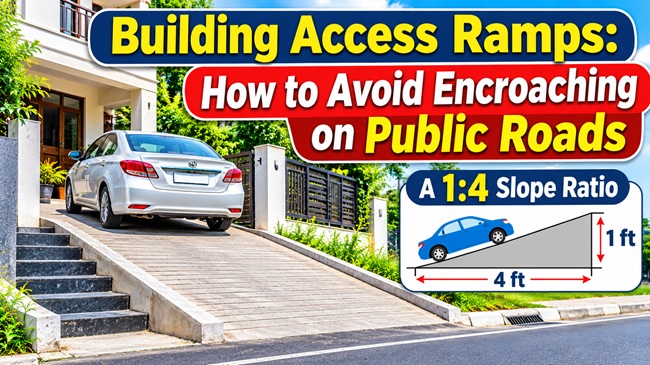
A 1:4 Slope Ratio Can Help Reduce Roadside Obstruction
In residential areas, improperly designed access ramps can create serious obstructions on public roads, affecting the movement of vehicles and pedestrians. Homeowners constructing houses with elevated basement or ground-floor levels often extend ramps beyond their compound boundaries, occupying a portion of the road and causing inconvenience to the public.
Such unauthorised structures may also face complaints from residents and action from local authorities, including removal or demolition.
Proper planning and ramp design are therefore essential to ensure convenient vehicle access without encroaching on public roads.
Important Factors to Consider When Constructing a Ramp
1. Plan the Basement Height Carefully
Homeowners should avoid unnecessarily raising the basement level. The height should be determined after considering road width, traffic movement, the surrounding layout and the levels of neighbouring buildings.
2. Follow a Suitable Ramp Slope
A slope ratio of 1:4 is suggested as a practical design approach to reduce steepness and improve vehicle access. However, the final design should comply with applicable local building regulations and accessibility requirements.
3. Use Proper Steps and Levels
The exterior approach area can be designed with additional steps to manage differences in height. For example, five steps instead of three may help reduce the height required for the access ramp.
Steps with a tread width of around 1.5 feet and a riser height of 5 inches may also make access easier for two-wheelers, depending on the site conditions.
4. Extend the Ramp Towards the Building
Where the exterior ground level is considerably lower than the building entrance, extending the ramp inward, beyond the compound wall line, can help reduce its projection onto the public road.
5. Keep Roadside Drains Clear
Ramps should not cover, block or obstruct roadside drainage channels. Proper drainage flow must be maintained to prevent water stagnation and flooding.
According to Jayaprakash, a member of the Coimbatore District All Construction Engineers Association, considering these factors during the planning stage can help homeowners construct convenient access ramps while minimising inconvenience to road users.
Conclusion
Access ramps are necessary for residential buildings, but their construction should not compromise public road space, pedestrian movement or roadside drainage. Homeowners should plan basement levels and ramp slopes carefully and obtain the necessary approvals before construction. The applicable local building regulations must always be followed.
Top Stories
-
 Thiruvannamalai Karthigai Deepam 2026: Ardhanareeswarar Gives Darshan on 10th Day Evening24/Nov/2026 4:16:09 PM
-

-
 Guindy Integrated Transport Terminal: ₹400 Crore Project Targeted for Completion by 203024/Nov/2026 3:58:09 PM
-
 Motorola Edge 70 Neo Launched in India: 50MP Sony Camera, 7000mAh Battery and Price Details24/Nov/2026 3:49:33 PM
-
 Gold Price Crash: Banks Send Notices to Gold Loan Borrowers - What Should Customers Do?24/Nov/2026 2:28:45 PM
-
Building Access Ramps: How to Avoid Encroaching on Public Roads24/Nov/2026 2:23:09 PM

 JB Soft System