
Simple Interest vs Compound Interest: Understanding the Difference Before Investing
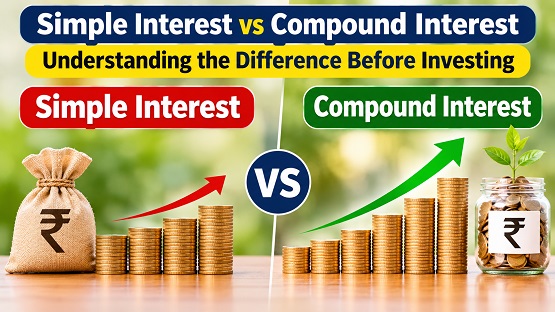
Interest plays an important role in savings, loans and investments. Two commonly used methods of calculating interest are Simple Interest and Compound Interest. Understanding the difference can help individuals make better financial decisions.
What Is Simple Interest?
Simple Interest is calculated only on the original principal amount. The interest earned does not become part of the principal for future calculations.
For example, if a person deposits ₹10,000 at 5% simple interest annually for three years, the interest will be ₹500 every year. The total interest earned will be ₹1,500, making the final amount ₹11,500.
What Is Compound Interest?
Compound Interest is calculated on the principal amount as well as the accumulated interest. This means interest earns additional interest over time.
For the same ₹10,000 investment at 5% annually, compounded once a year for three years, the maturity amount will be approximately ₹11,576.
Which Is Better?
Compound interest can help long-term savings grow faster because of the compounding effect. The longer the investment period, the greater its potential impact.
However, the actual benefit depends on the interest rate, compounding frequency, investment duration and applicable conditions.
Understanding both methods is useful when comparing bank deposits, loans and other financial products. Before investing or borrowing, individuals should carefully check how interest is calculated.
Top Stories
-
 Tomorrow Panchangam November 17, 2026 | Auspicious Timings, Rahu Kalam, Gulikai16/Nov/2026 5:26:20 PM
-
Simple Interest vs Compound Interest: Understanding the Difference Before Investing16/Nov/2026 5:25:46 PM
-
 Bigg Boss Tamil 10: Jason Announces Exit, But Vijay Sethupathi Convinces Him to Stay16/Nov/2026 5:19:07 PM
-
 Tirupati SV Museum Opens to Devotees: Entry Fee, Timings and Key Attractions16/Nov/2026 5:08:24 PM
-

-
 Tamil Nadu Salt Pan Workers Relief 2026: Rainy Season Assistance Increased to ₹7,00016/Nov/2026 4:03:45 PM

 JB Soft System