
Reducing Balance vs Flat Interest Rate: Understand the Difference Before Taking a Loan

When applying for a personal loan, vehicle loan or other financing facility, borrowers may encounter two interest calculation methods: reducing balance and flat interest rate. Although both determine the interest payable on a loan, the final repayment amount can differ significantly.
What Is a Flat Interest Rate?
Under the flat interest rate method, interest is calculated on the original loan amount throughout the repayment period, even though the borrower continues to repay the principal every month.
For example, if a person borrows ₹1 lakh at a flat interest rate of 10% annually for two years, the interest is calculated on the original ₹1 lakh for both years.
This means the total interest is ₹20,000, excluding additional charges.
What Is a Reducing Balance Interest Rate?
Under the reducing balance method, interest is calculated on the outstanding principal amount after accounting for repayments.
As the borrower pays monthly instalments, the outstanding loan amount gradually decreases. Consequently, the interest charged also reduces over time.
This method is commonly used for home loans and many other bank loans.
Key Differences
Flat Interest Rate:
- Interest is calculated on the original loan amount.
- Interest does not reduce as principal is repaid.
- The stated rate may appear lower than the equivalent reducing-balance rate.
Reducing Balance Interest Rate:
- Interest is calculated on the remaining principal.
- Interest generally decreases as repayments continue.
- It provides a clearer relationship between outstanding debt and interest costs.
What Should Borrowers Check?
Before accepting a loan, compare the total repayment amount, effective annual interest rate, processing fees and repayment schedule.
A flat rate should never be compared directly with a reducing-balance rate using only the stated percentages.
Understanding these methods helps borrowers identify the actual cost of borrowing and choose loans more carefully.
Top Stories
-
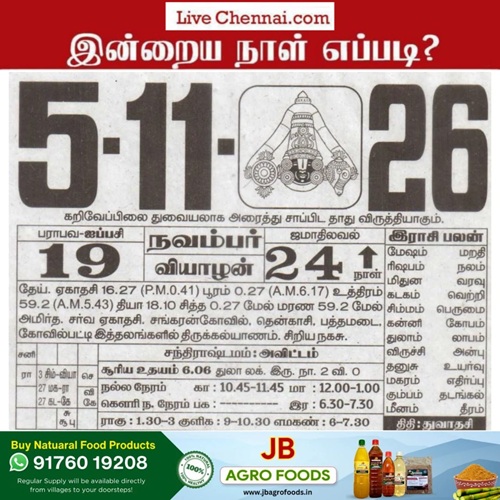 Tomorrow Panchangam November 05, 2026 | Auspicious Timings, Rahu Kalam, Gulikai04/Nov/2026 5:51:57 PM
-

-
 Annan Seer Scheme 2026 - 27: Tamil Nadu Issues Tender for 60,000 Gold Coins and Silk Sarees04/Nov/2026 5:02:33 PM
-
 6 Best Marriage Temples in Chennai - Wedding Booking Guide | Watch Full Video04/Nov/2026 5:01:20 PM
-
 OpenAI Doubles ChatGPT Pro Work and Codex Usage Limits for Pro 100 and Pro 500 Plans04/Nov/2026 4:56:24 PM
-
 Real Estate Channel Partner Meeting in Chennai on November 5, 6, 202604/Nov/2026 4:52:30 PM

 JB Soft System