
Heart Health: 6 Simple Signs to Check Your Heart Health at Home
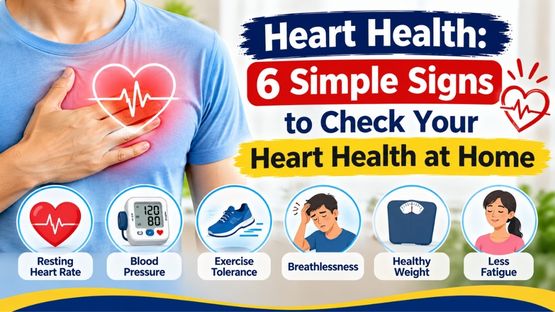
Heart health is important for overall well-being, but many people may not recognise the signs that indicate how well their heart is functioning. Certain everyday measurements and physical changes can offer useful clues about heart health.
Resting heart rate, blood pressure, exercise tolerance and swelling in the legs are some of the signs worth monitoring. Here are six indicators that can help you understand your heart health.
1. Check Your Resting Heart Rate
Resting heart rate is one of the basic indicators of heart health. For most adults, a resting heart rate of 60 to 100 beats per minute is considered normal.
People who exercise regularly may have a resting heart rate below 60 beats per minute. However, a low heart rate is not automatically a sign of good health, particularly if it is accompanied by dizziness, weakness or fainting.
To check your pulse, sit quietly for a few minutes, place two fingers on your wrist or neck, and count the beats for 60 seconds.
2. Monitor Your Blood Pressure
Blood pressure is another important measurement linked to cardiovascular health. A reading around 120/80 mmHg is generally considered optimal for adults.
Regular monitoring can help identify high blood pressure, which may not cause noticeable symptoms. Adults, particularly those over 40, should keep track of their readings and consult a healthcare professional if they are consistently high.
3. Notice How Your Body Responds to Physical Activity
Pay attention to how you feel while walking quickly, climbing stairs or doing routine physical activities.
Being able to complete everyday activities without unusual breathlessness, chest discomfort or excessive fatigue can be a reassuring sign. However, reduced exercise tolerance or unexplained tiredness may need medical evaluation.
4. Observe How Quickly Your Heart Rate Recovers After Exercise
Your heart rate naturally increases during exercise. After you stop exercising, it gradually returns towards its resting level.
The speed of this recovery can provide information about cardiovascular fitness. A faster recovery is generally associated with better fitness, although the result depends on factors such as age, exercise intensity and overall health.
5. Watch for Chest Pain or Discomfort
Chest pressure, tightness or pain during physical activity should never be ignored. Although these symptoms can have different causes, they may sometimes indicate a heart-related problem.
Seek immediate medical attention if you experience new or unexplained chest discomfort, particularly when it occurs with breathlessness, sweating, nausea or pain spreading to the arm, back or jaw.
6. Check for Swelling in Your Legs and Feet
Unexplained swelling in the legs, ankles or feet can sometimes be associated with fluid retention caused by heart problems.
When the heart cannot pump blood effectively, fluid may accumulate in different parts of the body, particularly the lower legs. However, swelling can also result from kidney problems, vein conditions, medications and other causes.
Consult a doctor if swelling is persistent, unexplained or accompanied by breathlessness or sudden weight gain.
Can These Home Checks C Confirm That Your Heart Is Healthy?
These simple checks can help you notice changes in your body, but they cannot confirm whether your heart is completely healthy. Some heart conditions may not produce noticeable symptoms in the early stages.
A medical assessment may include blood pressure monitoring, an ECG, blood tests or other investigations depending on your symptoms and risk factors.
Maintaining a balanced diet, exercising regularly, avoiding tobacco, getting enough sleep and attending routine health check-ups can support long-term heart health.
Disclaimer: This article is for general informational purposes only and should not be considered a substitute for professional medical advice, diagnosis or treatment.
Top Stories
-
 Cyclone Murasu: 4 Flights to Vijayawada and Rajahmundry Cancelled at Chennai Airport03/Nov/2026 10:58:59 AM
-
Heart Health: 6 Simple Signs to Check Your Heart Health at Home03/Nov/2026 10:54:47 AM
-
 Tamil Nadu Launches Philately Passport - Explore 58 Heritage and Tourist Destinations03/Nov/2026 10:25:39 AM
-

-
 Southern Railway Upgrades 8 Express Trains to Superfast: New Train Numbers from January 202703/Nov/2026 10:02:12 AM
-
 Tamil Nadu Announces Diwali Bonus of Up to 20% for Cooperative Employees03/Nov/2026 10:01:24 AM

 JB Soft System