
West Mambalam: The Untold History of Chennai
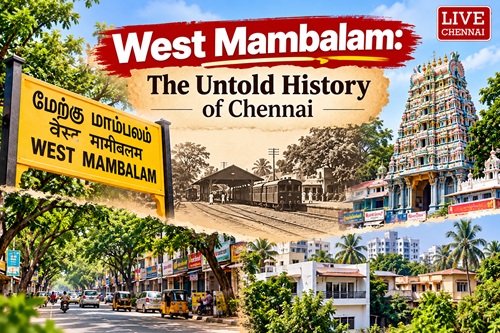
A Neighbourhood Where Village Life, Railways and Chennai’s Urban Growth Came Together
West Mambalam is today one of Chennai’s well-known residential neighbourhoods, known for its temples, busy streets, railway connectivity, traditional homes and local markets. But beneath its modern urban landscape lies a fascinating history shaped by village life, agriculture, the railway and the rapid expansion of Chennai.
From a Traditional Village to a Chennai Neighbourhood
Long before becoming part of modern Chennai, Mambalam was a village in the Saidapet taluk of the erstwhile Chingleput district. Historical accounts describe Mambalam as a largely agricultural settlement that also had a connection with traditional Kalamkari work.
The area was once much quieter than the densely populated neighbourhood seen today. Its landscape included agricultural fields, groves and water bodies, giving Mambalam the character of a traditional village.
Mambalam was also associated with the zamindari system and was administered by a Telugu-speaking Reddi family.
The Railway That Changed Mambalam
One of the biggest turning points in the history of West Mambalam came in 1911, when a railway station was established on the Madras–Kanchipuram railway line.
The arrival of the railway significantly improved connectivity and encouraged urban development around the area. The railway station became an important link between Mambalam and other parts of the growing city.
The railway also contributed to the distinction between the eastern and western parts of Mambalam, with the area on the western side becoming known as West Mambalam.
The Long Tank: A Lost Landmark of Chennai
One of the most fascinating chapters in Mambalam`s history is connected with the Long Tank, a large water body that once marked the western edge of Madras.
The Long Tank extended across areas that later developed into Mambalam, Kodambakkam, Nungambakkam and surrounding neighbourhoods.
As Chennai`s population grew and demand for residential land increased, the Long Tank was drained in 1923, opening up large areas for urban development. This played an important role in the transformation of Mambalam and neighbouring parts of Chennai.
When Mambalam Became Part of Madras
The transformation of Mambalam from a village into an urban neighbourhood accelerated during the early decades of the 20th century.
The development of nearby T. Nagar, improved transportation and increasing demand for residential land gradually changed the character of the entire region.
Mambalam was eventually incorporated into Madras city in 1946, making it one of the lateter village areas to become part of the expanding city.
Temples and Traditional Culture
Even as urban development transformed the area, West Mambalam retained a strong cultural identity.
Its temples, traditional streets and long-established communities became important parts of the neighbourhood`s character. Temples such as the Kothandaramaswamy Temple and other historic religious institutions continue to connect the present-day locality with its cultural past.
Traditional food businesses and long-running local establishments have also contributed to West Mambalam`s distinctive identity.
From Village Streets to a Busy Urban Locality
The decades after Independence brought rapid changes to West Mambalam. Houses, schools, shops, markets and transport facilities expanded as Chennai continued to grow.
The neighbourhood gradually became a densely populated residential area while retaining many of its traditional features.
The railway continued to play an important role in this transformation, with Mambalam railway station becoming a key suburban rail connection for residents of West Mambalam and surrounding areas.
West Mambalam Today: Where History Meets Modern Chennai
Today, West Mambalam is surrounded by some of Chennai`s major residential and commercial areas. Its location provides access to T. Nagar, Ashok Nagar, Saidapet and Kodambakkam, while the railway network connects the locality with several parts of the city.
Modern apartments, commercial establishments and busy roads now dominate much of the neighbourhood. Yet older temples, traditional homes, established shops and railway infrastructure continue to reveal glimpses of its earlier identity.
Why West Mambalam`s History Still Matters
The story of West Mambalam is ultimately the story of Chennai`s transformation.
A village once surrounded by agricultural land and water bodies gradually became connected by railway, expanded with the growth of Madras and eventually became part of the modern Chennai metropolitan landscape.
The Long Tank may have disappeared, agricultural fields have given way to buildings, and village roads have become busy urban streets. But the history of Mambalam remains visible in its railway station, temples, older neighbourhoods and enduring local traditions.
Conclusion: A Living Chapter of Chennai`s History
West Mambalam is more than just a residential locality on the Chennai map. It represents a fascinating chapter in the city`s journey from traditional villages and agricultural settlements to a modern metropolitan city.
For residents and visitors, looking beyond the busy streets of West Mambalam, Chennai reveals a neighbourhrhood shaped by railway development, cultural traditions, disappearing water bodies and decades of urban growth.
Top Stories
-
 Chennai Rotarian Rtn. Dhanasekar Donates Hair to Support Cancer Patients01/Oct/2026 8:55:49 PM
 -
 Tomorrow Panchangam October 02, 2026 | Auspicious Timings, Rahu Kalam, Gulikai01/Oct/2026 5:48:56 PM
 -
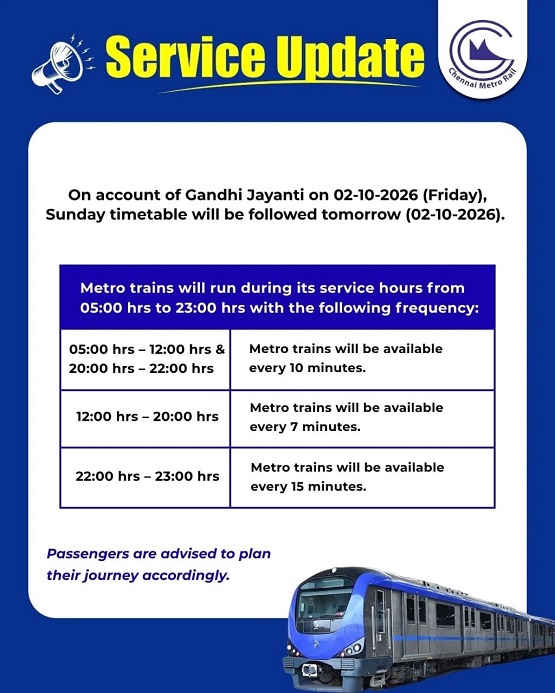 Chennai Metro Timings Changed for Gandhi Jayanti Tomorrow01/Oct/2026 5:14:41 PM
 -
 Invest in Gold Without Buying Jewellery: 7 Investment Options to Consider01/Oct/2026 5:00:34 PM
 -
 Microsoft Surface Pro 12-Inch and Surface Laptop 13-Inch Launched01/Oct/2026 4:35:19 PM
 -
 The Difference Between Paying a Challan and Settling One01/Oct/2026 4:31:32 PM

 JB Soft System