
Why Do More Cyclones Form in the Bay of Bengal During October and November?
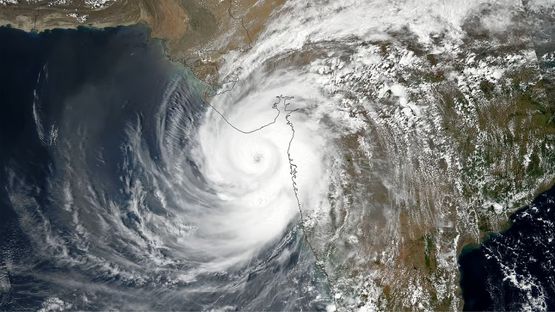
The Bay of Bengal experiences a higher number of cyclones during October and November compared with several other months of the year. Warm sea surface temperatures, changing wind patterns and post-monsoon weather conditions create favourable conditions for cyclone formation during this period.
According to data from the India Meteorological Department (IMD), October and November account for a significant share of the cyclonic systems recorded over the Bay of Bengal. Scientists from the IMD and the Indian National Centre for Ocean Information Services (INCOIS) have explained how ocean temperatures and atmospheric conditions contribute to this seasonal pattern.
Cyclone Statistics in the Bay of Bengal
The IMD has maintained cyclone records since 1891. According to the data cited in the report, a total of 1,261 cyclonic systems and related weather disturbances were recorded over the Bay of Bengal between 1891 and 2025.
Among the 541 cyclonic storms and severe cyclonic storms recorded during this period, the monthly distribution includes:
October: 96 cyclones
November: 126 cyclones
The IMD data also records 247 severe cyclones between 1891 and 2025. Of these:
October: 44 severe cyclones
November: 76 severe cyclones
These figures show that November has recorded more cyclonic storms and severe cyclones than October.
Why Are October and November Favourable for Cyclone Formation?
Scientists identify sea surface temperature and wind movement as two important factors influencing cyclone formation.
After the southwest monsoon withdraws, post-monsoon weather conditions become favourable for cyclonic activity along India`s eastern coast.
According to K. Nagaratna, Director of the Amaravati Meteorological Centre, low-pressure systems originating over the Pacific Ocean can move through the Andaman Sea and enter the Bay of Bengal.
During the pre-monsoon season, sea surface temperatures are higher near the Myanmar coast, influencing the movement of developing weather systems in that direction. After the monsoon withdraws, warmer sea surface temperatures are found closer to India`s eastern coastline. This can influence cyclone movement towards the east coast, along with prevailing wind patterns.
The curvature of the coastline and areas where rivers meet the sea may also influence cyclone movement.
Warm Sea Temperature Supports Cyclone Development
Sea surface temperature plays an important role in the development and strengthening of cyclones. According to the meteorological explanation cited in the report, the Bay of Bengal`s average sea surface temperature during this period remains above 26.5°C.
INCOIS scientist P. Sivayya explained that sea surface temperatures generally reach two seasonal peaks: one during March, April and May, and another during October and November.
Even after the monsoon season, the sea takes time to cool as winter begins. This delay allows warmer ocean conditions to continue, providing favourable conditions for low-pressure systems to develop and strengthen.
How Does a Low-Pressure System Become a Cyclone?
Cyclones develop through different stages as wind speeds increase. The IMD classifies these systems according to their maximum sustained wind spepeed.
| Weather System | Wind Speed |
|---|---|
| Low-pressure area | Below 31 kmph |
| Depression | 31–49 kmph |
| Deep Depression | 50–61 kmph |
| Cyclonic Storm | 62–88 kmph |
| Severe Cyclonic Storm | 89–117 kmph |
| Very Severe Cyclonic Storm | 118–167 kmph |
| Extremely Severe Cyclonic Storm | 168–221 kmph |
| Super Cyclonic Storm | 222 kmph or above |
As wind speeds increase, a low-pressure system can develop into a depression, a deep depression and eventually a cyclonic storm. Further strengthening can lead to severe and more intense cyclone categories.
Why Cyclone Activity Matters for India`s East Coast
The Bay of Bengal`s seasonal cyclone activity is important for states along India`s eastern coastline, including Tamil Nadu, Andhra Pradesh, Odisha and West Bengal.
Cyclones can bring heavy rainfall, strong winds, rough seas and coastal flooding. Understanding the reasons behind their seasonal formation helps improve weather monitoring, early warnings and disaster preparedness.
The combination of warm sea temperatures, post-monsoon atmospheric conditions and changing wind patterns makes October and November particularly active months for cyclones in the Bay of Bengal.
Top Stories
-

-
 Chennai Gold Rate Today: Gold Prices Rise Twice on November 404/Nov/2026 1:06:00 PM
-

-
 What Is an E-Way Bill? GST Rules, When It Is Required and How to Generate It Online04/Nov/2026 11:53:15 AM
-
 Vetri Special Vegetable Pack: Get 10 Vegetables for ₹100 in Tamil Nadu04/Nov/2026 11:42:25 AM
-
 Milk Tea vs Black Tea vs Green Tea: Which Is Healthier?04/Nov/2026 11:42:20 AM

 JB Soft System