
How to Choose the Right Solar Power System for Your Home: A Complete Buying Guide
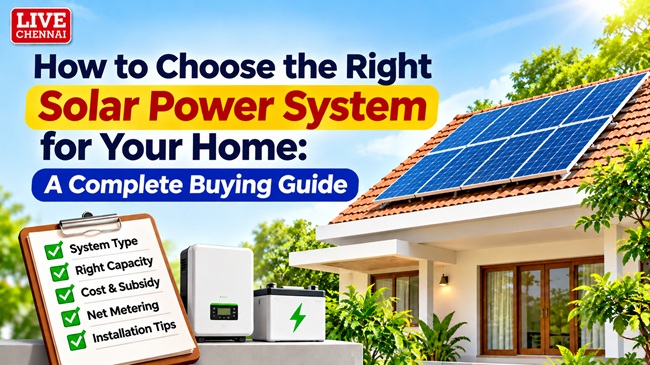
Choosing the right solar power system is essential for reducing electricity bills, improving energy efficiency and maximising the long-term benefits of your investment. Before installing rooftop solar panels, homeowners should carefully evaluate their electricity consumption, available roof space, solar panel capacity, inverter requirements, battery storage needs and the reliability of the installation company.
Here are some practical tips to help you select the right solar system for your home.
1. Choose the Right Solar Panel Capacity
The first step in selecting a rooftop solar system is understanding your household`s monthly electricity consumption.
Consider the following solar capacities based on your home`s power requirements:
1 kW Solar System: Suitable for households with relatively low electricity consumption.
2 kW Solar System: A good option for small and medium-sized households.
3 kW Solar System: Suitable for homes with moderate electricity requirements.
5 kW Solar System: Ideal for larger households with higher electricity consumption.
10 kW Solar System: Suitable for large homes and properties with substantial power requirements.
As a general estimate, a 1 kW rooftop solar system can generate approximately 4–5 units of electricity per day under favourable sunlight conditions. Actual electricity generation depends on factors such as sunlight availability, roof orientation, shading and overall system efficiency.
Practical Tip: Review your electricity bills for the previous 6–12 months before deciding on solar panel capacity. Also, ensure that your rooftop has sufficient unshaded space for installation.
2. Select the Right Solar Inverter
A solar inverter converts the DC electricity generated by solar panels into AC electricity, which is used by household appliances.
Before purchasing a solar inverter, consider the following factors:
- Choose an inverter that is compatible with your solar panel capacity.
- Check its conversion efficiency and product warranty.
- Look for monitoring features that allow you to track solar electricity generation.
- Ensure battery compatibility if you plan to add energy storage in the future.
- Select a trusted inverter brand with reliable after-sales service.
Choosing the right solar inverter helps improve system performance and ensures efficient utilisation of the electricity generated by your solar panels.
3. Decide Whether You Need Solar Battery Storage
Solar batteries store excecess electricity generated during the day for use at night or during power outages.
Homeowners can consider three main types of solar power systems:
On-Grid Solar System: Connected to the electricity grid. It generally does not provide backup power during a grid outage.
Off-Grid Solar System: Operates independently of the electricity grid and uses batteries to store electricity.
Hybrid Solar System: Combines grid connectivity with battery storage, offering greater flexibility and backup options.
If your home experiences frequent power cuts, a hybrid solar system with suitable battery storage may be a practical choice.
Practical Tip: Calculate the electricity requirements of essential appliances, including fans, lights, refrigerators and Wi-Fi routers, before deciding on battery capacity.
4. Choose a Reliable Solar Installation Company
Selecting an experienced and reliable solar installation company is just as important as choosing quality solar panels and inverters.
Before finalising an installer, consider the following:
- Check the company`s experience and customer reviews.
- Verify whether the company is an eligible or empanelled vendor under the applicable government solar subsidy scheme.
- Request a detailed quotation covering solar panels, inverters, mounting structures, wiring and installation charges.
- Check equipment warranties and workmanship guarantees.
- Confirm the availability of after-sales service and maintenance support.
- Ensure that the installer assists with the required electricity distribution company (DISCOM) approvals and net-metering arrangements.
Choosing a qualified solar installer can help ensure proper installation, reliable system performance and long-term benefits.
5. Compare Solar Prices, Warranties and Long-Term Benefits
Do not choose a rooftop solar system based solely on its initial installation cost. Compare equipment quality, expected electricity generation, product warranties and maintenance expenses before making a decision.
Ask the solar installation company to provide a detailed system design and an estimate of annual electricity generation.
It is also advisable to compare at least two or three quotations to understand the available options and select a system that offers good long-term value.
Final Tips for Choosing the Best Solar System
The right rooftop solar system should match your household`s electricity consumption, available roof space and backup power requirements.
By selecting suitable solar panel capacityty, a reliable inverter, appropriate battery storage and an experienced installation company, homeowners can reduce electricity expenses and enjoy long-term energy savings.
A properly designed and professionally installed solar power system can also help households make better use of renewable energy.
Top Stories
-
-

-

-
 Top 10 Best Jewellery Shops in Chennai - Watch Full Video06/Nov/2026 2:16:05 PM
-

-


 JB Soft System