
What Is an Encumbrance Certificate (EC)? A Property Buyer's Guide
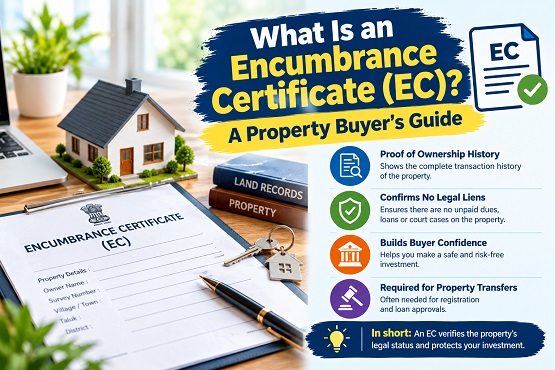
An Encumbrance Certificate (EC) is an important document used when checking a property`s registered transaction history. In Tamil Nadu, buyers commonly obtain an EC before purchasing land, a house or an apartment to identify registered transactions and certain recorded encumbrances affecting the property.
What Information Does an EC Provide?
An EC generally lists relevant registered transactions identified in the registration records for the specified property and search period. Depending on the records, these may include registered sales, mortgages and other registered instruments.
The details available depend on the property identification information, registration records and period selected for the search.
Why Should Buyers Check an EC?
Checking an EC helps buyers investigate the property`s registered history and identify transactions that require further examination.
For example, an EC may reveal a registered mortgage or a previous sale. Such information can help the buyer and legal adviser determine whether additional documents, clarification or action is required before the transaction proceeds.
How Can You Obtain an EC in Tamil Nadu?
The Tamil Nadu Registration Department provides online services for searching and viewing encumbrance details. Buyers can use the official registration portal, TNREGINET, to access the available services.
The property details and search period should be selected carefully to reduce the risk of overlooking relevant transactions.
Does an EC Guarantee Clear Title?
No. An EC is not a complete guarantee of ownership or a defect-free title. Some claims, disputes or interests may not appear in the certificate. Buyers should also examine the sale deed, parent documents, revenue records and relevant court or legal records where necessary.
Conclusion
An EC is an essential part of property due diligence, but it should be reviewed alongside other documents by a qualified property lawyer before a purchase is finalised.
Top Stories
-
 Carpet Area vs Built - up Area vs Super Built - up Area: Key Differences28/Oct/2026 2:53:31 PM
-
 Guideline Value in Tamil Nadu: How It Affects Property Registration28/Oct/2026 2:48:41 PM
-
What Is an Encumbrance Certificate (EC)? A Property Buyer's Guide28/Oct/2026 2:42:57 PM
-
What Is Patta? Why Is It Important When Buying Land in Tamil Nadu?28/Oct/2026 2:28:24 PM
-
 Low-Pressure Area Likely to Form Over South Andaman Sea Within 24 Hours28/Oct/2026 2:27:50 PM
-
 UDS Meaning in Real Estate: What Is Undivided Share of Land?28/Oct/2026 2:23:14 PM

 JB Soft System