
Can Diabetic Patients Eat Bananas on an Empty Stomach?
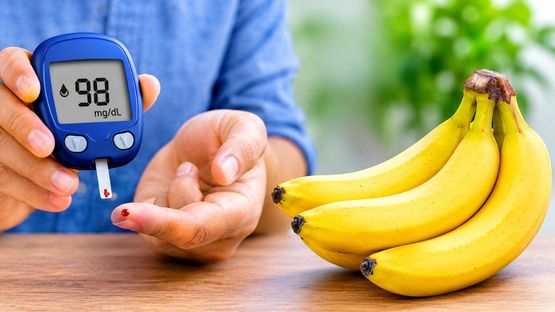
Bananas are a commonly consumed fruit and provide nutrients such as potassium and dietary fibre. They also contain natural sugars and carbohydrates, which can affect blood glucose levels. For people with diabetes, the quantity of banana consumed and how it is included in a meal are important considerations.
Eating a banana on an empty stomach does not affect everyone in the same way. However, people with diabetes may notice a rise in blood sugar after eating one, particularly if their glucose levels are not well controlled. The body`s response can also vary depending on the banana`s size, ripeness and the individual`s overall diet.
How Does Banana Consumption Affect Blood Sugar?
Bananas contain natural sugars, including glucose, fructose and sucrose. During digestion, the carbohydrates in bananas are broken down and absorbed, causing blood glucose levels to rise.
In people without diabetes, insulin helps regulate the increase in blood sugar. In people with diabetes, insulin production or its effective use may be reduced, making blood glucose management more difficult.
The glycaemic response to bananas can vary depending on their ripeness and portion size. Therefore, people with diabetes should consider how bananas fit into their daily meal plan rather than focusing only on whether they are eaten on an empty stomach.
Possible Symptoms of High Blood Sugar
When blood glucose levels become elevated, some people may experience the following symptoms:
- Increased thirst
- Frequent urination
- Tiredness or weakness
- Blurred vision
- Headache
- Nausea
These symptoms can occur for different reasons and are not necessarily caused by eating a banana. Regular blood sugar monitoring is important for people managing diabetes.
How Can People With Diabetes Eat Bananas?
People with diabetes do not necessarily need to avoid bananas completely. A few simple dietary practices can help them include the fruit in a balanced eating pattern.
Choose a smaller portion: A small banana or half of a large banana may be a suitable option, depending on individual dietary requirements.
Combine it with other foods: Bananas can be eaten with unsweetened yoghurt, almonds, peanuts or other suitable nuts.
Include it in a balanced meal: Eating fruit as part of a balanced meal may help manage the overall carbohydrate intake.
Avoid additional sugar: Avoid adding sugar, honey or other sweeteners to banana-based foods and drinks.
Monitor blood glucose: Checking blood sugar levels after eating can help individuals understand how their body responds to different foods.
Should People With Diabetes Avoid Bananas?
Bananas provide potassium, fibre and other nutrients that support general health. Therefore, people with diabetes do not need to eliminate them from their diet in every case.
The portion size, overall carbohydrate intake and individual blood glucose response are important factors. Eating bananas in moderation as part of a balanced diet can be an option for many people with diabetes.
Those who have difficulty controlling their blood sugar should seek personalised dietary guidance from a qualified healthcare professional.
Disclaimer: This article is for general infoformational purposes only and should not be considered a substitute for professional medical advice, diagnosis or treatment.
Top Stories
-
 Gold Loan Warning: Over 50% of Low-Risk Borrowers Take Another Loan Within 12 Months10/Nov/2026 10:44:56 AM
-
Can Diabetic Patients Eat Bananas on an Empty Stomach?10/Nov/2026 10:37:14 AM
-

-
 TNPDCL Excludes Gas-Based Power Plants from New Electricity Tender10/Nov/2026 10:32:22 AM
-
 BSNL Recharge Plans: Unlimited Calls and 100 SMS Daily for Just ₹172 - No Data Included!10/Nov/2026 10:21:11 AM
-
 Kilambakkam Railway Station Opening Date: Why Has the Launch Been Delayed Again?10/Nov/2026 10:14:02 AM

 JB Soft System