
Chennai Plans Bus-Priority Corridor Linking Tambaram, Velachery, Pallavaram and Taramani
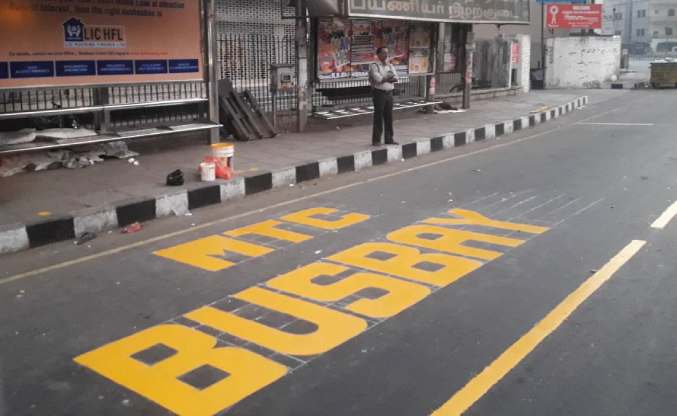
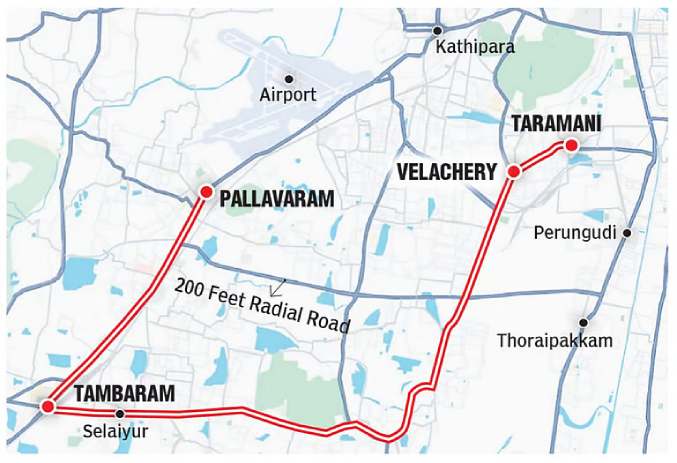
Proposed CUMTA project aims to improve public bus connectivity to the IT Corridor, upgrade road infrastructure and enhance pedestrian safety across south Chennai.
Chennai, October 9: Public bus travel from Tambaram to Chennai’s IT Corridor could become easier if a proposed bus-priority corridor connecting Tambaram, Velachery, Pallavaram and Taramani is implemented. The project is being considered under the Chennai Unified Metropolitan Transport Authority’s (CUMTA) Model Urban Mobility Corridors (MUMC) initiative.
The proposed corridor aims to improve public transport connectivity between residential neighbourhoods and major employment centres in south Chennai. It is also expected to connect with bus-priority infrastructure planned under Phase I along Pallavaram-Thoraipakkam Road and Old Mahabalipuram Road (OMR), potentially creating a more continuous network for buses.
Bus-Only Lanes Planned Based on Traffic Conditions
The proposed bus-priority system may operate differently depending on traffic conditions and bus volumes at various times of the day. The options include introducing bus-only lanes during specified hours, with digital monitoring to enforce restrictions. Physically segregated bus lanes may also be developed wherever necessary.
These measures are intended to give buses better movement along busy roads and improve connectivity for commuters travelling between Tambaram and the IT Corridor.
Road Infrastructure to Receive Major Upgrades
The project will focus on improving overall road infrastructure rather than simply widening existing carriageways. Proposed works include uniform carriageways, green medians, service lanes, improvements to culverts and bridges, safer junctions and grade separators wherever required.
The plans will also incorporate bus bays, bus stops, parking facilities, footpaths and cycling infrastructure. These improvements are intended to make roads more accessible and support different modes of transport.
The Detailed Project Report (DPR) will examine ways to improve bus-stop access and provide safer, more convenient facilities for passengers boarding and alighting from buses.
Pedestrian Safety and Accessibility in Focus
Pedestrian safety is another important aspect of the proposed Chennai bus-priority corridor. Depending on local requirements, the plans may include at-grade crossings, footbridges and skywalks.
Footpaths, bicycle lanes and safer road crossings are also expected to form part of the development. Additional measures will focus on improving road safety and accessibility for women, children and persons with disabilities.
Stormwater Drainage to Address Flooding
Flooding along the identified roads will also be assessed as part of the project. Flood-prone locations and watershed catchments will be studied to determine suitable stormwater drainage arrangements.
The proposed drainage systems will include appropriate discharge points to help prevent water accumulation on roads during heavy rainfall.
Utility Corridors and Better Metro Connectivity
Dedicated utility corridors are proposed alongside stormwater drains to accommodate electricity, water supply, sewage and telecommunications networks. The initiative aims to reduce repeated road excavation for laying and repairing utility infrastructure.
The plans will also consider existing and proposed Metro Rail and Mass Rapid Transit System (MRTS) infrastructure, with an emphasis on providing safe pedestrian access to stations.
CUMTA will coordinate with Chennai Metro Rail Limited (CMRL), Metropolitan Transport Corporation (MTC), Greater Chennai Corporation (GCC), Chennai Metropolitan Development Authority (CMDA) and Chennai Metropolitan Water Supply and Sewerage Board (CMWSSB) while preparing the plans.
If implemented, the proposed corridor could improve public bus connectivity, road safety and access to Chennai’s IT employment hubs. However, the improvements remain part of the proposal and will depend on the project`s planning and implementation.
Top Stories
-
 Joyalukkas Chairman Joy Alukkas Adds Cessna Citation XLS+ Private Jet09/Oct/2026 7:31:24 AM
 -
Chennai Plans Bus-Priority Corridor Linking Tambaram, Velachery, Pallavaram and Taramani09/Oct/2026 6:56:38 AM
-
 Tomorrow Panchangam October 09, 2026 | Auspicious Timings, Rahu Kalam, Gulikai08/Oct/2026 5:51:14 PM
 -
 Gold Loan vs Home Loan: Which Is Better for Urgent Financial Needs?08/Oct/2026 5:39:41 PM
 -
 JB SOFT SYSTEM Helps Organisations Build Custom Community Portals08/Oct/2026 5:30:07 PM
 -
 Arupadai Veedu Murugan Temple, Besant Nagar, Chennai08/Oct/2026 5:24:35 PM

 JB Soft System