
Should You Wash Chicken and Mutton Under Tap Water? Know the Risks
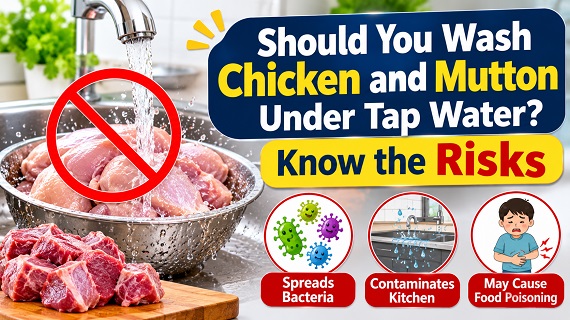
Washing raw chicken, mutton or fish under running tap water is a common practice in many households. People often wash meat to remove blood, dirt and germs before cooking. However, food-safety experts generally advise against washing raw meat because it does not reliably remove harmful bacteria and can spread germs around the kitchen through water droplets.
Why Should You Avoid Washing Raw Meat Under Tap Water?
Raw chicken and other meats may contain bacteria such as Salmonella, Campylobacter and E. coli. When meat is washed under running water, tiny droplets can splash onto the sink, kitchen counter, utensils and nearby food.
This can lead to cross-contamination, especially when vegetables, salads or cooked foods are kept near the sink.
Washing meat with plain water does not guarantee that harmful bacteria will be removed. Adding salt, turmeric, lemon juice or vinegar to the washing water also cannot be relied upon as a method of eliminating all disease-causing bacteria.
Proper cooking at a safe internal temperature is the more reliable way to kill harmful bacteria.
How Can Washing Chicken Spread Bacteria?
A 2022 study published in Physics of Fluids examined the potential health concerns associated with washing raw chicken. The study found that water splashing during washing can spread contaminated droplets to surrounding surfaces. Factors such as water flow and the height of the tap can influence how far the droplets travel.
This means that washing raw chicken can potentially spread bacteria across areas of the kitchen rather than making the meat safer.
How to Handle Chicken, Mutton and Fish Safely
Follow these basic food-safety practices when preparing raw meat:
- Avoid washing raw meat: Chicken and mutton can generally be prepared directly for cooking without rinsing under running water.
- Use separate utensils: Keep a separate cutting board and knife for raw meat to reduce cross-contamination.
- Wash your hands: Clean your hands thoroughly with soap and water for at least 20 seconds after handling raw meat.
- Clean kitchen surfaces: Wash the sink, counters, utensils and cutting boards properly after preparing raw meat.
- Store meat safely: Keep raw meat in a covered container in the refrigerator and separate it from cooked food and ready-to-eat items.
- Cook thoroughly: Make sure the meat reaches a safe internal temperature. Do not rely only on its colour to determine whether it is fully cooked.
What If You Still Prefer to Wash the Meat?
Some people may feel uncomfortable cooking meat without washing it because of long-standing household habits. If you choose to rinse it, keep the water flow low to reduce splashing and keep vegetables, cooked food and other ready-to-eat items away from the sink.
Afterward, clean the sink and nearby surfaces thoroughly and wash your hands with soap and water.
However, it is important to remember that rinsing raw meat does not reliably kill harmful bacteria. Safe storage, careful handling, proper kitchen hygiene and thorough cooking are more important for reducing foodborne illness risks.
Disclaimer: This article is for general food-safety awareness only and should not be considered a substitute for professional medical or food-safety advice.
Top Stories
-
Chennai Rain Today: Moderate Rain in Several Areas27/Nov/2026 10:22:36 AM
-

-
 Power Shutdown Areas in Chennai - Saturday (28.11.2026)27/Nov/2026 10:14:23 AM
-
Should You Wash Chicken and Mutton Under Tap Water? Know the Risks27/Nov/2026 10:12:37 AM
-
 Tamil Nadu Weather Today: Moderate Rain Likely in 19 Districts27/Nov/2026 10:03:44 AM
-
 Tamil Nadu Aims to Achieve 100% HPV Vaccination Coverage by December 202627/Nov/2026 10:00:38 AM

 JB Soft System