
AAC Blocks in Construction: Benefits, Uses and Things to Consider
What Are AAC Blocks?
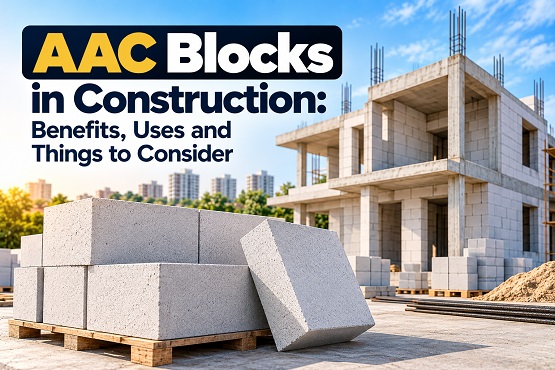
AAC stands for Autoclaved Aerated Concrete. AAC blocks are lightweight masonry units manufactured using a cement-based mixture containing fine material, lime, water and an aerating agent, followed by a controlled curing process in an autoclave.
The manufacturing process creates a cellular structure that makes AAC blocks lighter than many conventional solid masonry units.
They are used in residential, commercial and other building projects, subject to the design and construction requirements.
What Are the Benefits of AAC Blocks?
One major advantage is their relatively low weight, which can reduce the dead load associated with masonry compared with heavier alternatives. Their cellular structure can also provide useful thermal insulation properties.
AAC blocks can be cut and handled relatively easily, which may help improve construction efficiency when suitable tools, materials and workmanship are used.
Their performance depends on the product specification, wall design, installation method and environmental conditions.
Are AAC Blocks Suitable for Every Building?
Not automatically. The choice of masonry material should consider structural design, wall thickness, acoustic requirements, exposure conditions, fixing requirements and the intended use of the building.
AAC blocks are generally used as masonry units rather than assumed to replace the building`s designed structural frame. Their suitability for a particular wall or structural application must be assessed by the project`s qualified professionals.
What Should Homeowners Check?
Before selecting AAC blocks, check product quality, relevant technical specifications, dimensional consistency and compliance with applicable standards.
Proper installation is equally important. The correct mortar or adhesive, suitable joint thickness, appropriate plastering system and manufacturer-recommended fixing methods should be followed.
Builders should also consider the compatibility of AAC blocks with doors, windows, plumbing, electrical installations and wall-mounted fixtures.
AAC Blocks vs Conventional Bricks
AAC blocks are lighter and can offer better thermal insulation than some conventional masonry options. However, the overall cost and performance depend on material prices, transport, labour, wall thickness, finishing requirements and local availability.
Final Advice: AAC blocks can be a useful option for modern construction, but the best material depends on the building design, budget, site conditions and professional recommendations.
Top Stories
-
 Tomorrow Panchangam October 30, 2026 | Auspicious Timings, Rahu Kalam, Gulikai29/Oct/2026 5:51:52 PM
-
AAC Blocks in Construction: Benefits, Uses and Things to Consider29/Oct/2026 5:25:46 PM
-
 What Is RCC in Construction? Uses, Benefits and Important Facts29/Oct/2026 5:23:24 PM
-
 Occupancy Certificate in Real Estate: Importance and Verification Guide29/Oct/2026 5:21:08 PM
-
 Completion Certificate for Buildings in Tamil Nadu: Meaning and Importance29/Oct/2026 5:18:49 PM
-
 Planning Permission vs Building Permit in Tamil Nadu: Key Differences29/Oct/2026 5:16:08 PM

 JB Soft System