
Diwali Shopping 2026: Credit Card vs No Cost EMI Which Is Better?
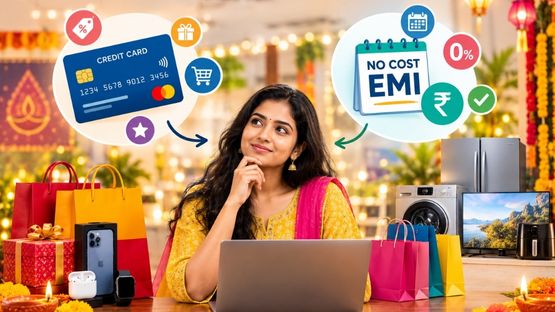
Diwali is a busy shopping season in India, with many people buying clothes, household appliances, smartphones and vehicles. While festive offers and discounts can make purchases attractive, choosing the right payment method is important to manage expenses and avoid unnecessary debt.
Cash, UPI, debit cards, credit cards and Equated Monthly Instalments (EMIs) each have different advantages and limitations. Understanding these options can help shoppers make informed financial decisions during the festive season.
Cash, UPI and Debit Cards
Paying through cash, UPI or a debit card allows customers to pay the full amount immediately. These methods do not create instalment obligations or outstanding credit card balances.
However, making a large payment at once can reduce the money available for emergencies and other essential expenses. Buyers should consider their savings and monthly budget before making expensive purchases.
Credit Cards: Discounts and Reward Points
Credit cards are popular during festive sales because they may offer instant discounts, reward points and special deals on eligible purchases. Some offers can provide discounts of up to 10%, depending on the card, retailer and offer conditions.
For example, a 5% discount on a purchase worth ₹50,000 would reduce the payable amount to ₹47,500.
However, credit cards require careful management. Customers should check the offer conditions and ensure they can repay the full bill by the due date. Spending beyond their repayment capacity or carrying unpaid balances can lead to interest charges and increasing debt.
No-Cost EMI: What Should You Know?
No-cost EMI options are commonly available for smartphones, vehicles and household appliances. They allow customers to divide the purchase amount into monthly instalments instead of paying the entire amount upfront.
However, no-cost EMI does not always mean there are no additional expenses. Processing fees, GST on applicable charges and other terms may increase the final cost. Customers may also miss out on instant discounts available for full payments.
For example, a ₹50,000 purchase could cost more than ₹50,600 after applicable processing fees and taxes, depending on the financing terms.
Before choosing an EMI plan, buyers should check the total repayment amount, processing charges, instalment duration and any discounts they may lose by selecting EMI.
Credit Card vs No-Cost EMI: Which Is Better?
The better option depends on your savings, repayment capacity and the terms offered at the time of purchase.
- Credit card: May be suitable for shoppers who can pay the entire bill on time and want to benefit from eligible discounts s or reward points.
- No-cost EMI: May help those who prefer to spread a large expense across several months, provided the instalments fit comfortably within their budget.
- Cash, UPI or debit card: May be preferable for those who have sufficient funds and want to avoid borrowing or monthly repayment commitments.
Tips for Smarter Diwali Shopping
1. Set a budget before shopping and prioritise essential purchases.
2. Compare the final price across payment options rather than focusing only on advertised discounts.
3. Check processing fees, GST and other applicable charges before choosing EMI.
4. Read credit card offer conditions carefully, including minimum purchase requirements.
5. Avoid borrowing more than you can comfortably repay.
6. Keep enough savings available for emergencies and regular expenses.
Conclusion
Credit cards may offer better value when customers receive genuine discounts and repay their bills in full by the due date. No-cost EMI can help manage cash flow, but additional charges and lost discounts may increase the overall cost.
Before making a festive purchase, compare the final payable amount under each option and choose the method that suits your budget and repayment capacity.
Top Stories
-
 TVK Wins Dharapuram and Maduranthakam By Elections09/Oct/2026 4:16:35 PM
 -

-
 Navi Pillay Wins 2026 Nobel Peace Prize09/Oct/2026 3:52:48 PM
 -
 Gold Price Outlook: Is It the Right Time to Buy Gold After the Recent Decline?09/Oct/2026 3:31:05 PM
 -
Diwali Shopping 2026: Credit Card vs No Cost EMI Which Is Better?09/Oct/2026 3:21:09 PM
-
 Tamil Nadu Weather Alert: Heavy Rain Forecast for 9 Districts Today09/Oct/2026 2:47:16 PM

 JB Soft System