
Early Signs of Vision Loss: 8 Symptoms You Should Never Ignore
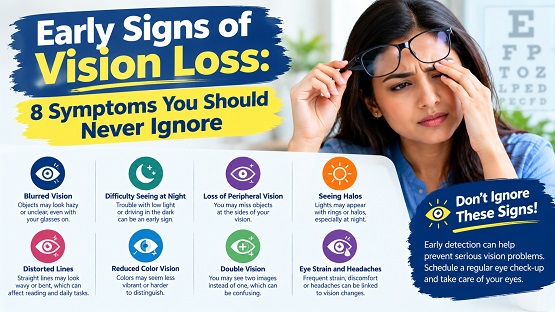
Vision loss does not always happen suddenly. In many cases, changes develop gradually and may go unnoticed until they begin to affect everyday activities. Difficulty seeing at night, missing objects in peripheral vision, blurred eyesight and straight lines appearing distorted can sometimes indicate an underlying eye problem.
Conditions such as glaucoma and diabetic retinopathy may cause little or no noticeable symptoms during their early stages. Understanding the warning signs and getting regular eye examinations can help identify potential problems before they progress.
1. What Are the Early Signs of Vision Loss?
Early warning signs may include:
- Blurred or distorted vision.
- Difficulty seeing clearly at night.
- Frequently bumping into objects or people.
- Missing vehicles or objects approaching from the side.
- Needing more light to read.
- Difficulty recognising faces or following lines while reading.
- Colours appearing faded or less vivid.
- New floaters or flashes of light in your vision.
These symptoms can have different causes, so an eye examination is important if they persist or change.
2. Can Eye Problems Develop Without Noticeable Symptoms?
Yes. Some eye conditions can progress without causing obvious changes in vision during their early stages.
Glaucoma can gradually damage the optic nerve, often affecting peripheral vision first. Diabetic retinopathy may also develop without noticeable symptoms initially.
Because these conditions can progress before a person realises anything is wrong, regular comprehensive eye examinations are important, even when eyesight appears normal.
3. What Does Loss of Peripheral Vision Mean?
Peripheral vision allows you to see objects around you while looking straight ahead. When it becomes impaired, you may struggle to notice people, vehicles or other objects approaching from the side.
Possible signs include bumping into doorframes, difficulty moving through crowded places and problems seeing clearly while driving at night.
Gradual loss of peripheral vision can occur with glaucoma. Because central vision may remain clear for some time, the change can be difficult to recognise without an eye examination.
4. Can Straight Lines Appearing Wavy Be a Sign of an Eye Problem?
Yes. Straight lines appearing bent, wavy or distorted can be a warning sign of a problem affecting the macula, the central part of the retina responsible for detailed vision.
Age-related macular degeneration (AMD) can affect central vision. Other warning signs may include a blurred or blank area in the centre of your vision, faded colours or difficulty recognising faces.
New distortion should be assessed by an eye specialist, particularly if it develops suddenly.
5. Which Eye Conditions Can Affect Vision Without Early Symptoms?
Several conditions may affect vision before noticeable symptoms appear.
Glaucoma: Often causes gradual peripheral vision loss and may not produce early warning signs.
Diabetic retinopathy: Can damage the retina in people with diabetes without causing obvious symptoms initially.
Age-related macular degeneration (AMD)D): Affects central vision and may cause blurred or distorted images.
Retinal detachment: May cause sudden floaters, flashes of light, a shadow or a curtain-like area across the vision.
Retinitis pigmentosa: This inherited condition can cause difficulty seeing in low light, followed by progressive loss of peripheral vision.
Early diagnosis and appropriate treatment can help manage some of these conditions and reduce the risk of further vision loss.
6. Who Should Pay Extra Attention to Eye Health?
Some people may need more frequent eye examinations because of their age, medical history or other risk factors.
- People with diabetes.
- People with a family history of glaucoma.
- Adults over 40, particularly older adults.
- People with high myopia, or significant short-sightedness.
- People who use steroid medicines or eye drops over a long period.
Long-term steroid use can increase the risk of glaucoma in some people. Steroid-containing eye drops should only be used under appropriate medical supervision.
7. When Should You Seek Immediate Medical Attention?
Certain changes in vision need urgent assessment. These include:
- A sudden increase in floaters.
- Flashes of light.
- A dark shadow or curtain-like effect across your vision.
- Sudden blurred vision or loss of vision.
- Sudden distortion or a new blind spot.
These symptoms may indicate a serious problem, including retinal detachment. Seek immediate eye care rather than waiting for the symptoms to improve.
If an eye injury occurs, avoid rubbing or pressing on the eye and seek medical attention.
8. How Often Should You Have an Eye Examination?
The recommended frequency depends on your age, risk factors, medical history and existing eye conditions. There is no single schedule that suits everyone.
People with diabetes may need regular comprehensive retinal examinations, even when their vision seems normal. Those with glaucoma risk factors or existing eye conditions may also require more frequent checks.
An eye specialist can recommend an appropriate examination schedule. A glasses prescription check alone may not assess every part of the eye or detect all eye diseases.
How Can You Protect Your Vision?
A few practical steps can support long-term eye health:
- Attend regular comprehensive eye examinations.
- Keep blood sugar and blood pressure under control with appropriate medical care.
- Avoid smoking.
- Wear sunglasses that provide adequate UV protection when outdoors.
- Use protective eyewear during activities that could injure your eyes.
- Avoid prolonged use of eye drops, especially steroid-containing products, without medical advice.
- Encourage children to spend time outdoors, as outdoor activity is associated with a lower risk of developing myopia.
Disclaimer: This article is for general informational purposes only and should not be considered a substitute for professional medical advice, diagnosis, or treatment.
Top Stories
-
-
 Solar Panel Subsidy 2026: Tamil Nadu Residents Can Get Up to ₹1 Lakh for Rooftop Solar28/Oct/2026 11:56:04 AM
-

-
Early Signs of Vision Loss: 8 Symptoms You Should Never Ignore28/Oct/2026 11:44:21 AM
-
 Chennai Rain Power Cut Status: Emergency Helplines & Monsoon Safety Rules28/Oct/2026 11:31:51 AM
-
 How to Reduce Your TNPDCL Electricity Bill During Peak Summer Months28/Oct/2026 11:22:07 AM

 JB Soft System