
Mylapore: The Untold History of Chennai
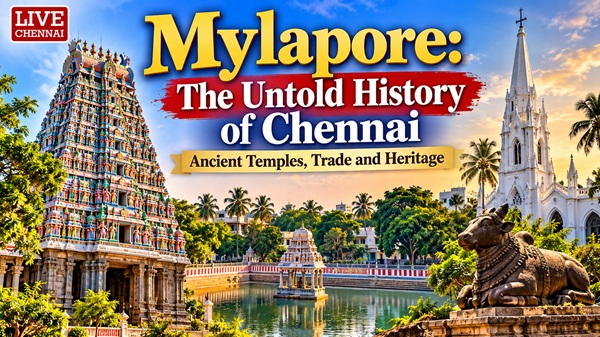
A Historic Neighbourhood with a Story Beyond Its Famous Temples
Mylapore is much more than a popular temple neighbourhood in Chennai. It is one of the city`s oldest settlements, with a history shaped by maritime trade, ancient religious traditions, Tamil literature, weaving and cultural exchange.
Long before modern Chennai developed around Fort St. George, Mylapore had its own identity as a historic settlement. Its temples, traditional streets and religious institutions continue to reflect the many layers of history that have shaped this part of the city.
Mylapore: The Story Behind the Name
Mylapore is traditionally associated with the Tamil word mayil, meaning peacock. The locality is also known as Thirumayilai in Tamil.
According to local religious tradition, Goddess Parvati worshipped Lord Shiva in the form of a peacock at this sacred place. This legend is closely connected with the identity of the famous Kapaleeshwarar Temple.
The name reflects the deep connection between Mylapore`s cultural identity, religious traditions and Tamil heritage.
Kapaleeshwarar Temple: The Heart of Historic Mylapore
The Kapaleeshwarar Temple is one of Mylapore`s most recognised landmarks and an important centre of Tamil Shaivite tradition.
Dedicated to Lord Shiva, the temple is known for its Dravidian architecture, colourful gopuram and traditional religious festivals. The surrounding streets continue to preserve the atmosphere of an old temple neighbourhood, with flower shops, traditional markets and houses reflecting the area`s cultural character.
The annual Panguni festival attracts large numbers of devotees and visitors, keeping Mylapore`s religious traditions alive across generations.
Mylapore`s Forgotten Maritime Past
One of the lesser-known aspects of Mylapore`s history is its connection with maritime trade.
Historical accounts describe Mylapore as an ancient coastal settlement associated with trade and commercial activity. The nearby coastline connected the region with wider maritime networks, bringing merchants, goods and cultural influences into contact with local communities.
References to the historic Mylai port, including the name Shahbandar in accounts associated with the eighteenth century, point to the area`s commercial significance.
This maritime history offers another perspective on Mylapore beyond its better-known temples and religious traditions.
A Centre of Tamil Literature and Religious Traditions
Mylapore has long been associated with Tamil literary and religious heritage. Local traditions connect the neighbourhood with Thiruvalluvar, the celebrated Tamil poet and author of the Thirukkural.
Over the centuries, Mylapore became an important centre of Shaivisism and Vaishnavism, while Jain, Christian and Muslim communities also contributed to its diverse social and cultural history.
The coexistence of different traditions has helped shape Mylapore`s distinctive place in Chennai`s heritage.
Santhome and the Changing History of Mylapore
The Santhome area, close to Mylapore, adds another chapter to the neighbourhood`s history. It is associated with the Christian tradition surrounding Saint Thomas and is home to the historic Santhome Basilica.
The area`s past also includes periods of European colonial influence and changes in coastal settlement patterns. These developments formed part of the wider transformation of the Mylapore region over several centuries.
Together, Mylapore and Santhome reveal how religious traditions, trade and changing political influences shaped the southern coastal settlements of present-day Chennai.
From Traditional Streets to Modern Chennai
During the growth of modern Madras, Mylapore gradually became integrated into the expanding city. Traditional homes, temple streets, markets and cultural institutions continued to coexist with new roads, commercial establishments and residential developments.
Even as Chennai expanded, Mylapore retained its identity as a centre of religious observance, music, literature and traditional Tamil life.
Its streets continue to attract devotees, residents, visitors and people interested in the city`s heritage.
Mylapore Today: Where History Meets Modern Life
Today, Mylapore remains one of Chennai`s most recognisable cultural neighbourhoods. Kapaleeshwarar Temple, traditional markets, music sabhas and historic religious institutions preserve its connection with the past.
The neighbourhood also reflects the changes taking place across modern Chennai, as older residential areas adapt to contemporary urban life.
Despite these changes, Mylapore`s identity remains closely linked to its temples, cultural traditions, literary associations and historic coastal connections.
Why Mylapore`s History Still Matters
The untold history of Mylapore is the story of a settlement that developed through religion, maritime trade, literature and cultural exchange long before modern Chennai took shape.
Its temples preserve centuries-old traditions, its historic associations reveal connections with Tamil literary heritage, and its coastal past highlights the importance of trade in the region`s development.
Mylapore is not simply an old locality on Chennai`s map. It is a living chapter of the city`s history, where tradition and modern urban life continue to exist side by side.
Top Stories
-
 Saidapet Offers: Discover Latest Deals and Discounts on LiveChennai20/Oct/2026 2:45:53 PM
-
 Top 10 Malls in Chennai 2026: See This Full Video for Shopping & Fun20/Oct/2026 2:29:19 PM
-
 Vaanamae Ellai: Tamil Singing Event to Be Held in Chennai on October 2120/Oct/2026 2:24:15 PM
-
 Top Malls Near West Mambalam, Chennai: Best Shopping, Food and Entertainment Destinations20/Oct/2026 2:19:36 PM
-
Mylapore: The Untold History of Chennai20/Oct/2026 2:09:38 PM
-

 JB Soft System