
Important Car and Bike Insurance Rules: What Vehicle Buyers Need to Know
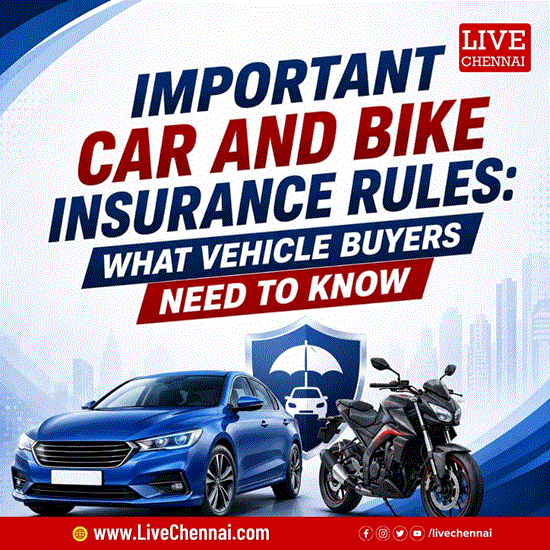
If you are planning to buy a new car or two-wheeler, understanding the insurance requirements is essential. Third-party motor insurance is mandatory in India, and the purpose of this requirement is to ensure that victims of road accidents can receive compensation.
However, the information circulating about a new Supreme Court order making four years of third-party insurance mandatory for cars and six years for two-wheelers does not match the Supreme Court`s established direction that is currently reflected in official and legal records.
The Supreme Court`s July 20, 2018 order mandated a three-year third-party insurance cover for new cars and a five-year third-party insurance cover for new two-wheelers.
Here is what vehicle buyers should know.
Third-Party Insurance Is Mandatory
Under the Motor Vehicles Act, a motor vehicle cannot be used in a public place without a valid insurance policy that meets the statutory requirements for third-party risk coverage.
Third-party insurance primarily protects against legal liability arising from injury, death or damage caused to a third party due to the use of the insured vehicle.
The objective behind compulsory third-party insurance is to provide a mechanism for compensation to accident victims and ensure that vehicle owners meet their legal responsibility.
What Is the Mandatory Insurance Period for New Vehicles?
According to the Supreme Court`s direction issued in 2018 and subsequent official references:
New cars: Mandatory third-party insurance for three years
New two-wheelers: Mandatory third-party insurance for five years
The Supreme Court directed that these requirements be implemented for policies sold from September 1, 2018.
The reason behind introducing long-term third-party insurance was that many vehicle owners failed to renew their insurance after the first year, leaving vehicles uninsured and potentially making compensation more difficult for accident victims.
Why Is Long-Term Third-Party Insurance Important?
The Supreme Court-appointed committee noted concerns regarding vehicle owners failing to renew their insurance policies after the initial period.
Long-term third-party coverage was therefore introduced to ensure that new vehicles remain insured for a longer period from the date of purchase. The move was also aimed at strengthening protection for road accident victims.
Four Important Types of Motor Insurance Cover
When purchasing a new vehicle, buyers should understand the different components of motor insurance.
1. Third-Party Insurance
This is the legally mandatory component. It covers the policyholder`s legal liability towards third d parties in accordance with the policy and applicable law.
For new vehicles, the long-term mandatory third-party period is:
- Three years for cars
- Five years for two-wheelers
2. Own Damage Cover
Own Damage, commonly known as OD cover, provides protection for damage to your own vehicle, subject to the policy`s terms and exclusions.
This may cover losses arising from situations such as accidents, fire, theft and certain natural or man-made events, depending on the policy.
3. Personal Accident Cover
Personal Accident, or PA cover, provides specified financial protection in the event of accidental death or certain disabilities, subject to the terms and conditions of the policy.
4. Passenger or Occupant Cover
Depending on the type of vehicle and insurance policy, additional coverage may be available for passengers or occupants.
Vehicle buyers should carefully check what is included and what is optional before finalising their insurance policy.
Should You Read the Insurance Documents Carefully?
Absolutely.
When purchasing a new car or bike, buyers should not simply focus on the vehicle`s ex-showroom price or on-road price. The insurance policy is also an important part of the purchase.
Before signing the documents, check:
- The duration of third-party coverage
- The duration of own-damage coverage
- Whether personal accident cover is included
- Whether additional passenger or occupant cover is available
- The policy exclusions
- The renewal requirements
- Add-on covers and their cost
It is also important to remember that third-party insurance and comprehensive insurance are not the same. Third-party insurance covers legal liability towards others, while comprehensive or package policies may also include protection for damage to your own vehicle.
What Happens if You Drive Without Valid Insurance?
Driving a vehicle without the legally required insurance can lead to penalties under the Motor Vehicles Act. Therefore, vehicle owners should ensure that their insurance remains valid and is renewed on time after the applicable policy period ends.
Claims About Digital Insurance Checks at Petrol Pumps
There have also been claims about a Supreme Court order requiring petrol pumps to digitally scan number plates and verify the insurance status of vehicles before providing fuel.
However, the Supreme Court material and official sources reviewed for this article do not establish a nationwide Supreme Court mandate introducing four-year and six-year third-party policies or compulsory digital insurance scanning at petrol l pumps. Such claims should therefore be verified against a specific government notification, court order or official implementation announcement before being published as a confirmed nationwide rule.
Key Takeaway for New Vehicle Buyers
If you are purchasing a new vehicle, the most important point is to ensure that it has the mandatory third-party insurance coverage required by law.
Based on the Supreme Court`s established direction and official references currently available:
New cars require three years of third-party insurance, while new two-wheelers require five years of third-party insurance.
Before purchasing a vehicle or insurance policy, buyers should carefully review the latest policy terms and any updated regulatory notifications issued by the relevant authorities.
Top Stories
-
 Power Shutdown Areas in Chennai - Tuesday (06-10-2026)04/Oct/2026 9:40:38 PM
 -
 Power Shutdown Areas in Chennai - Monday (05-10-2026)04/Oct/2026 9:39:28 PM
 -
 ₹19.8 Crore for an Apartment! A Look at Chennai’s Luxury Address Beside Express Avenue04/Oct/2026 10:42:50 AM
 -
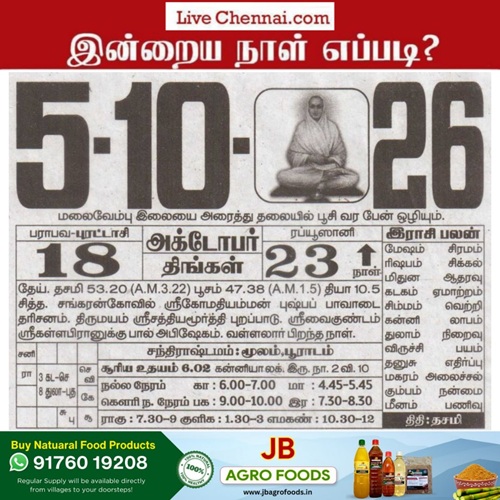 Today Nalla Neram October 5, 2026 – Rahu Kalam, Yamagandam & Tamil Panchangam03/Oct/2026 6:22:39 PM
 -
 Tomorrow Panchangam October 04, 2026 | Auspicious Timings, Rahu Kalam, Gulikai03/Oct/2026 6:21:18 PM
 -
 Bigg Boss Tamil 10 Day 26: Javeed, Dhanya, Savinya and Ashmitha Face Major Twist03/Oct/2026 5:30:20 PM

 JB Soft System