
Body Odor: Causes, Treatment and Prevention
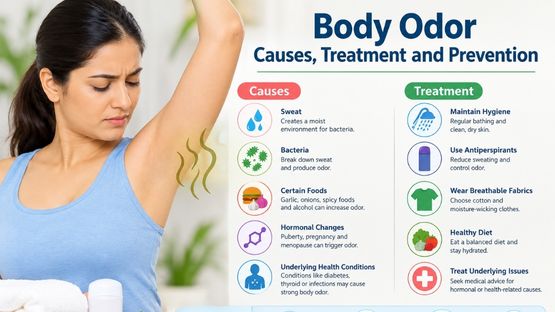
Body odor occurs when sweat mixes with bacteria on the skin. Hormonal changes, food, medications, stress, infections, and certain health conditions can affect body odor.
What Is Body Odor?
Sweat itself usually has no strong smell. Body odor develops when bacteria break down substances in sweat. It commonly occurs in areas such as the armpits and groin, where apocrine sweat glands are found.
Body odor usually becomes more noticeable during puberty when apocrine glands become active.
What Causes Body Odor?
Common causes and contributing factors include:
- Exercise and excessive sweating.
- Stress or anxiety.
- Hot weather.
- Certain foods and drinks.
- Hormonal changes.
- Medications and supplements.
- Genetics.
- Certain health conditions.
Diabetes, liver disease, kidney disease, thyroid problems, infections, menopause, and gout can sometimes cause changes in body odor.
How Is Body Odor Treated?
Treatment depends on the cause. Helpful steps include:
- Bathe or shower regularly and keep the armpits and groin clean.
- Wear clean, loose-fitting, breathable clothes.
- Identify foods that make odor worse.
- Manage stress to reduce excessive sweating.
For severe sweating or persistent body odor, a healthcare professional may recommend prescription antiperspirants, medications, antibiotics, botulinum toxin injections, or other treatments.
Natural Ways to Reduce Body Odor
Some people try baking soda, green tea, diluted apple cider vinegar, or diluted lemon juice. These methods may not work for everyone and can irritate sensitive skin, so use them carefully.
When Should You See a Doctor?
Seek medical advice if you have:
- Sudden changes in body odor.
- Excessive or unexplained sweating.
- Heavy sweating during sleep.
- Frequent skin infections.
- Body odor that does not improve with regular hygiene.
- Fruity-smelling breath or body odor, which can sometimes be linked to diabetic ketoacidosis.
Disclaimer: This article is for general informational purposes only and should not replace professional medical advice, diagnosis, or treatment.
Top Stories
-
 TNSTC Tambaram to Bengaluru Bus Timings: AC Economy and Regular Services23/Oct/2026 6:26:10 PM
 -
 Tomorrow Panchangam October 24, 2026 | Auspicious Timings, Rahu Kalam, Gulikai23/Oct/2026 5:51:42 PM
 -
 Best Areas Near Medavakkam, Chennai: A Guide to Nearby Residential and Lifestyle Localities23/Oct/2026 5:28:27 PM
 -
 Bigg Boss Tamil 10: Muniyamma’s 40 Sovereign Gold Jewellery Claim Sparks Debate23/Oct/2026 5:18:44 PM
 -
 Chennai Rain Complaint WhatsApp Number 2026: How to Register Complaints23/Oct/2026 4:50:18 PM
 -


 JB Soft System