
Dr. APJ Abdul Kalam: 10 Lesser-Known Facts About India's Missile Man
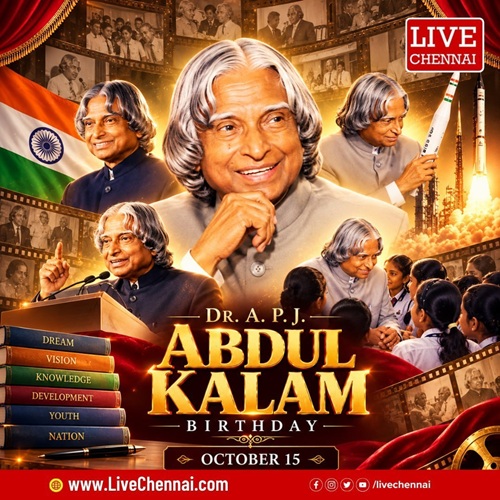
From selling newspapers as a schoolboy to leading India`s space research programmes, Dr. APJ Abdul Kalam`s life was shaped by perseverance, scientific curiosity and a deep commitment to education. Although widely remembered as India`s Missile Man and former President, several lesser-known aspects of his journey reveal the values that guided him throughout his life.
1. He Earned His First Money by Selling Newspapers
Born into a modest family in Rameswaram, Tamil Nadu, Kalam began earning money at a young age by helping his cousin distribute newspapers. He balanced this responsibility with his studies, developing the discipline and determination that later defined his career.
2. He Narrowly Missed Becoming an Air Force Pilot
Kalam dreamed of joining the Indian Air Force as a pilot. However, he ranked ninth in the selection process, when only eight candidates were chosen. Although the setback ended that particular ambition, it led him towards a career in aerospace science and engineering.
3. His Visit to NASA Influenced His Scientific Journey
In 1963, Kalam visited NASA in the United States as part of his professional exposure to space research. The experience contributed to his understanding of launch technology and supported his later work on India`s indigenous space programme.
4. He Led India`s First Indigenous Satellite Launch Vehicle
At the Indian Space Research Organisation (ISRO), Kalam served as project director of the Satellite Launch Vehicle-III (SLV-III). The programme achieved a major milestone in 1980 when it successfully placed the Rohini satellite into orbit, strengthening India`s capabilities in space technology.
5. He Played a Key Role in Pokhran-II
Kalam was one of the prominent scientific figures associated with India`s nuclear tests at Pokhran in May 1998. Stories about his efforts to maintain secrecy, including claims that he disguised himself as a soldier, have added to the public fascination surrounding the operation.
6. He Maintained a Simple Lifestyle
Despite reaching the highest constitutional office in India, Kalam was known for his modest personal habits. His possessions reportedly included books, clothes, a veena, a CD player and a laptop. His simple lifestyle reflected his emphasis on knowledge and public service rather than material wealth.
7. He Was Passionate About Playing the Veena
Beyond science and technology, Kalam had a strong interest in music. He played the veena, a traditional Indian string instrument, and music remained an important part of his personal life. His veena is displayed at the Rashtrapati Bhavan museum.
8. He Envisioned Solar Power for Rashtrapati Bhavan
Kalam encouraged the use of renewable energy and reportedly prerepared a plan to introduce solar power at the President`s estate. However, his presidential term ended before the proposal could be implemented.
9. A Bacterium Was Named in His Honour
Kalam`s name has also found a place in scientific research beyond India`s borders. Solibacillus kalamii, a bacterium identified in connection with research involving the International Space Station, was named in his honour.
10. He Considered Teaching His Greatest Calling
Kalam frequently emphasised the importance of educating and inspiring young people. Even after serving as President, he continued interacting with students and delivering lectures. On July 27, 2015, he collapsed while delivering a lecture at IIM Shillong and passed away later that day.
Dr. APJ Abdul Kalam: A Legacy That Continues to Inspire
Born on October 15, 1931, in Rameswaram, Tamil Nadu, Avul Pakir Jainulabdeen Abdul Kalam served as India`s 11th President from 2002 to 2007. He received the Bharat Ratna, India`s highest civilian award, in 1997.
His widely read books include Wings of Fire, India 2020 and Ignited Minds. Through his contributions to science, public service and education, Kalam inspired generations of Indians to pursue knowledge, work hard and dream big.
His life remains a reminder that a person`s background need not determine their future, and that the pursuit of knowledge can create opportunities to serve the nation.
Top Stories
-
 Average Car Loan Amount in India Rises 49% to ₹8.2 Lakh; Loan Tenures Get Longer15/Oct/2026 1:11:33 PM
 -
 What Should Gold Investors Do Now? Gold Falls to ₹1,08,120 per Sovereign in Chennai15/Oct/2026 1:02:39 PM
 -
 Tamil Nadu Ministers’ Contact Numbers and Email IDs Released for Public Complaints15/Oct/2026 12:10:24 PM
 -
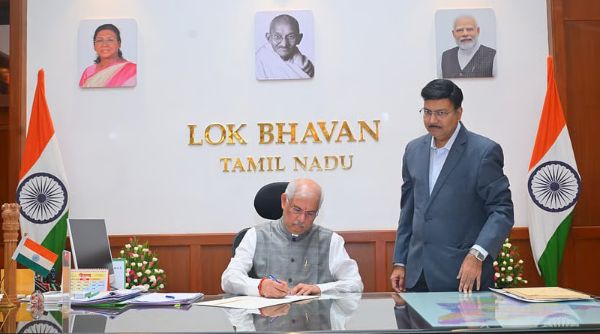 R.V. Arlekar Takes Charge as Full-Time Tamil Nadu Governor15/Oct/2026 12:02:26 PM
 -
 Does Washing Your Hair or Applying Oil Cause Hair Fall?15/Oct/2026 11:53:13 AM
 -
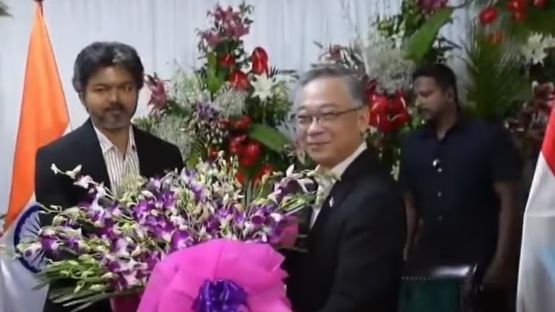 Chennai Opens 46 MW Data Centre in Ambattur with Tamil Nadu CM Vijay and Singapore Deputy PM15/Oct/2026 11:35:48 AM

 JB Soft System