
How to Identify Fake Bank SMS Messages and Protect Your Money
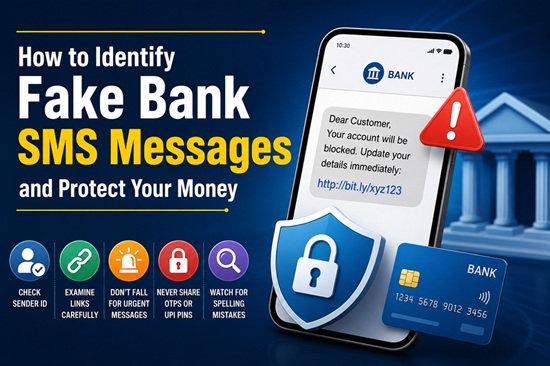
Online banking scams are becoming increasingly common, with cybercriminals using fake SMS messages that appear to come from banks to trick people into revealing sensitive information or transferring money. Since these messages can look remarkably genuine, it is important to know how to identify the warning signs before taking any action.
Here are five simple ways to spot a fraudulent bank SMS and protect your money:
1. Check the Sender ID
Always check the sender ID before trusting a bank message. Genuine bank SMS messages generally come from registered sender IDs rather than ordinary mobile numbers. If a message claiming to be from your bank comes from a regular mobile number, treat it with caution.
2. Examine Links Carefully
Never click on suspicious links received through SMS. Be especially cautious of shortened URLs such as bit.ly or unfamiliar website addresses.
Instead of clicking a link in a message, open your bank`s official website or mobile banking app directly. Although legitimate websites generally use “https://”, HTTPS alone does not guarantee that a website is genuine. Always check the domain name carefully.
3. Don`t Fall for Urgent or Threatening Messages
Scammers often create a sense of panic by claiming that your bank account will be blocked, your KYC will expire, or your banking services will be suspended immediately.
Do not let such messages pressure you into acting quickly. If you are concerned, contact your bank through its official website, app or customer service number and verify the information.
4. Never Share OTPs or UPI PINs
Never share confidential banking information such as your OTP, UPI PIN, ATM PIN, CVV, password or account credentials with anyone.
Banks do not require customers to disclose such sensitive information through SMS, phone calls or other unsolicited communications. If a message asks for these details, it is a major warning sign of fraud.
5. Watch for Spelling and Grammar Mistakes
Fraudulent messages may contain spelling mistakes, grammatical errors, unusual wording or poor formatting. These can be useful warning signs.
However, scammers can also create professionally written messages. Therefore, do not rely on language errors alone. Always verify the sender and the information through an official channel.
What to Do If You Receive a Suspicious SMS
If you receive a suspicious bank message, do not click on any links, download attachments or reply to the message. Instead, verify the information directly through your bank`s official website, mobile app or customer service.
Suspicious messages can be reported through the Sanchar Saathi Chakshu facility. If you have already lost money due to a cybeber fraud, report it immediately through the 1930 Cyber Crime Helpline and contact your bank to secure your account.
A few seconds of caution can prevent a major financial loss. Always verify before you click, and never share your banking credentials or security codes with anyone.
Top Stories
-
 Power Shutdown Areas in Chennai - Tuesday (06-10-2026)04/Oct/2026 9:40:38 PM
 -
 Power Shutdown Areas in Chennai - Monday (05-10-2026)04/Oct/2026 9:39:28 PM
 -
 ₹19.8 Crore for an Apartment! A Look at Chennai’s Luxury Address Beside Express Avenue04/Oct/2026 10:42:50 AM
 -
 Today Nalla Neram October 5, 2026 – Rahu Kalam, Yamagandam & Tamil Panchangam03/Oct/2026 6:22:39 PM
 -
 Tomorrow Panchangam October 04, 2026 | Auspicious Timings, Rahu Kalam, Gulikai03/Oct/2026 6:21:18 PM
 -
 Bigg Boss Tamil 10 Day 26: Javeed, Dhanya, Savinya and Ashmitha Face Major Twist03/Oct/2026 5:30:20 PM

 JB Soft System