
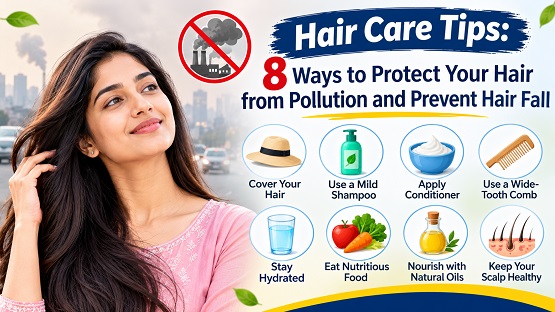
Hair Care Tips: 8 Ways to Protect Your Hair from Pollution and Prevent Hair Fall
Air pollution, vehicle smoke and dust can affect not only respiratory health but also the condition of the hair and scalp. People who travel regularly through busy roads, work outdoors or live near industrial areas may be exposed to higher levels of airborne pollutants.
Fine dust particles, vehicle emissions and other pollutants can settle on the hair, making it look dirty and feel rough. Exposure may also contribute to dryness, reduced softness and increased hair breakage, particularly in people with already dry or damaged hair.
Some people may also experience scalp irritation, itching or worsening dandruff. However, air pollution is not the only cause of hair fall. Nutritional deficiencies, stress, hormonal changes, genetics and certain health conditions can also contribute to hair loss.
Here are eight simple hair care practices that may help protect your hair from pollution and maintain scalp health.
8 Ways to Protect Your Hair from Pollution and Hair Fall
1. Cover Your Hair When Going Outdoors
Dust and pollution can settle on your hair when you travel outdoors. Wearing a clean cap or scarf can help reduce direct exposure.
People who travel long distances on two-wheelers should wear a properly fitted helmet and keep its inner lining clean.
If you have long hair, tying it loosely or braiding it can reduce contact with dust and prevent it from becoming tangled.
Avoid keeping wet hair covered under a helmet for long periods, as trapped sweat and moisture may cause scalp discomfort. Regularly clean your scarves, caps and helmet lining.
2. Use Hair Oil in Moderation
Oils such as coconut oil and argan oil may help reduce dryness and improve hair softness. Applying a small amount to the lengths and ends can also help reduce breakage.
You can apply a little coconut oil before bathing and leave it on for around 20–30 minutes before washing your hair with a mild shampoo.
However, oiling does not provide complete protection against air pollution. Excess oil may attract dust, so avoid applying large quantities before going outdoors.
People with dandruff, an itchy scalp or excessive oiliness should be careful about applying oil directly to the scalp, as it may worsen discomfort in some cases.
3. Choose the Right Shampoo
Keeping your hair clean is important, especially if you are regularly exposed to dust and smoke. However, washing your hair too frequently does not automatically make it healthier.
Choose your washing routine based on your scalp`s oil production, sweating and exposure to dust. People with oily scalps or those working in dusty environments may need to wash their hair more frequently, while people with dry hair may prefer longer intervals.
Follow these basic shampooing practices:
- Apply shampoo gently to the scalp.
- Avoid scratching or rubbing the scalp with your nails.
- Use lukewarm or comfortably cool water.
- Avoid rubbing the hair lengths aggressively.
- Rinse thoroughly to remove shampoo residue.
Sulphate-free shampoos may help some people manage dryness, but they are not necessary for everyone. Choose a product that suits your scalp and hair type.
4. Do Not Skip Conditioner
Using conditioner after shampooing can improve hair softness and reduce friction. It may be particularly useful for hair that has become dry due to environmental exposure or heat styling.
Apply conditioner mainly from the middle of the hair length to the ends. Leave it on for the duration mentioned on the product label and rinse thoroughly.
Conditioner can make hair easier to comb and help reduce breakage caused by tangling. People with long hair can also use a wide-toothed comb to gently remove knots.
Remember that conditioner supports external hair care but does not treat every underlying cause of hair fall.
5. Use a Hair Mask for Dry Hair
If your hair feels particularly dry, a moisturising hair mask may help improve softness and manageability.
Choose a product suitable for your hair type and follow the instructions on its packaging. Many hair masks are used for around 5–20 minutes, depending on the product.
You do not necessarily need expensive products to maintain healthy hair. Using a regular conditioner correctly may also provide useful benefits.
Avoid applying homemade mixtures containing lemon juice, baking soda or other potentially irritating ingredients directly to the scalp. If your scalp is already irritated, red or damaged, be cautious when trying new products.
6. Dry Your Hair Gently
Wet hair can be more vulnerable to damage from pulling and rough handling. Rubbing it vigorously with a towel or forcefully removing tangles may lead to breakage.
Use a soft cotton or microfibre towel to gently absorb excess water. Avoid twisting or squeezing the hair tightly.
If you use a hair dryer, choose a low or medium heat setting and avoid directing hot air at one section for too long. Frequent use of straighteners and curling irons may also damage the outer layer of the hair.
Allowing hair to dry naturally may be suitable for many people, but avoid leaving the scalp wet for unnecessarily long periods.
7. Apply Hair Serum Correctly
Hair serum can form a light coating on the hair surface, helping reduce friction and tangling. It may also improve smoothness and shine.
Apply a small quantity to the middle lengths and ends of your hair, following the product instructions. Using too much may make your hair look greasy.
Keep these points in mind:
- Choose a serum suitable for your hair type.
- Check whether the product is intended for scalp or hair-length application.
- Stop using it if you experience itching or irritation.
- Do not assume that serum protects your hair from all effects of pollution.
Hair serum is mainly a cosmetic hair care product and does not treat the underlying causes of hair loss.
8. Eat a Balanced and Nutritious Diet
External hair care is important, but proper nutrition also supports hair health. Inadequate intake of certain nutrients may contribute to increased hair shedding in some people.
Include a variety of nutritious foods in your daily diet:
- Protein: Eggs, milk, curd, lentils, chickpeas, beans and soy provide protein needed for normal hair growth.
- Iron: Green leafy vegetables, lentils and other iron-rich foods help meet the body`s iron requirements. Vitamin C-rich foods can support iron absorption.
- Healthy fats: Almonds, walnuts, peanuts and different seeds can be included in moderate amounts.
- Fruits and vegetables: A variety of fruits and vegetables provides essential vitamins, minerals and other nutrients.
- Water: Drink enough water according to your body`s needs to maintain overall health.
Avoid taking high doses of biotin, iron or other supplements without medical advice. Supplements may be necessary when a specific deficiency is identified, but unnecessary use may not improve hair health.
Additional Tips to Protect Hair from Air Pollution
Along with these eight practices, a few simple daily habits may help maintain hair and scalp hygiene.
1. Clean your hair when needed after returning home: Check whether dust has accumulated on your hair and wash it when necessary. Avoid vigorous rubbing.
2. Change pillowcases regularly: Sweat, oil and dirt can accumulate on pillowcases, so wash and replace them frequently.
3. Keep combs and helmets clean: Remove accumulated hair, dust and oil from combs. Clean helmet linings according to the manufacturer`s instructions.
4. Reduce outdoor exposure during high pollution: Check local air quality updates and limit prolonged outdoor activities when pollution levels are high.
5. Avoid tight hairstyles: Frequently tying or braiding hair tightly can put pressure on the roots and contribute to hair loss in some people.
When Should You Consult a Dermatologist for Hair Fall?
Hair fall is not always caused by air pollution. Other possible causes include iron deficiency, thyroid problems, hormonal changes, medication side effects, stress and genetic factors.
Instead of repeatedly changing hair care products, it is important to identify the actual reason for persistent hair loss.
Consult a dermatologist if you notice:
- Hair fall that is significantly greater than usual.
- Patchy hair loss.
- Persistent scalp itching or redness.
- Scalp sores, swelling or pus.
- Sudden reduction in hair thickness.
- Hair loss that continues despite following regular care practices.
A doctor may recommend tests depending on your symptoms and medical history. Identifying the underlying cause can help determine the appropriate treatment.
Final Thoughts
Air pollution, smoke and dust may affect hair texture and scalp comfort. Following a consistent hair care routine can help reduce some of these effects.
Protecting your hair outdoors, using suitable shampoo and conditioner, limiting heat styling and eating a balanced diet are useful steps towards maintaining healthy hair.
Hair growth is a gradual process, so visible changes may take time. Remember that healthy hair care involves both proper external maintenance and attention to overall health. Seek medical advice if hair loss or scalp problems persist.
Disclaimer: This article is for general informational purposes only and should not be considered a substitute for professional medical advice, diagnosis or treatment.
Top Stories
-
 Chennai Metro Reduces Poonamallee - Vadapalani Travel Time to Just 30 Minutes02/Nov/2026 11:11:53 AM
-
 Kanchipuram Kumarakottam Murugan Temple Kumbabishekam on November 22, 202602/Nov/2026 11:11:39 AM
-
 Chennai to Get a Massive 15 Lakh Sq. Ft. Saravana Stores Retail Complex on Radial Road
02/Nov/2026 10:48:53 AM -
Hair Care Tips: 8 Ways to Protect Your Hair from Pollution and Prevent Hair Fall02/Nov/2026 10:43:37 AM
-
 Pudukkottai Drone Ban on November 2, 2026: Restrictions Ahead of CM Vijay’s Visit02/Nov/2026 10:26:54 AM
-
 EPFO New Rules 2026: WhatsApp PF Balance Check and Automatic Settlement for Small Accounts02/Nov/2026 10:13:19 AM

 JB Soft System