Air Hostess Training Atm Centers Banks Beauty Parlours Bike Service Centres Best Time to Visit Blind School Builders Chennai Events Chennai Pincodes Chennai Telephones Chennai Tourist Places Chennai Weather Colleges Computer Service Centres Creches Schools DTP Services Driving Schools Electricity Offices Engineering College Foreign Embassies Foreign Exchange Gold Rate Health Hostels Hotels How to Reach Chennai IAS Coaching Centers Jewellers Libraries Lodges Marriage Halls Mobile Service Centres Music / Dance Classes Old Age Homes Polytechnic Institutes Property Rates Real Estates Schools Shopping Places Swimming Pools Water Suppliers Yoga Center
...................................................................................................................................................................................................................................................................................
Sri Varahagiri Venkatagiri
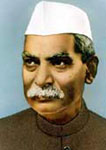
Dr. Rajendra Prasad, son of Mahadev Sahai, was born in Zeradei village in Bihar on December 3, 1884. Rajen was a brilliant student throughout school and college. He stood first in the entrance examination of the University of Calcutta and was awarded a Rs. 30 per month scholarship. It was first time that a student from Bihar had excelled. He joined the Calcutta Presidency College in 1902. In 1915, Rajen passed the Masters in Law examination with honors, winning a gold medal. He then completed his Doctorate in Law to attain the title, Dr. Rajendra Prasad. Whenever the people suffered, Dr. Prasad was present to help reduce the pain. In 1914 floods ravaged Bihar and Bengal. Dr. Prasad became a volunteer distributing food and cloth to the flood victims. In 1934, Bihar was shaken by an earthquake. The quake caused immense damage and loss of property. The quake was followed by floods and an outbreak of malaria. Dr. Prasad dove right in with relief work, collecting food, clothes and medicine. In 1935, an earthquake hit Quetta. Dr. Prasad was not allowed to lend a hand because of Government restrictions. He did not rest. He set up relief committees in Sind and Punjab for the homeless victims that flocked there. Dr. Prasad presided over the Bombay session of the Indian National Congress in October 1934. Following the resignation of Subhash Chandra Bose as the President of the Congress in April 1939, Dr. Prasad was elected President. He did his best to heal the rifts created between the incompatible ideology of Subhash Chandra Bose and Gandhiji. Rabindranath Tagore wrote to Dr. Prasad, "I feel assured in my mind that your personality will help to soothe the injured souls and bring peace and unity into an atmosphere of mistrust and chaos..." As the freedom struggle progressed, the dark shadow of communalism which had always lurked in the background, steadily grew. To Dr. Prasad's dismay communal riots began spontaneously burst all over the nation and in Bihar. He rushed from one scene to another to control the riots. Independence was fast approaching and so was the prospect of partition. Dr. Prasad, who had such fond memories of playing with his Hindu and Muslim friends in Zeradei, now had the misfortune of witnessing the nation being ripped into two. On August 15, 1947 India was free. Earlier, a Constituent Assembly was formed in July 1946, to frame the Constitution of India and Dr. Rajendra Prasad was elected its President. On November 26, 1946 the Constitution of India was completed and accepted by the people of India. On January 26, 1950, the Constitution was ratified and Dr. Rajendra Prasad was elected the first President of India. Dr. Prasad transformed the regal splendor of Rashtrapati Bhavan into an elegant "Indian" home. Dr. Prasad visited many countries on missions of goodwill. He stressed for peace in a nuclear age. In 1962, after 12 years as President, Dr. Prasad retired. He was awarded the highest civilian award of India, the Bharat Ratna. Dr. Prasad authored many books including his autobiography "Atmakatha" (1946), "Satyagraha at Champaran" (1922), "India Divided" (1946), "Mahatma Gandhi and Bihar, Some Reminisences" (1949), and "Bapu ke Kadmon Mein" (1954). Dr. Prasad spent the last few months of his life at the Sadaqat Ashram in Patna. He died on February 28, 1963 Back